
NXJ hoop clamp
for accumulator
The accumulator fixing clamp is a professional device designed specifically for fixing the accumulator. It has the characteristics of compact structure, flexible connection and beautiful appearance. The company’s products are divided into two types: NX and NXJ.
Advantages
of
NXJ hoop clamp
for accumulator
Enhanced Stability
Provides stronger fixation, reducing vibration and improving system safety.
Flexible Installation
Adjustable structure fits various accumulator sizes and mounting requirements.
Durable Construction
High-quality materials ensure long service life in demanding conditions.
Neat Appearance
Optimized design delivers clean layout and professional visual effect.
Ordering Code & Technical Parameter You Can Choose
NXJ
Code Name
Hoop For Accumulator
※
No.A1~A6
| Model | A | B | C | ΦD | H | E | L | S | K | Equipped with accumulator model | Weight (kg) |
|---|---|---|---|---|---|---|---|---|---|---|---|
| NXJ-A1 | 120 | 85 | 112 | 89-92 | 51-52.5 | 60 | 18 | 3 | – | NXQ△-L0.4~L0.63 | 0.17 |
| NXJ-A2 | 156 | 100 | 143 | 106-114 | 62.5-66 | 60 | 18 | 3 | – | NXQ△~L1 | 0.41 |
| NXJ-A3 | 156 | 100 | 191 | 152-159 | 87-91 | 60 | 18 | 3 | – | NXQ△-L1.6~L6.3 | 0.46 |
| NXJ-A4 | 236 | 152 | 256 | 216-224 | 120-124 | 60 | 32 | 4 | – | NXQ△-L10~L40 | 0.77 |
| NXJ-A5 | 332 | 280 | 322 | 299 | 190 | 40 | 5 | 4 | 395 | NXQ△-L20~L100 | 2.05 |
| NXJ-A6 | 422 | 360 | 378 | 351 | 192 | 40 | 5 | 4 | 420 | NXQ△-L63~L200 | 4.40 |
Why Choose Us
We have our own production workshops and warehouses, equipped with complete production and quality testing equipment.
After-sales Service
We provide professional, accurate, patient, and efficient solutions to your hydraulic accumulator manufacturing problems.
Customer Philosophy
Our company's customer philosophy is to create irreplaceable value for our customers through high-quality products and services.
Manage
Philosophy
Our management belief is to respect value and pursue a management philosophy of autonomy and self-motivation.
High-quality Products
Innovation adds value to our products. We have a strong R&D team with the strength to face challenges and bring our ideas to market.
Qualification Certificate
Learn more about cooperation
Contact Us Now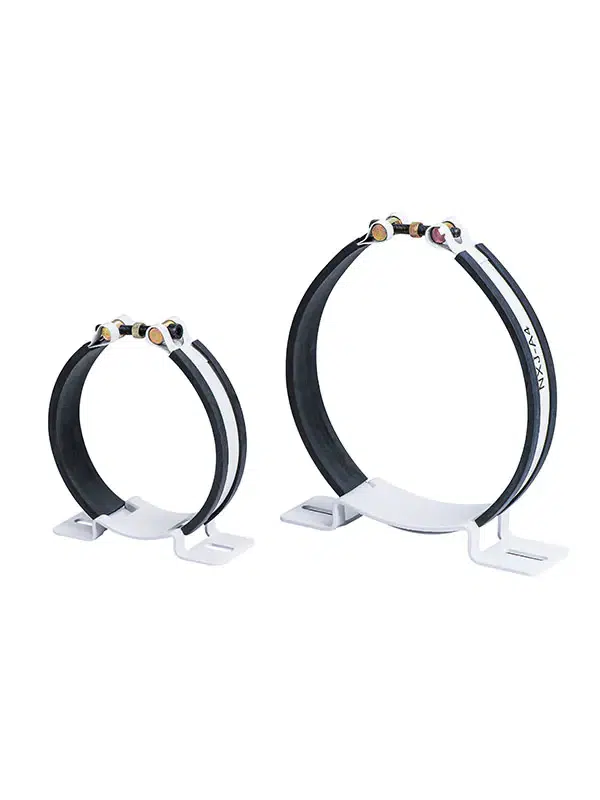
FAQ
The following are solutions to common problems. If you have further technical questions, please feel free to contact us.
Q1: What is the main function of an accumulator?
A: An accumulator stores hydraulic energy in the form of pressurized fluid. It helps maintain system pressure, absorb shocks, and provide additional flow during peak demand or emergency situations.
Q2: What are the common types of accumulators?
A: The most common types are bladder, piston, and diaphragm accumulators. Each type differs in structure and is selected based on pressure requirements, capacity, and application conditions.
Q1: What is included in an accumulator station?
A: An accumulator station typically includes the accumulator unit, pump, motor, control valves, pressure gauges, safety components, and a hydraulic reservoir, all integrated into a single system.
Q2: Why is an accumulator station important in hydraulic systems?
A: It stabilizes pressure, reduces energy consumption, minimizes pump wear, and ensures reliable system performance during fluctuating load conditions.
Q1: What are common accumulator accessories?
A: Common accessories include safety blocks, shut-off valves, pressure gauges, charging kits, mounting brackets, and protective covers, all of which support safe operation and maintenance.
Q2: Why are accessories necessary for accumulators?
A: Accessories enhance safety, enable proper monitoring, simplify maintenance, and ensure the accumulator operates efficiently and within design limits.
Q1: What is the function of a safety valve block?
A: A safety valve block protects the accumulator and system by controlling pressure, isolating the accumulator when needed, and safely releasing excess pressure.
Q2: What components are typically found in a safety valve block?
A: It usually includes a relief valve, shut-off valve, pressure gauge port, and sometimes a drain or discharge valve, all integrated into a compact unit for safety and convenience.
