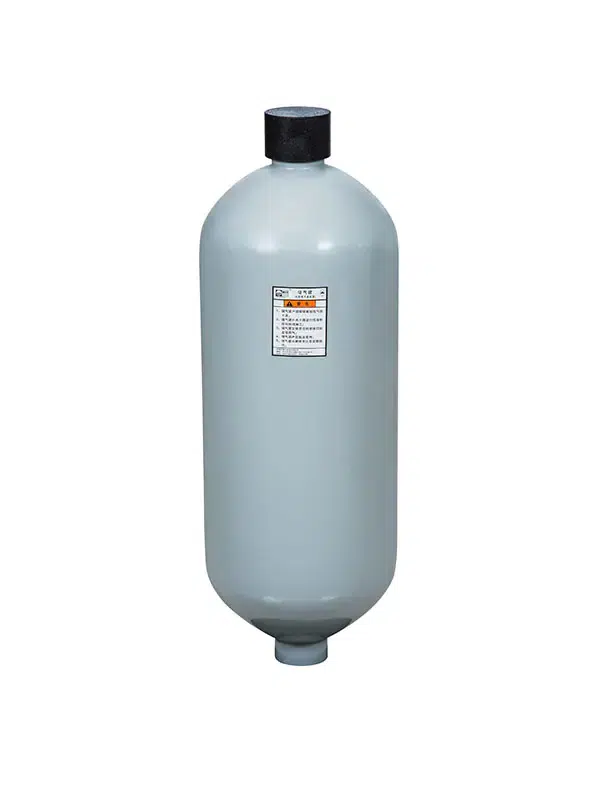

A piston type accumulator stores energy by using a freely moving piston to separate compressed nitrogen gas from hydraulic fluid. As fluid enters, it pushes the piston, compressing the gas and storing energy. When system pressure drops, the gas expands, forcing fluid back into the circuit.
Key Takeaways
- A piston type accumulator uses a solid barrier to isolate gas from fluid, storing energy as fluid compresses the nitrogen.
- This design is ideal for high-pressure, high-flow applications like hydraulic presses and heavy machinery.
- Regular inspection of the pre-charge gas and seals is critical to prevent gas leaks and extend service life.
Piston Accumulator Construction and Components
A piston type accumulator consists of a steel cylinder housing a free-floating piston. This piston divides the interior into two chambers: one filled with nitrogen gas and the other containing hydraulic fluid.
The Piston, Seals, and Cylinder
The piston acts as a solid physical barrier, sliding freely as fluid enters or exits. Seals along the piston’s edge prevent fluid from leaking past it and stop gas from migrating. If the seals wear out, the gas charge will slowly leak, reducing the accumulator’s efficiency.
Gas Valve and Fluid Port Functions
Technicians use the gas valve at the top to fill the chamber with dry nitrogen and set the pre-charge pressure. The fluid port at the bottom connects to the hydraulic circuit. A correctly set pre-charge ensures the nitrogen remains ready to provide counter-force whenever system demands change.
The Piston Accumulator Operating Cycle

The operating cycle consists of three stages: charging, storage, and discharge.
How Piston Accumulators Store Pressure
When system pressure rises, hydraulic fluid enters through the fluid port. The fluid pushes the piston toward the gas side. As the piston moves, it compresses the nitrogen gas, decreasing its volume. The internal pressure rises until it reaches equilibrium with the system pressure, storing energy in the compressed gas.
Releasing Stored Energy and Fluid
When a cylinder extends or a valve opens, system pressure drops. The compressed nitrogen expands, pushing the piston back toward the fluid side. This forces the hydraulic fluid out through the port and back into the circuit, releasing stored energy to meet sudden flow demands.
Performance and Applications of Piston Accumulators
High-Pressure and High-Flow Applications
Piston accumulators perform exceptionally well in high-pressure environments. Because the piston moves freely with minimal resistance, it maintains a rapid response. Unlike flexible bladders that wear out from repeated flexing, the solid piston offers high efficiency and a long service life in heavy-duty operations like hydraulic presses and steel mills.
Piston Accumulator vs. Bladder Accumulator
Choosing between designs depends on your operating cycle and space. A bladder accumulator is excellent for space-constrained environments requiring fast, small-volume responses. A piston type is the better choice for large volumes, high pressures, and heavy-duty cycles that demand a massive flow per cycle.
Routine Maintenance of Piston Accumulators

The condition of the seals determines the device’s ability to retain its gas charge. Technicians should periodically check the pre-charge pressure using specialized charging tools. A drop in the reading indicates gas is leaking past worn seals. Replacing the seals restores the isolation barrier.
Maintaining the proper pre-charge pressure protects the piston and extends its life. For complex systems requiring centralized monitoring and safety valves, integrated accumulator stations provide a reliable solution.
FAQ
How often should someone check the precharge?
Check the pre-charge pressure during scheduled maintenance intervals and whenever equipment performance declines. A drop in the reading indicates gas has leaked past worn seals. Early detection protects the piston and maintains stable pressure.
What happens when the seals wear out?
Gas leaks past the piston, causing a gradual drop in charge pressure. This results in a loss of stored energy, preventing the unit from maintaining pressure between pump cycles. Replacing the seals restores full functionality.
Does a piston design suit every system?
No. A piston unit fits high pressure, large flows, and heavy-duty work. A bladder unit fits compact spaces and fast, small-volume responses. Always match the design to your specific duty cycle and flow requirements.