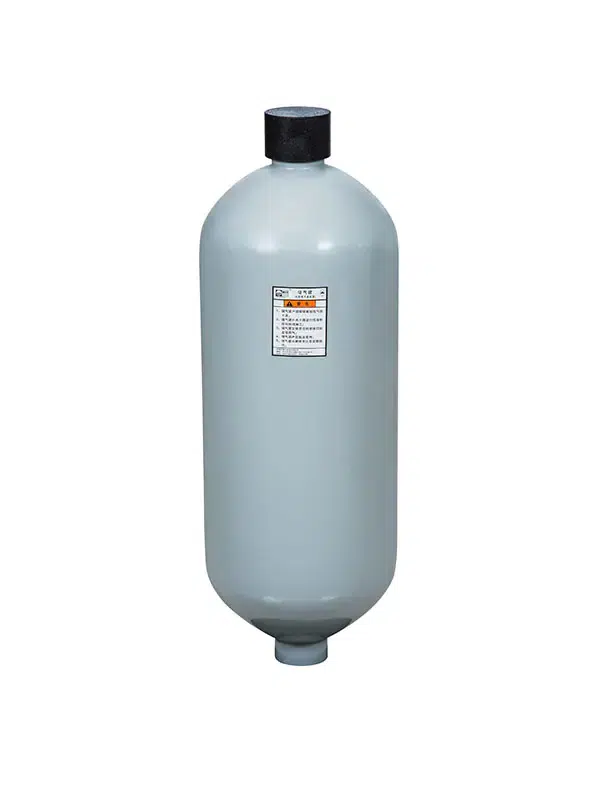
A hydraulic accumulator stores potential energy in the form of pressurized fluid or compressed gas and releases it as kinetic energy when needed. While electrical energy storage systems hold a charge through chemical substances, hydraulic accumulators utilize a “gas spring” mechanism. Understanding how fluid dynamics, gas pressure, and nitrogen interact is essential for engineers and maintenance professionals selecting the right equipment for a specific application.
Key Takeaways
- Potential to Kinetic: Accumulators store energy by compressing nitrogen gas and release it by allowing the gas to expand.
- Safety First: Nitrogen is an inert, non-flammable gas, making it the safest medium for pre-charging accumulators.
- System Matching: Choosing the right accumulator type—bladder, diaphragm, or piston—is critical for optimizing energy storage, shock absorption, and flow.
The Mechanism: How Hydraulic Accumulators Store Energy
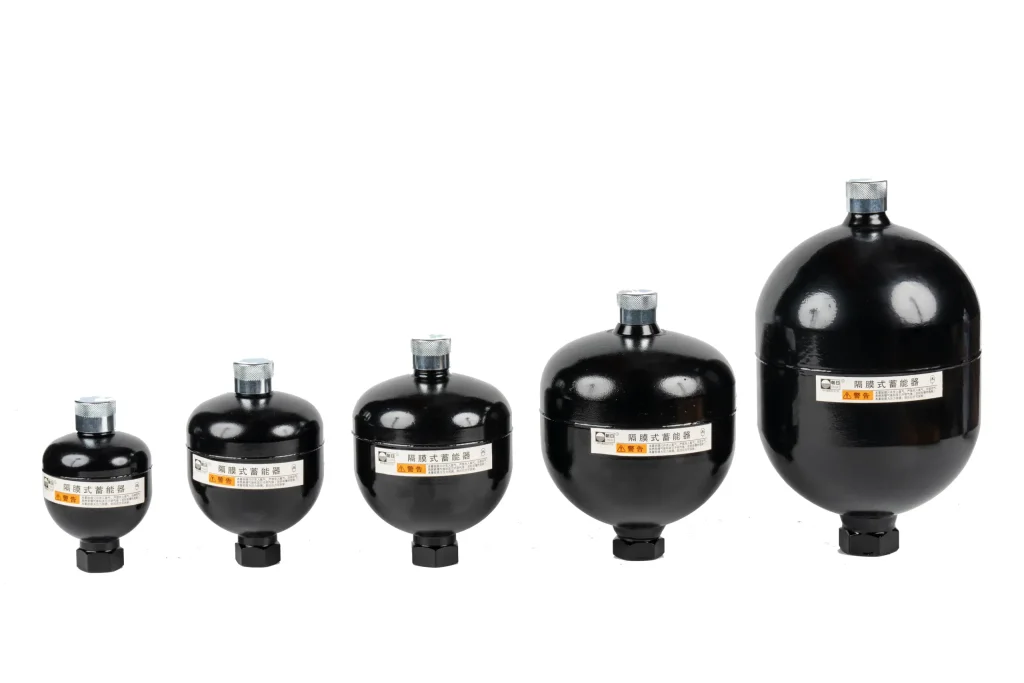
A hydraulic accumulator preserves potential energy in the form of compressed gas, converting it into hydraulic motion whenever the system requires a boost. This cyclical process consists of three main steps.
Potential Energy to Kinetic Energy
- Pre-charging: Before connecting the unit to a hydraulic circuit, a technician fills the gas chamber with dry nitrogen to a specific pressure.
- Charging (Storing): As hydraulic pressure rises, fluid is forced into the accumulator, compressing the nitrogen gas. This converts mechanical work into stored potential energy.
- Discharging (Releasing): When system pressure drops, the compressed gas expands, pushing the hydraulic fluid back out into the circuit and delivering kinetic energy to actuators or tools.
The energy remains locked within the gas molecules until the system demands it. It functions much like a coiled spring: poised, ready, and releasing energy on command.
The Role of Compressed Nitrogen Gas
In most systems, nitrogen is the gas of choice. Within normal operating ranges, its compression and expansion follow predictable patterns (described by Boyle’s Law), allowing engineers to accurately specify the accumulator and set the pre-charge pressure.
The pre-charge pressure determines the effective energy the accumulator can provide. If the pre-charge is too high, the volume of fluid released will be minimal. If it is too low, the bladder or piston may bottom out prematurely, resulting in a loss of usable capacity. Temperature is also critical; a pre-charge set indoors will change if the unit is moved to a freezing outdoor environment, which is why technicians always verify pressure on-site.
Furthermore, nitrogen is highly safe. As an inert, moisture-free gas, it prevents oxidation of the hydraulic fluid and does not support combustion.
Accumulator Types for Energy Storage
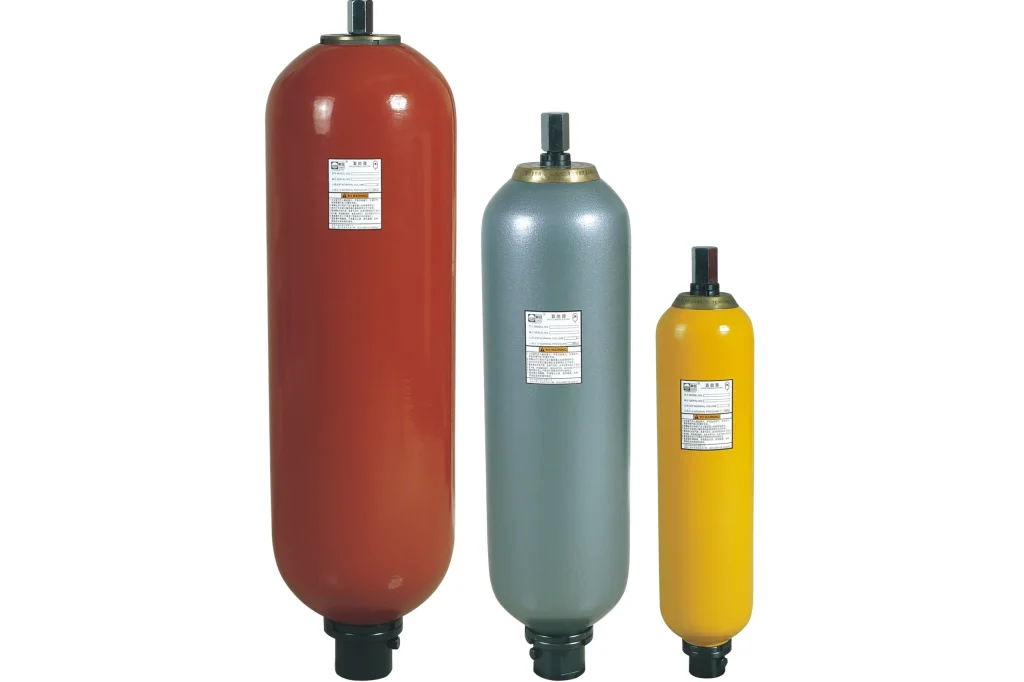
The physical design of the accumulator dictates how effectively it stores and releases energy.
Bladder and Diaphragm Accumulators
A bladder accumulators consists of a nitrogen-filled rubber bladder housed inside a steel shell. As fluid enters, it compresses the bladder. These units are well-suited for circuits with limited space, lower pressure, and applications requiring rapid response—the flexible bladder reacts within milliseconds. A 3,000 psi bladder unit with a 15-gallon capacity typically weighs about 300 pounds, whereas a piston unit of the same size weighs roughly 500 pounds.
A diaphragm-type accumulator operates on the same principle but uses a flexible diaphragm as the separating element. Designed for low-volume requirements, they handle gas compression ratios up to 8:1. Their quick response makes them ideal for controlling pressure pulsations in machine tools.
Piston Accumulators and Stations
For high-pressure and high-flow applications, engineers often turn to piston accumulators. These units use a solid metal piston to separate the gas from the fluid. With volume capacities ranging from 1 to over 100 liters, they offer stable, repeatable responses for heavy machinery like hydraulic presses.
For large-scale systems, integrated accumulator stations combine multiple vessels with pressure management valves and safety blocks. These stations provide centralized energy storage and simplify maintenance, meeting standards such as the ASME Boiler & Pressure Vessel Code.
Applications of Energy Storage in Accumulators

Pulsation Damping and Shock Absorption
In hydraulic systems, pump pulsations and “water hammer” effects can cause dangerous pressure spikes. Accumulators absorb these shocks. The gas cushion buffers pressure peaks, reduces noise, and protects seals and piping from rupture. Without an accumulator, a sudden movement of a heavy loader bucket could cause the vehicle’s rear wheels to lift off the ground. Typically, for shock absorption, the pre-charge pressure is set to 60% of the maximum operating pressure.
Emergency Backup and Leak Compensation
Beyond smoothing pressure, stored energy serves as a safety net. If the pump loses power or a valve closes suddenly, the accumulator releases its stored fluid to hold a clamping position, bring a load to a safe stop, or compensate for internal leakage. In wind turbines, marine equipment, and agricultural machinery, this stored energy ensures critical operations can be completed safely even during unexpected shutdowns. For energy storage duties, the gas pre-charge is usually set at about 90% of the minimum working pressure.
FAQs About How Accumulators Store Energy
How does an accumulator store energy?
It holds potential energy inside compressed nitrogen gas. As hydraulic pressure rises, fluid is pushed into the unit, squeezing the gas. When system pressure falls, the gas expands and pushes the fluid back out.
What precharge pressure suits storage duty?
For energy storage applications, engineers typically set gas pre-charge at about 90% of the minimum working pressure. For pulsation damping, 60% of the maximum operating pressure is a common starting point.
Why does nitrogen fill the gas side?
Nitrogen is inert, non-flammable, and free of moisture. It will not oxidize hydraulic fluid or feed a fire, and it maintains stable properties through millions of compression cycles. To maintain this pressure safely, regular checks using nitrogen charging tools are highly recommended.