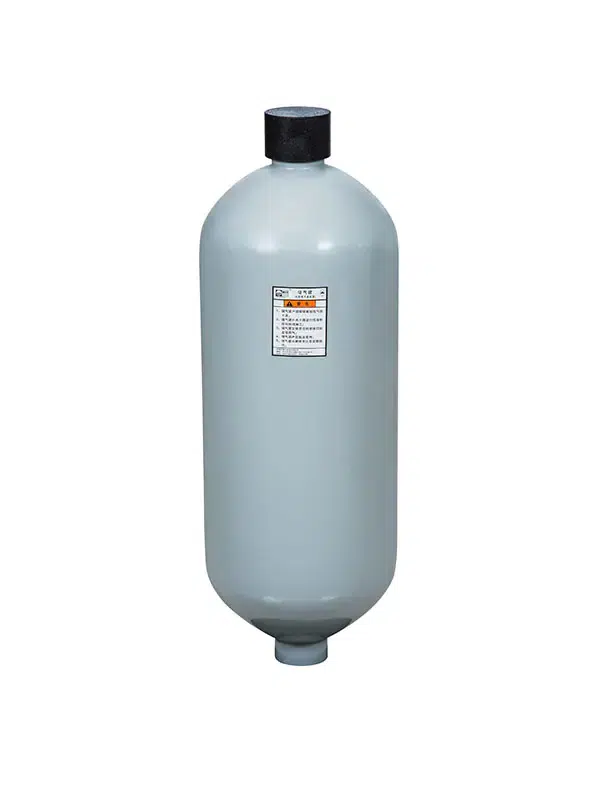
A bladder accumulator is a hydropneumatic pressure vessel that uses a flexible bladder to separate nitrogen gas from hydraulic fluid. Its primary function is to absorb fluid when system pressure exceeds a preset level and release it when pressure drops. This action stabilizes flow rate, stores energy, and protects hydraulic components from damage.
Key Takeaways
- A bladder accumulator stores hydraulic energy and releases it to keep pressure steady.
- It absorbs shocks and pulsations, which protects seals, hoses, and instrumentation from damage.
- Checking the nitrogen pre-charge and inspecting the bladder regularly keeps the system working reliably.
How a Bladder Accumulator Works

Internal Construction and Nitrogen Pre-Charge
A steel shell houses a flexible bladder, dividing the internal space into two chambers: an upper chamber filled with nitrogen gas and a lower chamber filled with hydraulic fluid. The bladder acts as a barrier, ensuring gas and liquid remain completely separated.
Before operation, technicians set the pre-charge pressure by filling the gas side with nitrogen. This baseline pressure allows the accumulator to store fluid under pressure and respond rapidly to system changes.
The Charging and Discharging Cycle
The cycle relies on gas compressibility:
- Charging: When system pressure exceeds the pre-charge level, fluid enters the port and pushes against the bladder. The nitrogen compresses, storing energy.
- Discharging: When system pressure drops, the compressed nitrogen expands, pushing the bladder outward and forcing fluid back into the circuit.
Key Functions of a Bladder Accumulator in Hydraulic Systems
Pulsation Dampening and Shock Absorption
Pumps generate pulsations, and sudden valve closures can trigger intense pressure spikes. A bladder accumulator absorbs this energy. When a spike occurs, the gas compresses; as it expands, it dampens the shock wave before it reaches sensitive components. This stabilizes pressure and extends the service life of seals and hoses.
Emergency Power and Leak Compensation
If a pump stops or loses power, the bladder releases stored fluid to maintain system pressure. This allows the circuit to complete a stroke safely or hold a clamping position. It also compensates for minor internal leaks and thermal expansion, maintaining stable pressure between pump cycles. Because the accumulator supplements peak flow, you can size the pump for average demand, reducing heat generation and energy costs.
Advantages and Maintenance of Bladder Accumulators

Why Choose a Bladder Accumulator Over a Piston Type?
Bladder accumulators offer rapid response and excellent sealing, preventing fluid from migrating into the gas side. Maintenance is straightforward: technicians can simply replace the bladder without rebuilding the entire unit. This makes them ideal for high-pressure and high-cycle applications.
For heavy-duty operations requiring large volumes and high flows (such as hydraulic presses), piston accumulators are often the better fit. For low-volume precision, diaphragm types excel.
Routine Maintenance and Pre-Charge Checks
Because nitrogen slowly permeates the bladder over time, pre-charge pressure must be checked on a set schedule. During service, inspect the bladder for signs of wear, cracks, or blistering. Proper sizing and accurate pre-charge settings are essential to protect the pump and ensure consistent performance.
Chaori Hydraulic has manufactured hydraulic accumulators since 1978. The company supplies bladder, piston, and diaphragm types, along with complete accumulator stations and nitrogen charging accessories. Their products carry ISO9001, ASME, and CE certifications for global compliance.
FAQ
What happens if the nitrogen pre-charge is too high or too low?
If the pre-charge is too high, fluid cannot enter the accumulator, and the system will not store energy. If it is too low, the bladder may bottom out against the fluid port, causing premature bladder failure.
Can a bladder accumulator be used in high-pressure systems?
Yes. Bladder accumulators are highly effective in high-pressure environments, often rated up to 3,000 PSI or higher, depending on the shell and bladder material.
How often should the pre-charge pressure be checked?
Technicians should check the pre-charge at every scheduled maintenance interval, or at least every 3 to 6 months. Gas naturally permeates the rubber bladder over time, so routine checks prevent pressure drops and system sluggishness.