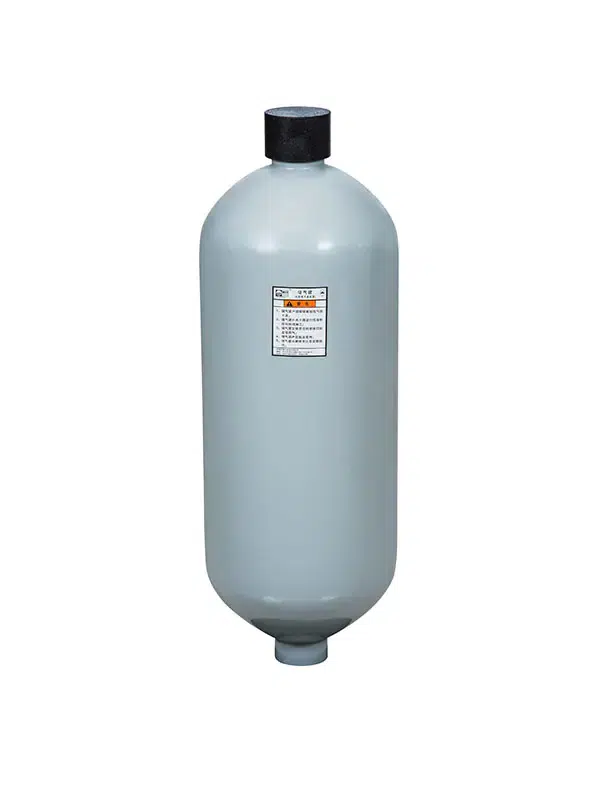
A hydraulic accumulator usually shows it is failing in three distinct ways: an uneven shell temperature, an erratic pressure gauge, and an unstable nitrogen pre-charge. Technicians can confirm a suspect unit by hand, by gauge, and with a charging rig. Units that pass these three checks are typically in good working condition.
Key Takeaways
- Check the Shell: An even temperature means it’s healthy. A distinct cold or hot band indicates internal failure or gas loss.
- Watch the Gauge: A steady needle under load is good. A jumping or drifting needle means the accumulator is no longer dampening pulses.
- Test the Pre-Charge: Use a charging rig to check the nitrogen pressure. If it won’t hold, the accumulator needs replacement.
Field Checks for a Bad Accumulator

Two checks require no tools and can be performed in the field on a machine that is still warm from service. These give a fast preliminary diagnosis before using a charging rig.
Checking Shell Temperature by Hand
Start the system, let it run under normal load, then stop it. Run your hand slowly down the shell, from the gas end to the fluid end. A healthy unit feels even along its entire length.
A bad accumulator behaves differently. A distinct cold band near the gas end means the nitrogen charge has escaped. The gas is no longer there to absorb heat from the oil, so that zone stays cool. A hot band in the middle or at the oil port points to an internal fault, such as a torn bladder or a stuck piston. When the shell temperature splits into two distinct zones, the unit is failing.
Gauge Behavior While Running
Watch the pressure gauge through a full work cycle. Normal behavior is uneventful: the needle holds steady under load, drops smoothly as the actuator moves, and recovers cleanly when the pump catches up.
Erratic readings raise a flag. A needle that jumps, drifts, or swings without a change in load suggests the accumulator no longer dampens pulses. Pressure that falls faster than usual means the unit isn’t holding its charge, forcing the pump to work harder. A technician should log the pressure at the start and end of a cycle; a consistently large gap confirms the suspicion.
Verifying Hydraulic Accumulator Pre-Charge

If the field checks raise concerns, a pre-charge test provides definitive proof of the unit’s condition.
Gauge Reading With System Off
Shut the system down and isolate the circuit. Open the bleed valve and watch the system pressure gauge as oil leaves the accumulator. A healthy unit releases stored oil predictably, and the needle settles at the gas pre-charge point.
A faulty unit behaves differently. The needle may drop instantly (indicating an undercharged or uncharged gas side) or stall well above the expected pre-charge pressure (suggesting a blocked gas valve or a ruptured bladder). Record the final reading once hydraulic pressure reaches 0 psi and compare it to the manufacturer’s specification.
Testing with a Charging Rig
A charging rig gives the final answer. Connect the check/charge head to the gas valve and read the pre-charge pressure. A reading that holds steady confirms a properly charged accumulator. A reading that keeps falling shows gas escaping past the valve or a compromised bladder accumulator.
Top up the unit with dry nitrogen and watch again. If the nitrogen will not stay in place, the accumulator is bad. The gas has found a path out, and no amount of refilling will fix it.
Other Symptoms of a Bad Accumulator
Cycle Times and Rapid Pump Cycling
A failing unit often affects machine movement before anyone checks a gauge. Actuators respond slowly, cycle times lengthen, and the pump starts and stops much more often than it should. Because the accumulator can no longer store enough energy to carry the load between pump strokes, the pump must refill the circuit repeatedly. Counting pump starts per cycle will clearly show the difference.
Noise and Leak Symptoms
Unusual noises are worth investigating. A knocking or hammering sound in the line often means nitrogen has leaked out, leaving nothing to soften pressure spikes. Physical signs confirm the diagnosis: fluid on the outside at the gas valve or oil port shows the unit has leaked. In many cases, the bladder may have ruptured, allowing oil into the gas side. Ruptured bladders cannot be patched and must be replaced immediately to avoid sudden failure.
Chaori Hydraulic, a manufacturer and supplier of accumulator stations since 1978, builds bladder, piston, and diaphragm units. The company also offers nitrogen charging tools for wholesale orders, ensuring every unit ships with a clear baseline for the first check.
FAQ
How can a technician spot a bad accumulator without tools?
Run the system, then feel the shell from top to bottom. An even temperature suggests a healthy unit. A distinct cold or warm band points to a bad accumulator with a lost charge or internal damage.
Can a plant test the pre-charge in-house?
Yes. A technician connects a nitrogen charging tool to the gas valve and reads the pre-charge pressure. A reading that will not hold confirms a faulty unit. Plants can stock charging accessories for these routine checks.
Does a low pre-charge always mean replacement?
Not always. A technician can top up the unit with dry nitrogen and recheck the pressure. If the gas stays in place, normal operation is restored. If the gas escapes again, the accumulator needs repair or replacement.