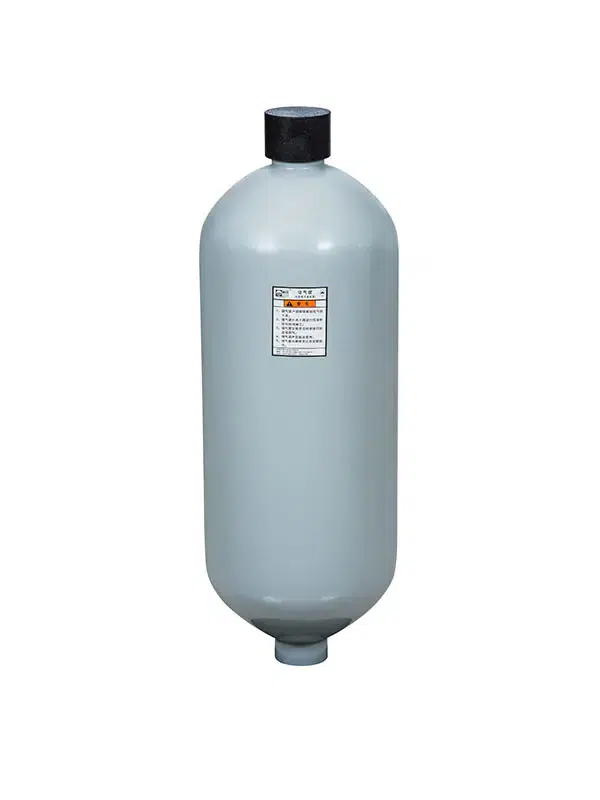
Yes, hydraulic accumulators remain widely utilized today, serving as essential components within modern hydraulic systems. They are ubiquitous across various sectors, including construction, manufacturing, agriculture, energy, and marine engineering. By virtue of their ability to store and release hydraulic energy, accumulators play a pivotal role in enhancing system efficiency and stabilizing system pressure.
In modern hydraulic systems, accumulators are primarily employed to alleviate the load on hydraulic pumps, dampen pressure fluctuations, and provide backup power during peak demand periods or in the event of temporary power outages. Furthermore, they are indispensable for shock absorption and cushioning, helping to safeguard equipment against damage caused by sudden pressure spikes and mechanical stress.
Although the advent of new hydraulic technologies and control systems has significantly improved overall operational efficiency, accumulators remain a preferred solution in the industry due to their inherent advantages: simple construction, reliable operation, and exceptional cost-effectiveness. Numerous manufacturers—exemplified by brands such as “Chaori”—continue to actively produce a diverse range of accumulator products to meet the varied demands of the modern industrial landscape.
Key Takeaways
- Accumulators are very important in many industries today. They help store energy, absorb shocks, and keep pressure steady.
- There are different types of accumulators, like bladder and piston. Each type has its own job. It is important to pick the right one for what you need.
- Using accumulators can help save a lot of money. They do this by stopping energy waste and lowering damage to equipment.
- New technology makes accumulators work even better. This helps manage energy well and lets people check them in real time.
- Adding accumulators to your systems keeps things safe and reliable. This makes them a good choice for many uses.
Accumulator Applications Today
Manufacturing and Automation
Accumulators are used in almost every factory today. They help machines run safely and without problems. In factories, accumulators store energy and absorb shocks. They also give emergency power when needed. You can find them in assembly lines and robotic welding cells. They are also in stamping presses and material handling systems. These devices keep pressure steady. They protect important parts from sudden changes.
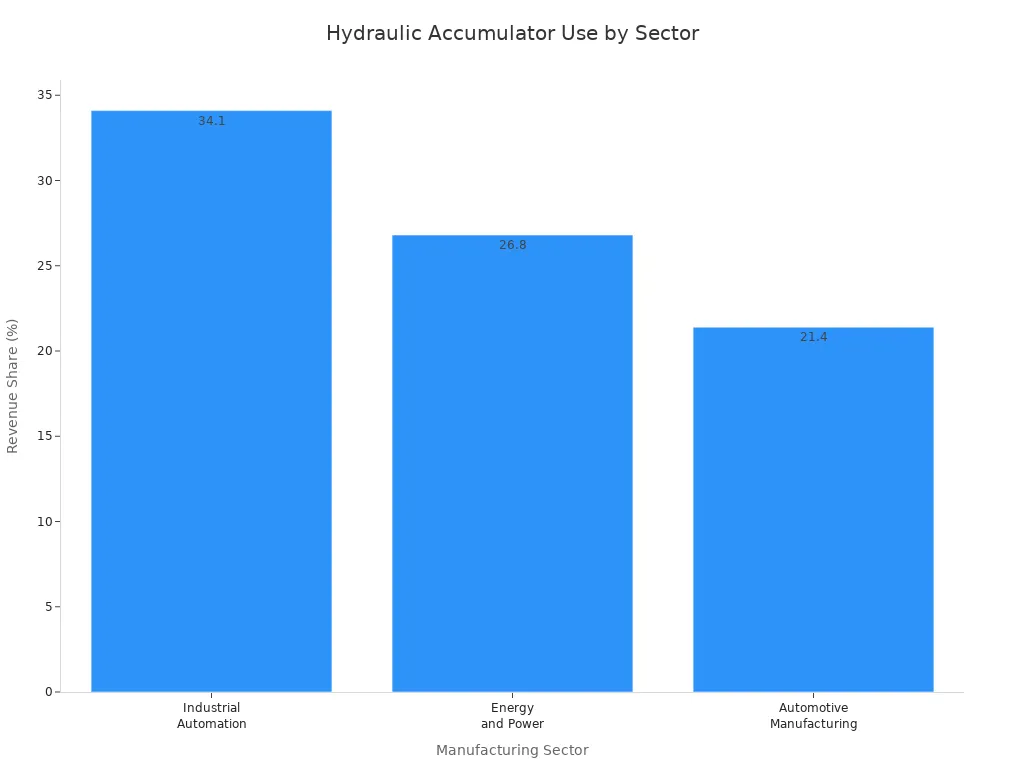
Here is a table that shows how different manufacturing areas use accumulators:
| Manufacturing Sector | Application Revenue Share | Key Applications |
|---|---|---|
| Industrial Automation | 34.1% | Automated assembly lines, robotic welding cells, precision stamping presses, materials handling systems |
| Automotive Manufacturing | 21.4% | ABS/ESC systems, active suspension, hydraulic hybrid powertrains, power steering, convertible roof actuation |
| Energy and Power Sectors | 26.8% | Offshore oil and gas production, emergency shutdown valves, subsea well completion systems |
You can see that industrial automation uses the most accumulators. The energy and automotive sectors use them too.
Accumulators do many important jobs in these systems:
- Store energy for later
- Absorb shocks to protect machines
- Give emergency power if the main system stops
- Make pressure changes smooth and help pumps during busy times
Ningbo Chaori Hydraulic gives solutions for all these factory needs. They help your systems stay strong and work well.
Automotive and Transportation
Many vehicles today have accumulators. They help cars and trucks save energy and stay safe. In start-stop systems, accumulators give quick power to restart engines. This saves fuel and lowers pollution. In electric and hybrid cars, accumulators store energy from braking. They send this energy to electric motors. This helps cars go farther and work better.
Accumulators also power safety features like adaptive cruise control. They help with collision avoidance too. They keep infotainment and connection systems working, even if the engine is off. In trucks and buses, accumulators help with power steering and active suspension. This makes rides smoother and safer.
Energy and Power Systems
Accumulators are used in power plants and renewable energy systems. They work as energy storage devices. An accumulator can take in, hold, and give out energy when needed. Some store energy slowly and release it fast. Others do the opposite. They can handle thermal, mechanical, or electrical energy.
New accumulator technology helps renewable energy systems. New accumulators can store more energy and last longer. They also charge faster. They work well in very hot or cold places. They are safer too. You find them in wind turbines, solar power plants, and hydroelectric stations. These new features help keep energy systems steady and reliable.
Robotics and Mobile Equipment
Robots and mobile machines use hyd accumulators. They store hydraulic energy for quick use when robots need lots of power. Accumulators lower vibration and stop pressure spikes. This protects important parts. They keep pressure steady, even when things change fast. This helps robots move smoothly and safely.
In machines like construction and farm vehicles, accumulators cushion shocks. They also help if there are leaks. They make sure your machines work well and last longer.
Other Key Uses
Accumulators are used in many other industries. Here is a table with some examples:
| Industry | Application of Accumulators |
|---|---|
| Hydraulic Hybrid | Energy storage, dampening vibrations |
| Mobile Equipment | Compensation of leakage oil, cushioning pressure shocks |
| Wind Turbine | Energy storage, emergency operation |
| Robotics | Dampening vibrations, energy storage |
| Maritime | Swell compensator, dampening vibrations |
| Aviation | Emergency operation, cushioning pressure shocks |
| Oil and Gas | Compensation of leakage oil, energy storage |
| Power Plant | Energy storage, dampening vibrations |
There are also new uses in other industries. Some accumulators now have IoT features for real-time checks and maintenance. In renewable energy, they help with wind turbine pitch systems and solar thermal storage. Special accumulators are made for aerospace, subsea oil recovery, and nuclear energy projects.
No matter what industry, Ningbo Chaori Hydraulic has accumulator solutions for your needs.
Types of Hydraulic Accumulators
When you pick an accumulator, you should know the main types. Each type works in its own way. Some are better for certain jobs than others.
Bladder Accumulators
A bladder accumulator has a rubber bladder inside a steel shell. The bladder holds gas, usually nitrogen, and keeps it away from the hydraulic fluid. When fluid goes in, the gas gets squeezed and stores energy. This type reacts fast to pressure changes. You see bladder accumulators in machines that need quick action, like hydraulic presses and mining equipment. They also help stop shocks and keep pressure steady in power plants and wind turbines.
Tip: Bladder accumulators are good for stopping shocks and keeping your system clean.
Piston Accumulators
A piston accumulator looks like a tube with a piston that moves inside. One side has gas, and the other side has hydraulic fluid. The piston moves to keep the pressure even. This type can hold a lot of fluid and handle very high pressure. You find piston accumulators in big machines and large projects. They are used where you need lots of stored energy. They work well and keep oil clean.
| Feature | Piston Accumulator | Bladder Accumulator | Diaphragm Accumulator |
|---|---|---|---|
| Design | Cylinder with moving piston | Rubber bladder in steel shell | Flexible diaphragm, compact |
| Best Use | Large volume, high pressure | Shock absorption, fast response | Space-limited, quick cycling |
| Response Time | Moderate | Fast | Very fast |
| Size | Large | Medium | Small |
Diaphragm Accumulators
A diaphragm accumulator uses a soft diaphragm to keep gas and fluid apart. This makes it small and light. It reacts very fast to pressure changes. You see diaphragm accumulators in robots and mobile machines. They are good when you do not have much space. They last a long time, need little care, and cost less if they are small.
- Small and fits in tight spots
- Reacts quickly to pressure changes
- Good for jobs that cycle a lot
High vs. Low Pressure
You need to choose the right accumulator for your pressure needs. High-pressure accumulators work above 350 bar. They are used in hard jobs like oil and gas, military, and aerospace. Medium-pressure types (100-350 bar) are common in factories, cars, and mobile machines. Low-pressure accumulators (up to 100 bar) are best for farm machines and light industry. High-pressure types use strong materials and work very well. Low-pressure types are simple and cost less.
| Type of Accumulator | Pressure Range | Common Uses | Key Features |
|---|---|---|---|
| High-Pressure | Above 350 bar | Oil & gas, aerospace, military | Strong, high performance |
| Medium-Pressure | 100-350 bar | Industry, automotive, mobile | Balanced size and force |
| Low-Pressure | Up to 100 bar | Agriculture, light industry | Simple, cost-effective |
Picking the right accumulator helps your system work well. It saves energy and keeps your equipment safe. Each type is best for different jobs.
How Accumulators Work in Modern Systems
Energy Storage and Release
An accumulator can hold energy when you do not need it. This energy is used when your system needs more power. In a factory, the accumulator saves energy when machines are off. When machines need extra power, the accumulator gives it fast. This lets you use smaller pumps and save money on energy. In solar power plants, the accumulator stores extra energy during the day. It sends out energy at night. This keeps the power steady and safe.
- Saves energy when demand is low
- Gives energy when demand is high
- Lets you use smaller, better pumps
- Cuts down on wasted energy in factories and power plants
Shock Absorption and Damping
Accumulators help stop shocks in machines. They keep your machines safe from sudden pressure jumps. In mobile machines, the accumulator takes in shock loads. It helps with safe stops in emergencies. In wind turbines, it helps control brakes and blades. You also see accumulators in boats, where they keep steering and winches steady. This makes your equipment last longer and work better.
- Takes in shocks in moving machines
- Gives steady force in presses
- Keeps wind turbines and boats steady
Pressure Maintenance and Leakage Compensation
An accumulator keeps pressure even in your hydraulic system. When the pump is off, the accumulator holds the pressure. It also makes up for small leaks in valves or seals. If pressure drops too low, the accumulator adds more. This keeps your machines working without stopping. It also helps your pump last longer.
- Keeps pressure up when the pump is off
- Makes up for leaks in valves and actuators
- Helps pumps hold pressure for a long time
Emergency Power and Backup
An accumulator gives backup power when you need it most. In airplanes, it helps with landing gear and brakes if the main system fails. In factories, the accumulator keeps machines running if the power goes out. Power plants use accumulators to balance power supply and demand. In flood control, they open and close gates even with no electricity. These backup features make your system safer and more dependable.
Tip: Using an accumulator for backup can stop costly downtime and protect important jobs.
Benefits of Hydraulic Accumulators
Reliability and Durability
A hydraulic accumulator helps your system work well for years. It takes in shocks and keeps pressure steady. This protects your machines from sudden changes. Sometimes, an accumulator can lose nitrogen or get small leaks. You should check the nitrogen pressure and look at the seals often. Doing regular checks and fixing problems early helps a lot. If you follow a good service plan, your accumulator will last longer. Your machines will also stay safe and work better.
Tip: Always look at the safety relief valves and check the bladder or piston. This stops sudden problems and keeps your system working right.
Efficiency and Cost Savings
A hydraulic accumulator helps you use less energy and money. It saves extra energy when you do not need it. When you need more, it gives the energy back. This means your pump does not have to run all the time. You save energy and your equipment does not wear out fast. The accumulator also acts like a shock absorber. This lowers stress on parts and means fewer repairs. When things get busy, it gives more fluid so you do not need a bigger pump. If you lose power, the accumulator gives emergency flow. This keeps things running and stops costly downtime.
Unique Advantages in Industry
Hydraulic accumulators give you many special benefits. They store and release energy at the right time. This makes your system work better. The accumulator keeps pressure steady and softens sudden changes. This helps your equipment last longer. You also get more fluid during busy times without a bigger pump. If your main power stops, the accumulator helps keep things safe. These features make accumulators a smart choice in many industries.
You can trust accumulators from Ningbo Chaori Hydraulic. They meet important standards like ISO9001, ASME, and CE. This means you get safe, strong, and high-quality products for your machines.
Alternatives to Accumulators
Modern Technologies
There are new technologies that try to take the place of accumulators in hydraulic systems. Electric actuators use motors to move things. Supercapacitors hold energy and let it out fast. Battery systems give steady power for a longer time. These options work well in some jobs. They are good when you need exact control or have little space.
When Accumulators Are Preferred
You should pick an accumulator if your system needs fast energy. Hydraulic accumulators act quickly in emergencies or when power is low. They help machines bounce back from sudden shocks. Accumulators make hydraulic systems work better and faster. If you want backup power or to keep your equipment safe, accumulators are a smart choice. You also get smoother work and longer machine life.
Note: An accumulator is best when you need quick energy and strong shock protection.
Limitations of Alternatives
Modern alternatives have some problems. Electric actuators might not be as fast as accumulators. Supercapacitors can give energy quickly, but they do not handle high pressure well. Battery systems give steady power, but they cannot react fast to sudden needs. These alternatives often need more care and cost more over time. An accumulator is simple, reacts fast, and is very reliable. You get less downtime and fewer repairs with an accumulator.
- Accumulators act right away when things change.
- Alternatives can be slow or break under heavy loads.
- Accumulators need less care and last longer.
You can see that accumulators are still trusted in many industries.
Today, many industries use the accumulator for important jobs. New designs can handle higher pressure and hold more energy. Some accumulators have smart features that check things in real time. This helps you save energy and makes your system stronger. The accumulator stores energy, controls pressure, and keeps things safe. You also get digital tools and can fix problems before they get big. Picking an accumulator means your system will work well and last longer.
FAQ
What are copay accumulator programs?
Copay accumulator programs keep track of your copay help. They do not let this help count toward your deductible. This means you might pay more yourself. Ask your insurance company if they use these programs.
How do copay maximizers differ from copay accumulator programs?
Copay maximizers spread your patient help out over the year. Copay accumulator programs do not let your copay help lower your deductible. Check your plan to see which program you have.
Why is pre-charging an accumulator important?
Pre-charging an accumulator lets you store energy before using it. You need to follow the right steps to stay safe. Always check the pressure and read the manufacturer’s instructions.
How often should you inspect accumulators?
You should check accumulators often. Look for leaks, check the pressure, and look at safety devices. Checking accumulators helps you find problems early and keeps things working well.
Can copay accumulator programs impact patient assistance?
Copay accumulator programs can limit your patient help. You might not get all the help from copay programs. Talk to your provider to see how these programs change your costs.