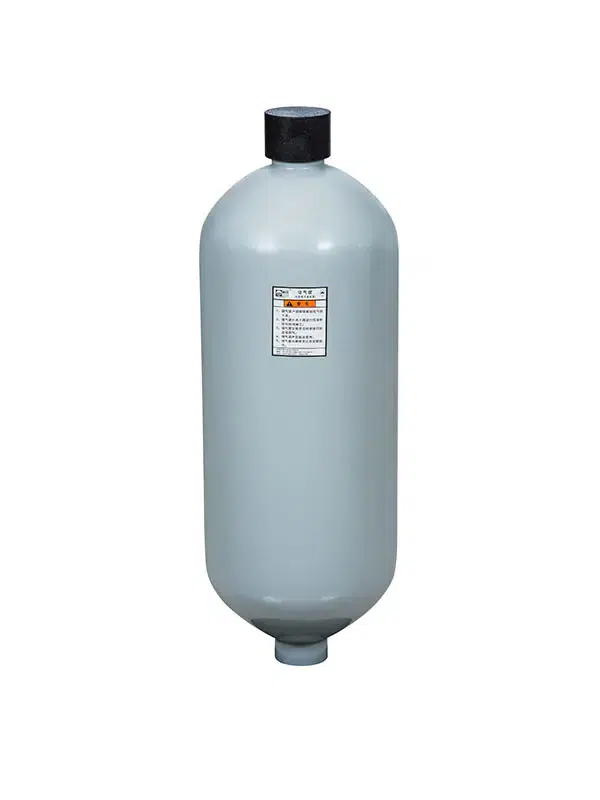
When specifying hydraulic components, a common industry misconception is searching for a “diaphragm piston accumulator.” In reality, diaphragm and piston accumulators are two distinctly different technologies.
Diaphragm accumulators can make wind turbines safer and can help stop big failures. However, they also have some safety problems and operational limits. While they excel in small, low-volume applications, they might not handle high pressure well and may not last as long as other types. When your offshore, industrial, or heavy-duty system demands maximum reliability and massive energy storage, upgrading to a high-capacity Chaori Hydraulic Accumulator (piston style) is often the engineering standard.
This guide breaks down the true limitations of diaphragm accumulators, backed by thermodynamic principles and industry standards, so you can make an informed decision for your hydraulic circuit.

Key Takeaways
- Terminology Matters: “Diaphragm” and “Piston” are separate accumulator designs; one uses a flexible elastomer membrane, while the other uses a sliding metal cylinder.
- Pressure Limitations: Diaphragm accumulators cannot handle very high pressure, meaning they do not work well in high-pressure systems.
- Volume Constraints: They hold less fluid than other types, which lowers how much energy they can store in big jobs.
- Vulnerability: You must check them often to keep them working; you need to look at the diaphragm for damage and make sure the hydraulic fluid stays clean to stop leaks.
- Environmental Sensitivity: Diaphragm accumulators can change how they work if it gets too hot or cold, and some chemicals can also cause problems.
Pressure Limits of Diaphragm Accumulators
Lower Maximum Pressure Ratings
Because diaphragm accumulators rely on a stretched elastomer membrane to separate gas and fluid, they cannot handle very high pressure. The membrane inside can stretch or even break if the force is too strong. This makes diaphragm accumulators less dependable when things get tough.
While some welded diaphragm units can reach up to 6600 PSI (455 Bar), this is generally their absolute structural ceiling. Piston accumulators, by contrast, are regularly manufactured to exceed 10,000 PSI safely under ASME Section VIII and PED 2014/68/EU standards.
Engineering Comparison: Pressure Boundaries
| Accumulator Type | Typical Max Pressure Rating | Structural Limitation |
| Diaphragm Accumulators | Up to 6600 PSI (455 Bar) | Elastomer shear stress and membrane rupture |
| Piston Accumulators | 10,000+ PSI (690 Bar) | Limited only by steel vessel wall thickness |
If you use a diaphragm in a system that needs high pressure, you might lose control pressure. For heavy industry like steel mills or deep-water oil platforms, piston accumulators offer superior dependability.
Volume Constraints and Energy Storage
Limited Fluid Storage capacity
Diaphragm accumulators cannot hold much fluid. The membrane inside stretches when fluid goes in, but it cannot fill the whole space. Structurally, the maximum allowable compression ratio (the ratio of maximum system pressure to gas pre-charge pressure) for a diaphragm is typically limited to 4:1 to prevent the rubber from crushing.
Because of this, you can only use about 70% of the total volume. The rest of the space stays empty, and the membrane cannot stretch more to use it.
Usable Volume Comparison
| Accumulator Type | Max Compression Ratio | Usable Fluid Volume (%) |
| Diaphragm Accumulators | 4:1 to 6:1 | Approx. 70% |
| Piston Accumulators | Up to 10:1 | Up to 95% |
Diaphragm accumulators are not good for big systems because you may need many units to match one piston accumulator. This takes up more space and costs more money.
Diaphragm Wear, Fatigue, and Lifespan
Material Degradation from Cycling
When you change the pressure, the diaphragm stretches and moves, which makes it wear out. After a while, you might see cracks or thin spots. Diaphragm wear happens faster if you use the accumulator in very hot or cold places or cycle it a lot.
Because of this material fatigue, diaphragm accumulators do not last as long as piston types. Most diaphragm accumulators work for about 5 to 10 years. The rubber parts break down more quickly with lots of use. Conversely, piston accumulators feature a solid metal piston and heavy-duty seals that handle wrong precharge pressures much better without catastrophic failure.
Real-World Scenario: Wind Turbine Pitch Control In wind turbine emergency pitch systems, accumulators actuate the blades during grid failures. While diaphragm accumulators are compact and common here, a failure is instantaneous. When a diaphragm ruptures, the system loses all stored energy instantly. Piston accumulators are increasingly preferred for larger turbines because they fail slowly; a worn piston seal will cause a gradual pressure drop, triggering a sensor alarm long before a total shutdown occurs.

Temperature and Chemical Sensitivity
Performance in Extreme Environments
Diaphragm materials can get hard or crack in very hot or cold places. If you use an accumulator in cold weather, elastomeric parts like standard nitrile seals can turn hard and break easily. They cannot stretch or seal well anymore. In hot weather, the diaphragm gets stiff, wears out faster, and may not seal well.
Chemical Compatibility Issues
Diaphragm materials can break down if they touch the wrong fluids. You must pick the right material for the diaphragm based on the fluid in your system:
- Nitrile (NBR): Works safely with most standard mineral oils.
- Fluoroelastomer (Viton/FKM): Resists aggressive fluids like synthetic oils and high temperatures.
If you use fluids that do not match, the diaphragm may leak or stop working. Piston accumulators bypass much of this risk, as changing a piston’s O-ring seal to match a new fluid is significantly cheaper and easier than custom-ordering a specialized diaphragm membrane.
Contamination Sensitivity
Diaphragm accumulators can be harmed by dirty fluid. Small bits of dirt can hurt the membrane and cause leaks. While a diaphragm separates the fluid and gas effectively, abrasive particles in the hydraulic fluid will constantly rub against the rubber membrane during cycling, wearing it out incredibly fast.
Pro Tip: ISO Cleanliness Codes To protect any accumulator, your hydraulic system should adhere to ISO 4406 fluid cleanliness standards (typically 18/16/13 or better for sensitive systems). If dirt or debris gets inside, the diaphragm can tear or change shape, making the accumulator work badly and sometimes fail fast.
Maintenance Demands and Downtime
Changing diaphragm accumulators often can make your system less reliable. When the rubber diaphragm breaks, it happens fast, meaning your machine may stop working right away. This sudden failure causes forced outages, more downtime, and higher costs.
Piston accumulators fail slowly, allowing you to see problems early and fix them before the system stops. However, diaphragm accumulators also lose nitrogen over time due to natural gas permeation through the rubber. Therefore, you must check the pre-charge often.
Maintenance Checklist for Diaphragm Systems:
- Check nitrogen pre-charge pressure monthly.
- Make sure oil is clean to protect the membrane.
- Look for leaks around gas fittings.
- Keep inline filters clean and change them often.
FAQ
What is the difference between a diaphragm and a piston accumulator?
A diaphragm accumulator uses a flexible rubber membrane to separate nitrogen gas from hydraulic fluid, making it fast-acting but limited in volume. A piston accumulator uses a sliding metal cylinder with seals, allowing for massive fluid storage and high-pressure capabilities.
What are the main limitations of diaphragm accumulators?
They cannot handle extremely high pressure, they hold less fluid than other types, and the diaphragm can wear out faster due to continuous stretching. These problems make them less reliable in heavy-duty, high-volume jobs.
How often should you check or replace the diaphragm?
Check the pre-charge pressure monthly. A full inspection should happen every six months. Because they generally last 5 to 10 years, they should be replaced proactively within that lifecycle to prevent sudden ruptures.
What fluids are safe for diaphragm accumulators?
You should generally use mineral oils. Some synthetic fluids can chemically attack the rubber. Always consult the manufacturer’s chemical compatibility chart to ensure your fluid matches the specific elastomer (like Nitrile or Fluoroelastomer) used in the accumulator.