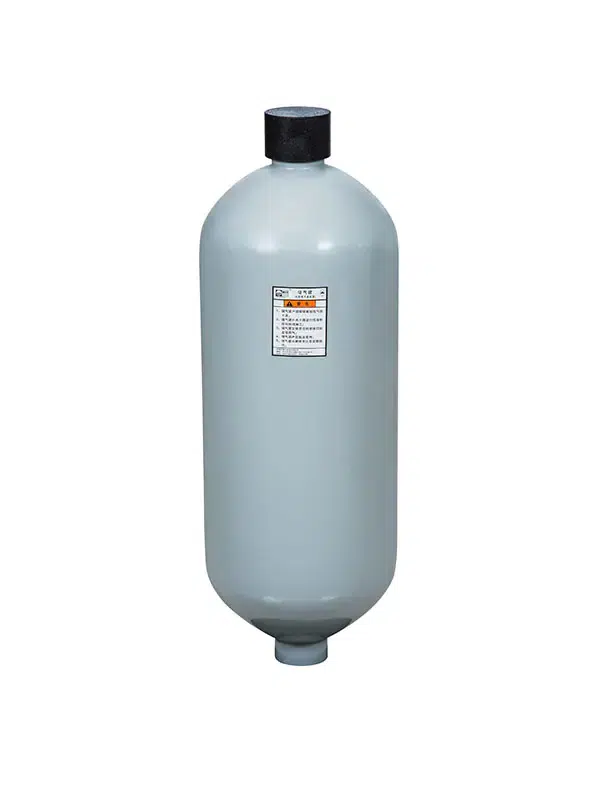
A hydraulic accumulator stores pressurized fluid to stabilize a system and absorb shocks, whereas a booster pump actively raises incoming pressure. Think of an accumulator as a rechargeable battery that stores energy, and a booster pump as the charger that pushes power in. This guide compares their core functions, performance, applications, and cost to help you choose the right equipment.
Key Takeaways
- Accumulator: Stores and stabilizes pressure without using electricity. It acts as a quiet buffer to absorb surges.
- Booster Pump: Actively raises low incoming pressure using electricity. It runs only when needed.
- The Best Setup: Use an accumulator for steady pressure and a booster pump when supply is too low. Using them together extends pump life.
Core Functions of an Accumulator vs. Booster Pump

Accumulator: Storing and Stabilizing Pressure
An accumulator is a closed vessel that stores fluid under pressure (often using a pre-charged gas). It acts as a buffer between the supply and the fixtures, absorbing pressure surges and maintaining steady flow at the outlet. Because it has few moving parts, it runs silently, uses zero electricity, and requires minimal maintenance. However, it only works if the system pressure rises above the delivery point at some time of day to charge the unit. A bladder accumulator, for example, uses a flexible rubber bladder to store this energy efficiently.
Booster Pump: Actively Raising Pressure
A booster pump actively increases pressure when the incoming supply is too low to reach fixtures. It pulls fluid from a tank and pushes it at a higher pressure. The controls monitor line pressure and start the pump only when pressure drops, stopping when the tap closes. This design is necessary for buildings where the incoming pressure never reaches a usable level on its own.
Pressure, Flow, and Cost Comparison of Accumulator and Booster Pump

Energy Consumption and Maintenance
Energy use sets the two apart. An accumulator has no electrical running cost and needs little upkeep. A booster pump consumes power only while running, but it introduces mechanical wear and tear, requiring more frequent maintenance. For a system that just needs surge control or pulsation damping, an accumulator is far more cost-effective long-term.
Placement and Integration
Placement matters. Installing an accumulator in the upstream pipeline reduces booster cycling and extends the pump’s lifespan. A well-sized accumulator handles pulsation damping, shock absorption, and backup pressure. A booster pump, meanwhile, handles higher flow rates and lifts the overall supply pressure to the tap.
Choosing Between an Accumulator and a Booster Pump
Applications and Flow Requirements
Applications follow the logic of the problem. If your system has good pressure during quiet hours but poor flow during peak demand, you need an accumulator to bridge the gap. If the incoming mains pressure is consistently low, you need a booster pump. Check the available flow rate against the required pressure at the furthest outlet; a flow problem usually points to pipe size, while a pressure problem points to the incoming supply.
When to Use Both Together
Many installations use both devices as a team. The accumulator steadies the line and provides stored reserve, while the booster pump lifts the overall water supply. Integrated accumulator stations can combine multiple units with safety valves and controls, providing a complete solution for complex pressure and flow profiles.
FAQ
Which device suits a home with weak shower flow?
Check the incoming pressure first. A booster pump fits a home where the mains pressure stays low. An accumulator fits a home with good pressure at quiet hours but poor flow at peak demand.
Can a system use an accumulator and booster pump together?
Yes. An accumulator in the upstream line keeps pressure steady and cuts booster cycling. The booster pump then lifts the supply to the taps. This pairing makes the pump last longer and evens out demand spikes.
What specifications should a buyer verify before ordering?
Ask for the accumulator volume, available flow rate, and supply pressure in writing. Chaori Hydraulic backs its accumulators with ISO9001, ASME, and CE certifications. Local plumbing and pressure-vessel codes still apply.