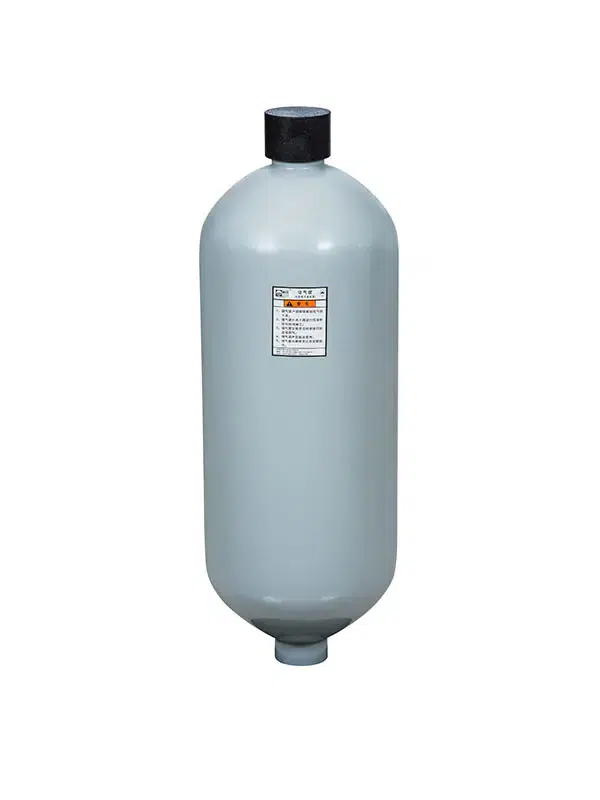

To adjust the accumulator pressure, the pre-charge pressure should be set to a value lower than the pump’s start-up pressure (cut-in pressure). Proper pre-charge pressure in a hydraulic accumulator helps ensure optimal operation. This guide covers the steps for checking the current pre-charge pressure, inflating or deflating the unit, and aligning the accumulator pressure with the pump’s start-up pressure. Selecting a hydraulic accumulator from a trusted manufacturer, such as Ningbo Chaori Hydraulic, ensures reliable performance.
Key Takeaways
- Ensure the accumulator’s pre-charge pressure is set a few PSI below the pump’s start-up pressure (cut-in pressure). For example, if the start-up pressure is 40 PSI, the pre-charge pressure should be set to 37–38 PSI. This prevents frequent pump cycling, thereby extending the equipment’s service life.
- When charging the accumulator, use only dry nitrogen; never use oxygen or compressed air. Mixing oxygen with oil under pressure can cause an explosion. Always adhere to safety protocols during operation: turn off the pump, release system pressure, and use appropriate tools.
- Check the pre-charge pressure at least once a year. Drain the system before performing this check, then set the pre-charge pressure to 2 PSI below the start-up pressure. Incorrect pre-charge pressure settings can lead to frequent pump starts or rapid pressure drops, resulting in increased operating costs.
Prepare Your Hydraulic Accumulator Safely
Turn Off the Pump and Relieve Pressure
Safety is the primary consideration before performing any adjustment work. Ensure the pump is turned off and the hydraulic accumulator is isolated from the system. Open the discharge valve to release any accumulated fluid pressure. Verify that the pressure gauge reads zero before proceeding; residual internal pressure can cause serious injury during the gas charging process.
Ningbo Chaori Hydraulic has been manufacturing and supplying hydraulic accumulators since 1978 and holds ISO9001, ASME, and CE certifications. These certifications demonstrate that the designs of their bladder accumulators, piston accumulators, and diaphragm accumulators meet rigorous quality and safety standards.ASME-certified products undergo third-party witnessed hydrostatic testing and feature a 4:1 burst-to-rated pressure design ratio; CE/PED-certified models require a 2.8:1 burst-to-rated pressure ratio and must pass low-temperature Charpy impact tests. Always follow the manufacturer’s instructions for the specific model you are using.
Gather Tools for Charging
Different types of accumulators may require different charging tools; bladder, piston, and diaphragm accumulators each have specific valve connections. Always use the nitrogen charging tools and safety valve blocks supplied by the original manufacturer to ensure compatibility. A high-quality charging assembly should include a pressure gauge, a hose, and a pressure-regulating valve.
Never use oxygen or compressed air to charge an accumulator. Under pressure, mixing oxygen with hydraulic fluid can trigger an explosion, resulting in serious injury.
A common mistake is substituting a tire inflator for a nitrogen charging kit. Compressed air contains oxygen, which can react with oil mist and cause an explosion. Only dry nitrogen is safe, as it does not undergo chemical reactions. For a pump with a start-up pressure of 40 PSI, the pre-charge pressure should be set between 37 and 38 PSI. During any charging operation, the pre-charge pressure must never exceed the pump’s start-up pressure.
Check and Adjust Pre-Charging an Accumulator

Read Current Pressure with a Gauge
To check the current pre-charge pressure of an accumulator, begin at the gas valve located at its sealed end. This valve is typically a Schrader valve, requiring a charging tool equipped with a pressure gauge; for low-pressure equipment, a standard bicycle pump gauge suffices. For hydraulic accumulators used in volume compensation, the target pre-charge pressure is generally set between one-half and two-thirds of the system’s maximum pressure. Water supply systems require a different approach: the pre-charge pressure should be set slightly below the system’s cut-in pressure (e.g., if the cut-in pressure is 30 psi, the pre-charge pressure should be just under 30 psi).
Many accumulator tanks are factory-charged with gas to approximately 2.8 bar (35 psi), a setting that serves as an initial reference point. Dry, inert nitrogen is used for pre-charging because it does not react with hydraulic fluid. Bladder-type or piston-type accumulators charged with dry nitrogen can safely store energy.
Temperature affects pressure readings because gas pressure varies with absolute temperature. If the pre-charge pressure is set at 20°C, the reading will rise by approximately 10% when the temperature increases to 50°C. For instance, if the target pre-charge pressure is 144 bar at 20°C, the reading at 45°C would be approximately 156 bar (calculated as: 144 × 318 / 293). Consequently, a low reading obtained in winter might actually correspond to the same gas charge set in July; it is essential to apply temperature correction before determining whether a pressure deviation has occurred.
Changes in nitrogen volume due to temperature fluctuations require corresponding adjustments during the charging process.
Add or Release Air to Reach Target
An accumulator can be adjusted to its target state by charging it with nitrogen or releasing gas. A charging unit equipped with a pressure-regulating valve is typically used to control the gas flow. The correct pre-charge pressure depends on the specific system. For variable-speed pump systems equipped with pressure sensors, the target pre-charge pressure should be set to 0.88 to 0.92 times the system’s minimum operating pressure. This value can be determined through digital twin simulation and monitored in real-time using calibrated pressure sensors.
Pre-charge pressure directly affects the accumulator’s effective volume. If the pre-charge pressure is too low, the utilization of the shell volume decreases because the gas is excessively compressed before reaching the effective working pressure. If the pre-charge pressure is too high, the bladder or piston may bottom out, preventing the effective release of fluid. If the pre-charge pressure exceeds the system’s minimum operating pressure, the bladder may suffer immediate damage or failure.
It is recommended to use nitrogen charging tools and safety valve assemblies provided by the original manufacturer (such as Ningbo Chaori Hydraulics). This manufacturer and supplier offers wholesale and custom services for large-scale hydraulic systems, and their charging units are suitable for bladder, piston, and diaphragm accumulators. Please verify the pre-charge gas pressure regularly. Doing so helps reduce the number of pump start-stop cycles and maintains pressure stability within the hydraulic system. Maintaining a stable accumulator pre-charge pressure is crucial for ensuring optimal system performance.
Match Accumulator Pressure to the Pump’s Cut-In
Set Pre-Charge Below Cut-In
The primary principle for adjustment is simple: set the accumulator’s pre-charge pressure lower than the pump’s start-up pressure. A common method is to charge the unit with gas until the pressure gauge reads slightly below the operating pressure level. For instance, if the pump starts at 38 psi, the accumulator pre-charge pressure should be set to 38 psi or slightly lower (e.g., 36 psi). This slight pressure differential ensures the accumulator empties completely before the pump starts. Correct pre-charge pressure enables smooth cycling and extends equipment service life.
Improper pre-charge pressure settings can cause problems. If the pre-charge pressure is too low, the pump will start frequently, leading to increased motor wear. If the pre-charge pressure is too high, system pressure drops rapidly after the pump stops, also resulting in frequent pump cycling. Both scenarios degrade system performance and increase maintenance costs.
Manufacturers recommend checking the tank’s current pre-charge pressure annually. Before testing, ensure the system is completely drained of fluid. The pre-charge pressure should be reset annually to a level 2 psi below the start-up pressure (cut-in pressure). Frequent cycling is often caused by water accumulation (waterlogging) inside the pressure tank. A pressure differential of less than 20 psi between the start-up pressure and the stop pressure (cut-out pressure) can also cause this issue. Minor leaks near the pump can produce similar symptoms.
Incorrect pre-charge pressure settings are often mistaken for pump failure, as the symptoms—frequent cycling and pressure fluctuations—are similar; however, the root cause may lie in the tank’s inability to provide a stable, effective discharge volume.
Industrial hydraulic systems operate at much higher pressures, yet the same principles apply. Never exceed the maximum limits specified by the manufacturer. Dry nitrogen must always be used for pre-charging, as it prevents internal system oxidation.
Pre-charge gas pressure must be measured accurately using a calibrated pressure gauge. Pre-charge pressure directly affects the available fluid volume, and accurate readings ensure the system operates as designed.
Close the Valve and Restart
After completing the correct pre-charging procedure, ensure the gas valve is securely tightened. For bladder-type accumulators, the Schrader valve seals automatically when the charging adapter is removed; however, verify that the valve cap is screwed on tightly. Reconnect any lines or fittings removed during the charging process, then slowly open the isolation valve between the accumulator and the system.
Restart the pump, monitor the hydraulic system pressure, and observe whether the operating cycle is normal. Proper pre-charge settings reduce pump start-up frequency, as the bladder accumulator stores energy during cycle intervals. During operation, listen for abnormal noises and check connections for leaks.
Ningbo Chaori Hydraulic manufactures custom accumulator stations and provides wholesale services for large-scale hydraulic systems. Its products are widely used in the agriculture, wind power, marine, and steel industries. As an ISO9001, ASME, and CE-certified manufacturer, the company delivers reliable equipment. Custom accumulator stations enable centralized energy storage to handle high-intensity operating conditions, while bulk purchasing helps lower costs for large projects. Correct pre-charge settings extend equipment service life and ensure operational stability. Regular inspections guarantee efficient system performance over the long term.
The operational workflow includes: shutdown, depressurization, inspection, adjustment, matching, and restart. The accumulator pre-charge pressure should be set below the system’s cut-in pressure. For example, if the cut-in pressure is 40 PSI, the pre-charge pressure should be set between 37 and 38 PSI. Proper pre-charging prevents frequent pump starts and stops (short-cycling). It is recommended to source accumulators from reliable suppliers like Ningbo Chaori Hydraulic, which offers both custom and wholesale services. Be sure to check the pre-charge pressure at least once a year.
FAQ
How often should someone check the precharge?
Please inspect the system at least once a year. First, drain the system. Then, set the pre-charge pressure to 2 psi below the cut-in pressure. Frequent cycling often indicates an excess of water accumulation in the storage tank.
Why does nitrogen matter for charging?
Dry nitrogen does not react with the oil. Compressed air contains oxygen; an explosion may occur when oxygen mixes with oil mist under high pressure. Be sure to use the nitrogen charging tool provided by the manufacturer.
What happens if the pre-charge is wrong?
Excessively low pre-charge pressure causes the pump to start frequently, while excessively high pre-charge pressure leads to a rapid drop in system pressure after the pump stops. Both issues increase maintenance costs. Ningbo Chaori Hydraulic has been manufacturing accumulators since 1978 and offers both custom and wholesale services.