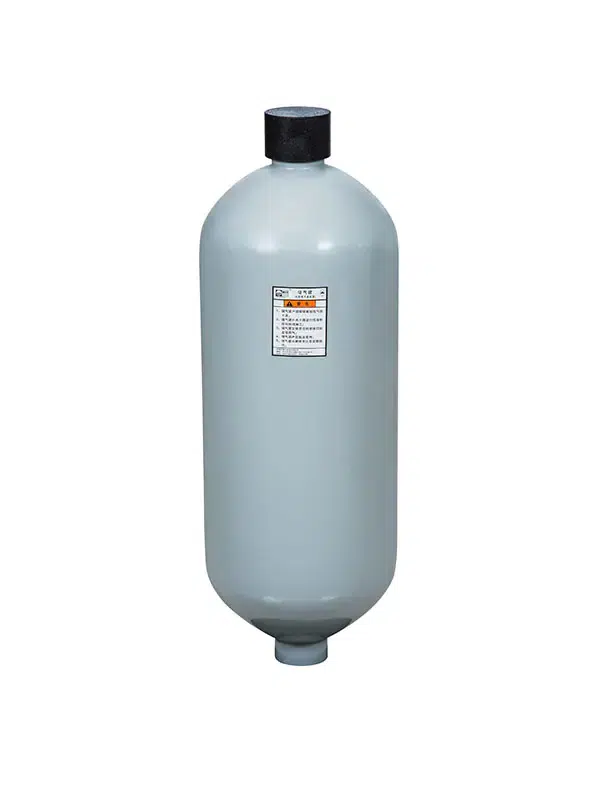
The most suitable choice between a piston accumulator and a bladder accumulator depends on the specific application. Piston-type accumulators are well-suited for systems involving high pressure, high flow rates, or extreme temperatures, whereas bladder-type accumulators are better adapted for systems that require rapid response, operate at lower pressures, or are cost-sensitive. When choosing between the two, one should carefully evaluate factors such as performance, application suitability, regulatory compliance, and cost. This guide compares both types, outlines their respective areas of application, and aims to help users make the best decision.
Key Takeaways
- For applications involving high pressure, high flow rates, or extreme temperature conditions (very high or very low), please select a piston-type accumulator.
- For applications requiring rapid response, low-pressure environments, or shock absorption and damping, please select a bladder-type accumulator.
- Please outline the specific requirements of your system to ensure the selection of an appropriate accumulator.
Bladder and Piston Accumulators: Performance Differences

The primary differences between bladder-type and piston-type accumulators lie in their pressure and flow rate capacities, physical dimensions, and response speeds. These characteristics determine which type of accumulator is suitable for a given system.
Pressure, Flow, and Size
Compared to bladder accumulators, piston-type accumulators can withstand higher pressures and support greater flow rates. Furthermore, as they are generally larger in size, piston-type accumulators are frequently employed in large-scale hydraulic circuits subject to demanding operating conditions. The performance of a bladder-type accumulator is constrained by the material of its bladder, which limits the extent to which the gas can be compressed; a lower compression ratio results in a smaller effective volume for a given overall size.
There are also significant differences in discharge characteristics: bladder-type accumulators can provide high-flow, instantaneous discharge, making them suitable for medium- to high-pressure systems. Piston-type accumulators, by contrast, trade off some instantaneous flow capacity in exchange for a higher pressure margin and greater volume. When planning for pressure and performance, rated parameters should be determined based on peak demand rather than average demand.
Temperature and Response Time
In terms of heat resistance, the piston-type design offers a distinct advantage. Standard piston-type accumulators operate within a temperature range of -15°C to +100°C, which can be extended to -40°C to +150°C through the use of specialized configurations. While the shell of a bladder-type accumulator can withstand temperatures from -60°C to +200°C, the internal flexible bladder itself has an upper temperature limit of only 180°F (approximately 82.2°C). Exceeding 80°C leads to a sharp reduction in the service life of the bladder. These characteristics define the advantages and limitations of bladder-type accumulators in high-temperature process applications.
Response time is another critical factor. Bladder-type accumulators offer a response time of less than 25 milliseconds, as their flexible bladders can deform almost instantaneously. In contrast, piston-type accumulators typically have a response time exceeding 25 milliseconds—particularly under low-pressure conditions—due to the significant mass of the piston itself.
Because the piston carries a lot of mass, it struggles to respond quickly to transients and oscillations. Bladder accumulators respond nearly instantly to the pressure difference between the gas and fluid sides.
This distinction is critical in operating conditions characterized by rapid fluctuations in hydraulic pressure. Bladder-type accumulators are effective at absorbing shocks and smoothing out pressure oscillations, whereas piston-type accumulators excel at maintaining stable control and pre-charge pressures during long-cycle operations—though their inherent inertia can result in a slower response to sharp, transient changes. Proper nitrogen pre-charging and the correct configuration of related parameters are essential for both types of accumulators. If the pre-charge pressure is set too low, the internal components of either a bladder-type or piston-type accumulator may bottom out, thereby shortening their service life.
The table below sums up the flow and speed contrast.
| Attribute | Bladder Accumulators | Piston Accumulators |
|---|---|---|
| Response speed | Faster, low inertia | Slower, higher inertia |
| Discharge flow | High flow discharge rates | Suited to high pressure and large volume |
Piston vs. Bladder Accumulators: Application Fit

Application fit settles most selection debates. The two designs serve different duty cycles, and each one has a clear home.
Where Piston Accumulators Excel
Piston accumulators fit high-cycle industrial systems, wind power, heavy-duty machinery, marine and offshore equipment, and steel and heavy industry. A few operating conditions push a buyer toward the piston type as the better choice:
- Very High Flow Rates: Bladder-type accumulators typically have a flow rate limit of around 220 gpm (gallons per minute); exceeding this limit can damage the bladder. Piston-type accumulators can handle flow rates up to approximately 818 gpm, making them the only viable choice when flow rates exceed 220 gpm.
- Extreme Temperatures: Rubber bladders are generally suitable for a temperature range of approximately –40°F to 250°F, whereas the seals in piston-type accumulators can operate within a range of about –45°F to 320°F.
- High Compression Ratios: Piston-type accumulators offer a distinct advantage over bladder-type units when the compression ratio exceeds 4:1—a primary reason for selecting the piston design. If the compression ratio is below 4:1, either type may be used.
- Failure Modes: Bladder-type accumulators tend to fail abruptly, often resulting in nitrogen gas entering the system. In contrast, the seal configuration of piston-type accumulators leads to a more gradual failure process.
- Large Capacities: Piston-type accumulators are available in sizes ranging from 5 in³ (cubic inches) to over 100 gal (gallons); large-bore models can even withstand operating pressures exceeding 10,000 psi (pounds per square inch).
- Specialized Fluids: Eliminating the bladder reduces potential issues related to material compatibility.
Piston-type accumulators are highly customizable and capable of handling larger volumes, higher pressures, and higher temperatures than many bladder-type accumulators. Furthermore, because they offer a wider tolerance range for initial pre-charge pressure settings, they can, in certain applications, accommodate a higher liquid-to-gas ratio.
In such applications, a wider tolerance for pre-charge pressure is also highly advantageous. Chaori Hydraulic offers piston-type accumulators customized for these operating conditions; drawing on decades of manufacturing experience, the company also supports volume procurement. Furthermore, buyers can choose between repairable and non-repairable piston-type accumulators, based on their specific requirements regarding maintenance needs, downtime, and tolerance for contamination.
Where Bladder Accumulators Excel
Bladder accumulators fit general-purpose units, low-pressure systems, dithering, and shock absorption where fast response matters. The flexible bladder reacts in milliseconds, so the bladder is better wherever pressure swings quickly. A bladder accumulator also suits cost-sensitive projects and compact installations.
A piston accumulator should never be used for shock applications; it is far more sensitive and prone to contamination that can damage its seals, unlike the more suitable alternatives.
Over time, leakage (or bypass) past the seals in a piston-type accumulator can degrade its shock-absorption performance. Hydraulic fluid may leak across the seals, displacing the pressurized nitrogen gas; this not only shortens the piston’s effective stroke but also risks damaging the piston should it strike the bottom of the accumulator housing. For applications with demanding pressure and performance requirements, a bladder-type accumulator is often the superior choice. Chaori Hydraulic offers both bladder and piston-type accumulators; ensuring that your chosen unit is compatible with your hydraulic fluid will help extend its service life.
No single design is optimal for every situation. The right choice depends on your specific requirements regarding pressure, flow rate, temperature, response time, and budget. Bladder and piston-type accumulators each have distinct strengths, and the comparison above highlights the applications for which each is best suited.
No single design is optimal for every situation. The right choice depends on your specific requirements regarding pressure, flow rate, temperature, response time, and budget. Bladder and piston-type accumulators each have distinct strengths. We recommend defining your operational requirements first, then evaluating them against the characteristics of hydraulic accumulators as described in this text.
FAQ
How does a buyer choose between a piston and a bladder accumulator?
The buyer first lists the pressure, flow, temperature, and response needs. A piston accumulator works well for high pressure and large volume. A bladder accumulator works well for fast response and lower pressure.
Can a piston accumulator handle shock absorption?
No. Over time, piston seal bypass makes shock performance worse. Oil leaks past the seals and pushes out the nitrogen charge. A bladder accumulator absorbs shock much better.
What role does precharge play in each design?
Correct precharge protects both bladder and piston accumulators. A charge that runs too low lets the bladder or piston bottom out. That shortens service life in either design. Matching hydraulic fluid to the chosen unit also protects service life.