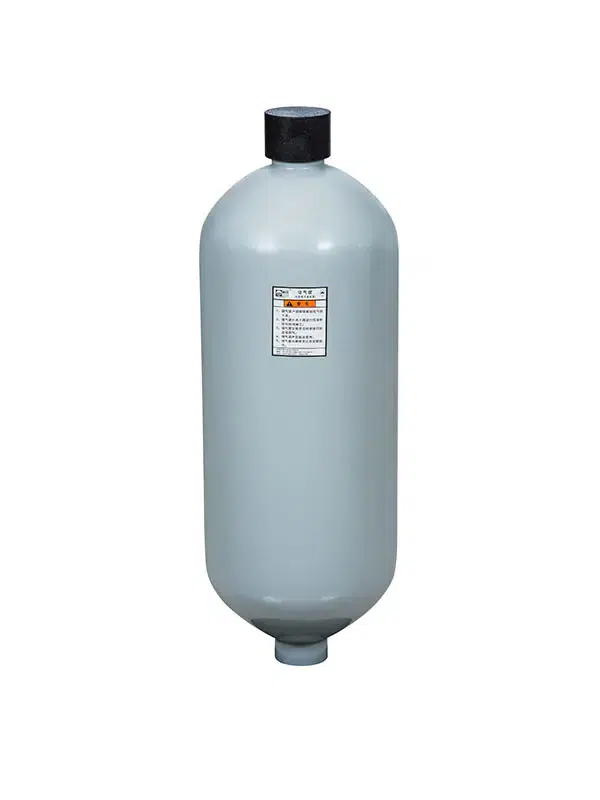

A suspension accumulator absorbs road-induced shocks. Built as a pressure vessel with two separate chambers, it operates on a straightforward principle. When hitting bumps, wheel movement forces hydraulic fluid into one chamber. Since liquid cannot be compressed, nitrogen gas inside gets compressed instead. This compression dissipates abrupt impact forces and delivers effective cushioning. Mastering this working principle helps engineers grasp vehicle stability performance. Chaori, a leading manufacturer of such components, supplies accumulators that deliver reliable balancing performance for heavy-duty machinery.
Key Takeaways
- Suspension accumulators transfer hydraulic fluid pressure to compress nitrogen gas
- The mechanism cushions vibration generated on uneven road surfaces to improve ride comfort
- Nitrogen gas rapidly absorbs impact energy
- Supports safe, stable operation for large vehicles
- Three mainstream designs are available: bladder accumulator, piston accumulator and diaphragm accumulators
- Each variant is engineered to match specific pressure requirements of different vehicles
How Accumulators Work in Suspension Systems

Understanding accumulator operation enables engineers to develop more robust vehicle systems. Suspension accumulators leverage fluid power technology to stabilise heavy machinery travelling across rough terrain.
💡 Core principle: Incompressible fluid transfers kinetic force to compressible gas, forming an elastic buffer against road shocks.
Nitrogen Compression and Fluid Displacement
Road bumps push vehicle wheels upward and drive the internal piston. The piston displaces hydraulic fluid. Fluid flows through sealed pipelines and enters a heavy-duty metal tank. A flexible partition separates hydraulic oil and nitrogen within the vessel. Top manufacturers including Chaori produce robust accumulators capable of enduring sudden, heavy impacts. Incoming fluid quickly compresses nitrogen, dissipating instantaneous shock waves and protecting system components from excessive stress.
The Rebound and Pressure Equilibrium Cycle
Once the bump passes, wheels move back down. Compressed nitrogen expands inside the tank and pushes hydraulic fluid back into the cylinder. Returning fluid restores the original ride height and prevents persistent frame bouncing.
Balanced gas pressure maintains stable system operation:
- Stable nitrogen pressure counteracts hydraulic fluid pressure
- Sufficient pre-charged nitrogen prevents air bubble formation
- Proper pressure balance avoids fluid interruption within the circuit
This continuous, smooth cycle suppresses sharp vibrations.
Hydraulic Accumulator Function as a Gas Spring
A hydraulic accumulator functions as a gas spring. Unlike metal springs that maintain fixed stiffness, nitrogen gas delivers variable elasticity. The gas chamber efficiently stores impact energy.
| System Element | Main Role | Primary Functional Benefit |
|---|---|---|
| Nitrogen Chamber | Soft gas cushion | Gives smooth bump protection |
| Fluid Channel | Liquid force mover | Sends power straight to gas |
| Sealed Barrier | Smart fluid separator | Stores trapped power safely inside |
Custom hydraulic accumulators respond rapidly to changing external loads and offer reliable protection for vehicle frames. Bulk buyers prefer proven mass-produced units for precise fluid power regulation. All custom hydraulic accumulator models enhance equipment stability and operational safety.
Key Types of Hydraulic Accumulators

Engineers select suitable models based on operating pressure, volume and available installation space. Industry leader Chaori manufactures fully certified accumulators compliant with ASME U-stamp requirements, CE directives and ISO 9001 standards.
Bladder Accumulators for Fast Reaction
A bladder accumulator features a rubber bladder that isolates hydraulic oil from nitrogen. The flexible bladder delivers ultra-fast response within 25 to 40 milliseconds, efficiently absorbing pressure spikes from shocks. Manufacturers select appropriate rubber compounds compatible with different working fluids:
- Nitrile (NBR)
- Hydrogenated Nitrile (HNBR)
- Fluorocarbon (FKM)
- Ethylene Propylene Diene Monomer (EPDM)
Chaori NXQ series bladder accumulators suppress vibration efficiently and maintain stability for rugged machinery.
Piston Accumulators for High Pressure
A piston accumulator uses heavy-duty sealing elements to separate oil and gas inside a seamless steel tube. This robust design supports high-pressure applications up to 1,200 bar.
| Feature Metric | High-Pressure Performance |
|---|---|
| Maximum Flow Rate | Up to 818 gpm |
| Piston Speed Limit | 120 inches per second |
| Primary System Use | Large fluid energy storage |
This strong hydraulic accumulator holds bulk liquid. It works well under heavy loads.
Diaphragm Accumulators for Compact Systems
Diaphragm accumulators adopt a welded diaphragm structure, lightweight and suited for confined spaces. A flexible diaphragm is welded inside a spherical shell.
💡 System Note: The standard compression ratio limit for diaphragms ranges from 4:1 to a maximum of 6:1, offering 70% usable fluid volume for low-to-medium energy demand.
Compact diaphragm accumulators fit light-duty equipment and deliver shock absorption within the limited installation space of suspension systems.
💡 Core conclusion: Compressible nitrogen absorbs instantaneous impact loads.
Suspension accumulators regulate fluid power to safeguard heavy machinery. Proper selection greatly improves vehicle stability. Designers choose bladder, piston or diaphragm configurations according to pressure rating, installation space and volume demands. Sourcing hydraulic accumulators from Chaori guarantees consistent quality.
FAQ
What is the main function of a suspension accumulator?
💡 Quick Fact: Hydraulic fluid moves into gas chambers during sudden road impacts.
It holds pressurized fluid to soak up sharp hits. This action gives smooth bump damping. It keeps car frames steady on bad roads.
Which type of accumulator responds fastest to road vibrations?
A bladder accumulator reacts in under 25 milliseconds. Its flexy rubber bag handles fast pressure jumps easily.
Why do manufacturers fill these vessels with nitrogen gas?
Nitrogen gas shrinks safely. It does not mix with hydraulic oil. Gas springiness keeps systems steady. It shields key machine parts.