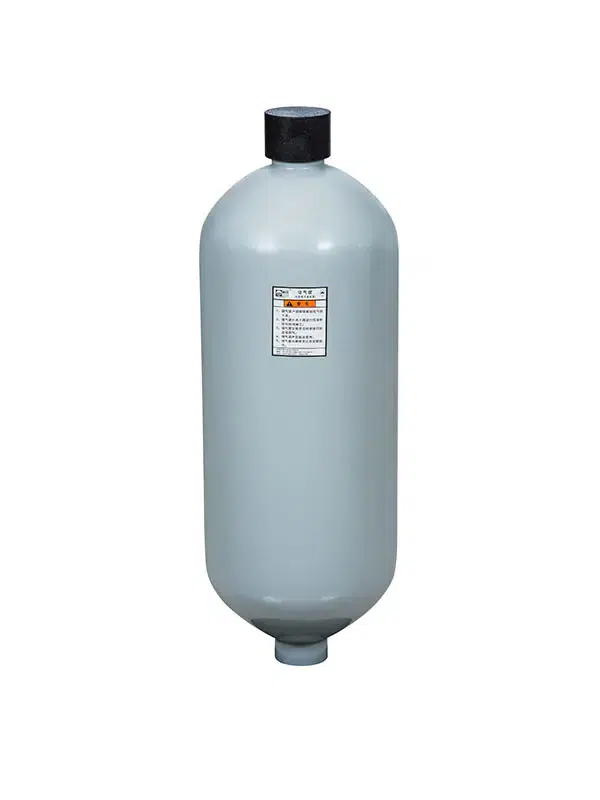
Calculating the specifications for a hydraulic accumulator depends on the volume of fluid and the amount of energy the system requires to store. The most commonly used calculation method is based on the required usable fluid volume and the system’s operating pressure range.
First, it is necessary to determine the system’s minimum and maximum pressure values, as well as the required fluid discharge volume. Subsequently, gas law relationships are utilized to estimate the appropriate hyd accumulator specifications. Simply put, the greater the pressure differential, the larger the volume of usable fluid the accumulator can deliver.
A typical design approach involves setting the accumulator’s pre-charge pressure to approximately 60% to 90% of the system’s minimum pressure to ensure efficient system operation. Furthermore, when selecting a model, engineers take into account various factors such as cycle frequency, ambient temperature, and the specific type of application.
To ensure the accuracy of the calculations, it is highly recommended to strictly adhere to the selection guidelines provided by the manufacturer. Specialized companies—such as “Chaori”—typically offer technical support services for product selection, assisting clients in precisely matching the accumulator’s capacity to the system’s specific requirements, thereby ensuring optimal system performance and reliability.
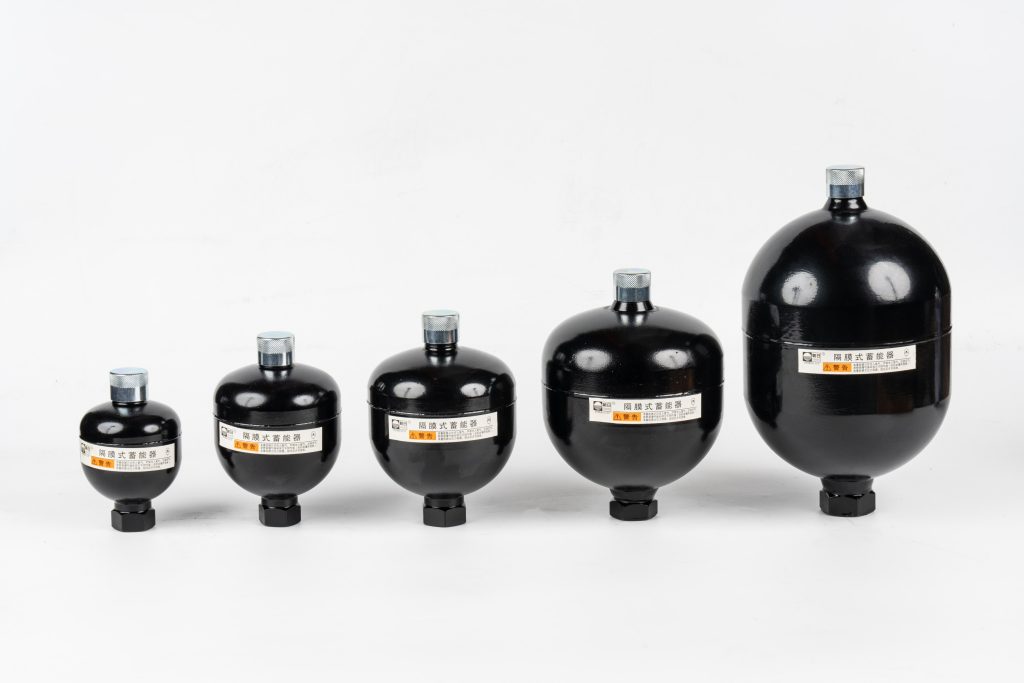
Key Takeaways
- Picking the right hydraulic accumulator helps your system work better and stay safe. Think about bladder, piston, or diaphragm types for what you need.
- Use the right formula to find the total accumulator size. This helps your system run well and do its job right.
- Get important facts like the lowest and highest pressures, fluid amount, and temperature range before you pick a size. Good information gives you better results.
- Set the precharge pressure to 80-90% of the lowest working pressure. This stops damage and keeps your system steady.
- Check and take care of your accumulator often to stop common problems. Watch the precharge pressure and make sure the size is right.
Hydraulic accumulator sizing formula
Key equation explained
To get good results, you need to use the right hydraulic accumulator sizing formula. The main formula comes from Boyle’s Law. This law explains how gas pressure and volume change inside the accumulator. You can use this formula for all Chaori Accumulators. This includes bladder, piston, and diaphragm models.
Here is the standard hydraulic accumulator sizing formula:
- P1 × V1ⁿ = P2 × V2ⁿ
This equation shows how pressure and volume are linked at different times in the accumulator cycle. There is also a simpler formula to find the total accumulator volume:
- total accumulator volume (V₀) = (P₂ × V₁) / (P₂ – P₁)
This formula helps you figure out how much fluid your system can hold and release. You will use this formula for most hydraulic accumulator sizing jobs.
Variable definitions
You need to know what each variable means before you start. Here are the main variables you will use:
| Variable | Description |
|---|---|
| P1 | Minimum system pressure (bar or psi) |
| P2 | Maximum system pressure (bar or psi) |
| V1 | Usable fluid volume (liters or gallons) |
| V0 | Total accumulator volume (liters or gallons) |
| n | Gas law exponent (use 1.0 for isothermal, 1.4 for adiabatic) |
- P1 is the lowest pressure your system will have.
- P2 is the highest pressure when the system is working.
- V1 is the amount of fluid you want to use from the accumulator.
- V0 is the total accumulator volume you need to pick.
- n depends on how fast the accumulator fills or empties. Use 1.0 for slow changes and 1.4 for fast changes.
You can use these variables for all Chaori Accumulator types. Each type—bladder, piston, or diaphragm—follows the same basic rules for hydraulic accumulator sizing.
Required data
You need to collect some important information before you start sizing:
- Minimum and maximum system pressures (P1 and P2)
- The amount of fluid you need to store or release (V1)
- The type of job (energy storage, pulsation dampening, emergency power, or leakage compensation)
- The temperature range where the accumulator will work
Tip: Cold temperatures can make the total accumulator volume 10-15% less. Hot temperatures can make the pressure inside the accumulator go up. Always check your system’s temperature range before you finish your hydraulic accumulator sizing.
You should also know the flow rate and how long you need the accumulator to give fluid. This helps you choose the right total accumulator volume and keeps your system safe.
You can use a Chaori Accumulator for many jobs. The bladder type is good for fast response and stopping vibration. The piston type is best for heavy-duty and high-pressure systems. The diaphragm type fits in small spaces and mobile machines. The hydraulic accumulator sizing formula works for all these types.
When you gather the right data and use the correct sizing formula, you can pick the best accumulator for your system. This keeps your machines safe and working well.
Sizing hydraulic accumulators step-by-step
Gather system parameters
Start by getting all the important details about your hydraulic system. This helps you not make mistakes later. Write these values down before you do any sizing math:
- Minimum system pressure (P1): Find the lowest pressure your system will have.
- Maximum system pressure (P2): Write down the highest pressure your system will reach.
- Required fluid volume (V1): Decide how much fluid you want the accumulator to give or hold.
- Operating temperature range: Note the coldest and hottest temperatures your system will face.
- Application type: Figure out if you need energy storage, pulsation dampening, emergency power, or leakage compensation.
Tip: You should also check the flow rate and how long you need the accumulator to give fluid. This makes your sizing more exact.
Apply the formula
Now you can use the main formula for sizing hydraulic accumulators. The formula shows how pressure and volume change at different times. For most jobs, you will use:
P1 × V1ⁿ = P2 × V2ⁿOr, for a quick guess:
Total accumulator volume (V₀) = (P₂ × V₁) / (P₂ - P₁)Follow these steps:
- Put your system values into the formula.
- Use the right gas law exponent (n). Use 1.0 for slow changes (isothermal) and 1.4 for fast changes (adiabatic).
- Find the total accumulator volume you need.
If your system is tricky, use a hydraulic accumulator sizing calculator. This tool helps you:
- Make sure you size things right, which is important for how your system works and lasts.
- Think about temperature and safety.
- Stop problems between hydraulic and electric parts.
- See how sizing affects your system.
- Give you a base for real-life jobs.
- Add in moving parts and how they work with other pieces.
- Make your answer better.
A hydraulic accumulator sizing calculator saves you time and helps you not make mistakes, especially in advanced systems.
Adjust for precharge and pressure range
You must set the precharge pressure right for safe and good work. The precharge pressure should be lower than your system’s working pressure. For example, if your system works at 3,000 psi, set the precharge around 1,300 psi. This lets the hydraulic pump put fluid into the accumulator and lets the accumulator give fluid when needed.
Set the precharge pressure to 80-90% of your system’s lowest working pressure. This stops damage to the accumulator and keeps your system working well. It also stops hydraulic shock and keeps the right amount of fluid in the accumulator.
“Wrong precharge can cause big problems in your hydraulic system. If precharge is too low, the accumulator’s gas volume is not enough. This makes pressure drop a lot when you use the system. Pumps have to work harder and the system can become unstable. If precharge is higher than system pressure, oil cannot go into the accumulator at all. This means the accumulator cannot help and pressure can jump up and hurt parts. The worst thing is, the bladder can get damaged if precharge is not set right.”
Always check your precharge setting when you do sizing math. This step keeps your equipment safe and makes your accumulator last longer.
Match accumulator type to your application
Picking the right accumulator type is just as important as sizing. Each type has its own best jobs. Use the table below to help you choose:
| Accumulator Type | Volume Efficiency | Sizing Multiplier | Typical Applications |
|---|---|---|---|
| Bladder | 85-95% | 1.1x | Clean applications |
| Piston | 90-98% | 1.05x | High pressure |
| Diaphragm | 80-90% | 1.15x | Food/pharma |
- Bladder accumulators are best for clean air, fast response, and small spaces. They also help stop pressure surges.
- Piston accumulators are great for high-pressure jobs, careful pressure control, and heavy work.
- Diaphragm accumulators are good for jobs where you do not want dirt, for stopping pulses, and for medium pressure.
You should always pick the accumulator type that fits your job. For example, if you need to stop pulses, a diaphragm or bladder accumulator is a good choice. If you need energy storage in a high-pressure system, pick a piston accumulator.
A hydraulic accumulator sizing calculator can help you compare types and pick the best one for your needs.
Note: Sizing hydraulic accumulators the right way makes things safer, saves energy, and helps your equipment last longer. Always use a hydraulic accumulator sizing calculator for hard systems or when you need to think about temperature, safety, or how parts work together.
Hydraulic accumulator sizing example
Sample calculation
Let’s look at a real example with a Chaori Accumulator. Imagine you need an accumulator for a machine. The machine works between 2,000 psi and 3,000 psi. You want the accumulator to give 5 liters of fluid. This happens when pressure drops from 3,000 psi to 2,000 psi. The system is at room temperature. You pick a bladder type because it reacts fast.
Here is how you find the total accumulator volume:
- Write down your numbers:
- Minimum pressure (P1): 2,000 psi
- Maximum pressure (P2): 3,000 psi
- Usable fluid volume (V1): 5 liters
- Gas law exponent (n): 1.4 for fast changes
- Use the quick formula:
Total accumulator volume (V₀) = (P₂ × V₁) / (P₂ - P₁) - Put your numbers in the formula:
V₀ = (3,000 × 5) / (3,000 - 2,000) V₀ = 15,000 / 1,000 V₀ = 15 liters - Change for bladder type efficiency (1.1x multiplier):
15 × 1.1 = 16.5 liters
You need a Chaori bladder accumulator with at least 16.5 liters total volume.
Result interpretation
You should always check if your accumulator is right for your system. Follow these steps:
- Know what your accumulator does and how often it works.
- Make sure your pressures match your job.
- Think about the temperature where your system works. This changes precharge pressure.
- Set the precharge pressure to about 80-90% of your lowest pressure.
- Check that the size you found fits your system and precharge.
You can also test your system:
- Watch for pressure drops when the machine is busy. If pressure drops too much, get a bigger accumulator.
- See how long it takes for the system to get back to normal. If it is slow, you may need a bigger accumulator or a stronger pump.
- Notice if the machine starts and stops a lot. If it does, make the accumulator bigger or change the pressure settings.
- Check if your machine runs smooth and stays steady.
If you do these steps, you will know if your hydraulic accumulator sizing is right. You can trust your Chaori Accumulator to keep your system safe and working well.
Best practices and common mistakes
Typical errors
You can stop many problems if you know the usual mistakes in hydraulic accumulator sizing. Here are some things you should look out for:
- Not following the manufacturer’s pre-charge pressure rules
- Picking the wrong size or bladder material for your job
- Using an accumulator that does not match your system’s pressure
- Forgetting about things like temperature or how you set up the accumulator
- Buying cheap accumulators from suppliers who are not certified
These mistakes can make your system break or become unsafe. The table below shows some dangers that happen when you size the accumulator wrong:
Sizing tips
You can make your system safer and more exact by following these tips:
- Learn about your system before you start sizing the accumulator.
- Find all the ways the accumulator helps your system.
- Get as much information as you can about your job.
- Add a safety factor of 10-25% to your math, especially for important systems.
- Think about gas leaks, changes in temperature, and how the accumulator can wear out.
Taking care of your hydraulic accumulator is also very important:
- Check the accumulator every six months for damage or wear.
- Keep the area around the accumulator clean so dirt does not get in.
- Check and fill the hydraulic fluid when needed, using the right kind.
- Test the system pressure often to make sure it is correct.
- Change broken parts right away.
- If you store the accumulator for a long time, clean and drain it first, then keep it dry.
When to consult experts
If your system is hard to understand or keeps having problems, ask a hydraulic expert for help. They have the skills and tools to fix tough problems. Getting help from a pro can save you money and keep your system safe.
Chaori engineers can answer hard sizing questions or help you make special accumulators. Their help makes sure your system works well and stays safe.
FAQ
How often should you check the precharge pressure?
Check the precharge pressure every three months. If your system is very important, check it once a month. This helps your accumulator stay safe and work well. It also helps you stop problems before they start.
What type of Chaori Accumulator works best for fast response?
Pick a Chaori bladder accumulator if you need fast response. It reacts fast and is good for systems with sudden pressure changes.
Can you use the same sizing formula for all accumulator types?
Yes, you can use the same sizing formula for bladder, piston, and diaphragm accumulators. The main formula works for all these types. Just change the answer a little for each type’s efficiency.
What happens if you oversize your accumulator?
If your accumulator is too big, your system might react slowly. You could also spend more money than you need to. Always pick the right size for your system.