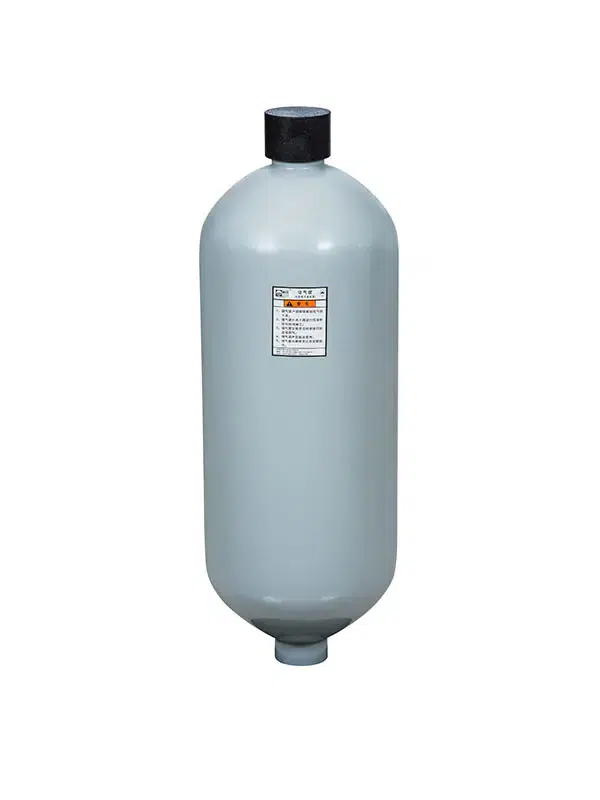
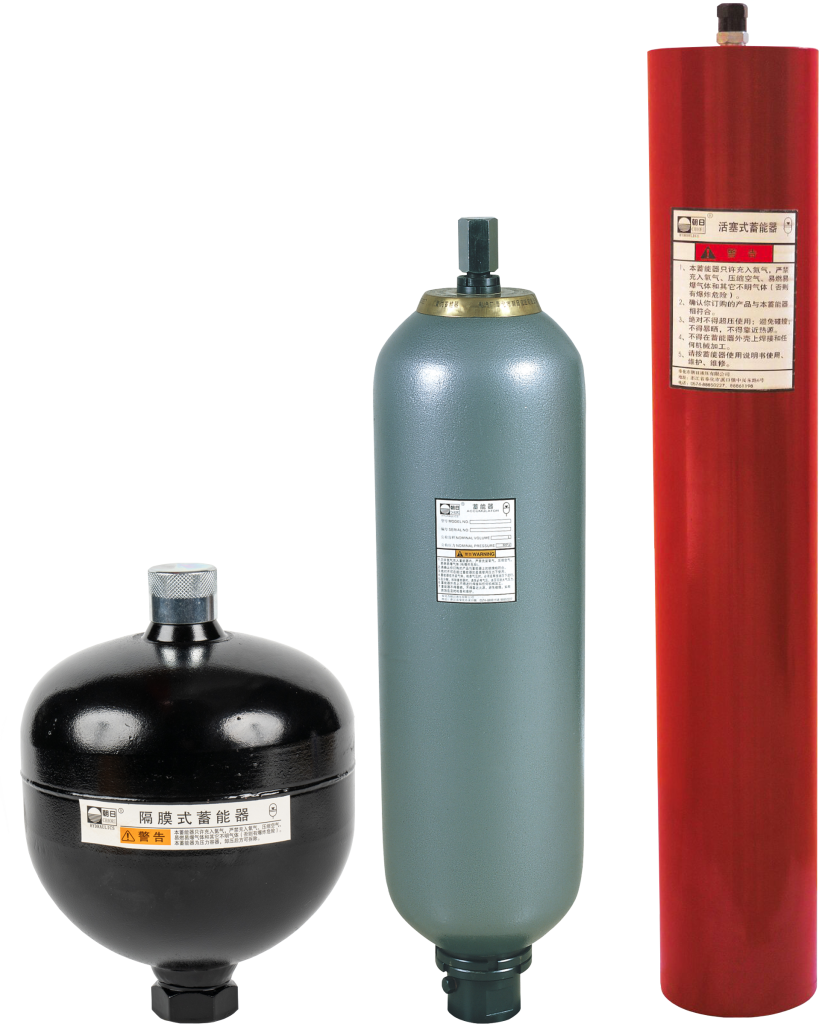
Hydraulic accumulators are mainly classified into three types: bladder accumulators, piston accumulators, and diaphragm accumulators. Each type is designed for specific applications based on pressure, flow rate, and response requirements.
Blade accumulators use a flexible rubber bladder to separate nitrogen from hydraulic oil. They respond rapidly to pressure changes, making them ideal for absorbing shocks and quickly releasing energy.
Piston accumulators use a moving piston to separate the gas and liquid. They are suitable for high-pressure systems and can handle larger flow rates, thus commonly used in heavy industrial applications.
Diaphragm accumulators use a flexible diaphragm instead of a bladder or piston. They are compact, cost-effective, and typically used in small systems with limited space.
Choosing the appropriate accumulator type depends on system requirements, but all three types play a crucial role in improving the efficiency, stability, and performance of hydraulic systems.
Key Takeaways
- Bladder accumulators work quickly and are dependable. They are good for jobs that need fast action. They can handle different levels of pressure.
- Piston accumulators are best for high-pressure uses. They work well in big machines. They can hold a lot of energy.
- Diaphragm accumulators are small and not heavy. They fit easily in small places. They are good for low or medium pressure jobs.
- Picking the right accumulator depends on what your system needs. Think about things like pressure, size, and how much energy it can hold.
- All accumulators need regular care. Look for leaks and check gas pressure. This helps keep your system safe.
Main Types of Accumulators
Bladder Accumulators
A bladder accumulator contains a retractable bladder with a robust outer shell. The bladder separates hydraulic oil from nitrogen gas. When hydraulic oil flows in, the bladder compresses the gas to store energy. When energy is needed, the gas pushes out the hydraulic oil.
Blade accumulators have the following characteristics:
- Rapid response to pressure changes.
- Resistant to fouling.
- Consistent performance under the same conditions.
- Easy to inflate using appropriate tools.
- Ideal for preventing sudden pressure surges and for operations requiring rapid response.
Blade accumulators are widely used in hydraulic presses, construction machinery, and energy storage devices. They are also used in safety systems to protect machines from sudden pressure shocks. Ningbo Chaori Hydraulics’ bladder accumulators are fast-acting and highly flexible, making them ideal for machines requiring rapid operation.
Tip: Bladder or diaphragm accumulators both use a gas like nitrogen that can be squeezed to keep the hydraulic fluid apart and store energy.
Piston Accumulators
Piston accumulators have a solid piston inside a tube. The piston keeps the gas and hydraulic fluid apart. When you pump fluid in, the piston moves and squeezes the gas. This saves energy and helps the system handle high pressure.
This is how a piston accumulator works:
- Fluid goes into the tube.
- The fluid pushes the piston and squeezes the gas.
- The squeezed gas holds energy until it is needed.
Piston accumulators can handle very high pressure and lots of fluid. You see them in big jobs like airplanes, defense, and factories. These accumulators can go up to 20,000 psi and move up to 214 liters per second.
Ningbo Chaori Hydraulic’s piston accumulators are made for high-pressure jobs and big projects. You can count on them to be steady and work well in tough places.
Diaphragm Accumulators
Diaphragm accumulators use a flexible diaphragm to separate gas and liquid. The diaphragm is typically made of rubber-like materials. When liquid flows in, it pushes the diaphragm and compresses the gas. When energy is needed, the gas expands and expels the liquid.
Here are some features of diaphragm accumulators:
- The diaphragm is lightweight and flexible.
- Compact size, saving space and reducing weight.
- The materials used are carefully selected to withstand liquids and high temperatures.
Diaphragm accumulators are widely used in factories, robotics, construction machinery, oil and gas, green energy, and automotive industries. They help save energy, mitigate shocks, maintain pressure stability, and reduce noise. Ningbo Chaorui Hydraulics’ diaphragm accumulators are a smart choice when you need to save space and cost.
Note: All three types of accumulators use gases such as nitrogen to separate hydraulic oil and store energy for the system through compression.

Advantages and Limitations of Each Type
Bladder Accumulators: Pros & Cons
Bladder accumulators are fast and dependable. They do not cost too much. These use a flexible bladder to keep gas and fluid apart. This design lets them react quickly to pressure changes. Fast response is good for machines that need quick moves. They work well with many different pressures. The shell is strong and tough.
But bladder accumulators need to be checked often. Gas can leak out as time goes by. You must check the pre-charge pressure a lot. If you set the pre-charge too high, the bladder can break. The compression ratio is not very high. You might need a bigger accumulator for more fluid. Bladders wear out and must be replaced after lots of use.
Tip: It is safer to undercharge than to overcharge the pre-charge pressure.
Piston Accumulators: Pros & Cons
Piston accumulators can handle very high pressure. They hold a lot of fluid. You see them in big machines and airplanes. They give you good control. They come in many sizes, so you have more choices.
Some key benefits include:
- Handles high pressure well
- Many sizes for different jobs
- Good at keeping out dirt
But piston accumulators are more complex. They can cost more to fix and keep working. They are slower to respond than bladder types. The seals can slow things down a little. You must check the seals to stop leaks.
Diaphragm Accumulators: Pros & Cons
Diaphragm accumulators are small and light. They fit in tight spaces. This makes them good for moving machines and small systems. They do not get dirty easily. They work well even in tough places.
Here is a table showing some common drawbacks:
| Drawback | Description |
|---|---|
| Limited High-Pressure Capacity | Best for lower pressure applications |
| Lower Energy Storage Capacity | Stores less energy than piston types |
| Susceptibility to Wear and Aging | Diaphragm material can wear out or age |
| Temperature Sensitivity | Performance can change with temperature |
Pick diaphragm accumulators if you need to save space and weight. They work best with low or medium pressure. The diaphragm can wear out, especially if it gets hot or cold a lot.
Note: All three types of accumulators need regular checks to keep your system safe and working well.
Choosing the Right Accumulator Type
Application Suitability
You need to pick the right accumulator for your system. First, think about what your machine does each day. Some machines need to move fast. Others need to store lots of energy. Here are the main things to check:
- Energy storage capacity—make sure it matches your flow and pressure.
- Type of accumulator—think about the good and bad points of each type.
- Operating pressure—choose one that fits your system’s pressure.
- Fluid compatibility—see if the accumulator works with your fluid.
- Size and weight—pick one that fits your space and weight needs.
- Installation and maintenance—check if you have room and tools for care.
- Environmental factors—think about heat, wetness, and shaking.
You should also think about how the accumulator handles shocks. Check how fast it needs to react and how often it will work. For example, bladder accumulators are good for systems that move quickly. Diaphragm types are best for small spaces or moving machines.
High vs. Low Pressure Needs
You must know your system’s pressure before you choose. Piston accumulators are best for high pressure, above 5,000 PSI. Bladder accumulators work for medium pressure, up to 5,000 PSI. Diaphragm accumulators are better for low pressure, under 3,000 PSI. If your system cycles a lot or needs to move fast, hydro-pneumatic accumulators with bladders are a smart pick. Always check the pressure rating to keep your system safe.
Tip: Do not think zero pressure means it is safe. Always follow safety steps when working with accumulators.
Compliance and Quality Considerations
You want your accumulator to last and keep your system safe. Look for products that meet rules like ISO9001, ASME, and CE. These show the company tests their accumulators and follows strict rules. Good companies also check for leaks, test for high pressure, and use safe materials. Ningbo Chaori Hydraulic follows these rules and can make custom solutions for you. When you pick hydro-pneumatic accumulators that meet these standards, your system will run well and stay safe.
FAQ
What does an accumulator do in a hydraulic system?
An accumulator stores energy for your hydraulic system. It helps keep the pressure steady. This makes machines run smoothly and safely.
How do I know which accumulator type to choose?
Think about your system’s pressure and space. Also, think about how fast you need it to work. Bladder types react fast. Piston types are good for high pressure. Diaphragm types are best when you need to save space.
How often should I check my accumulator?
Check your accumulator every few months. Look for leaks and check the gas pressure. Make sure all the parts are working right.
Can I refill the gas in my accumulator?
You can refill the gas in most bladder and piston accumulators. You need special tools and must follow safety steps. Always use nitrogen gas, not air.
What safety tips should I follow with accumulators?
Always let out the pressure before you start working. Wear your safety gear. Follow the maker’s instructions. Never use oxygen or air to fill the gas side.