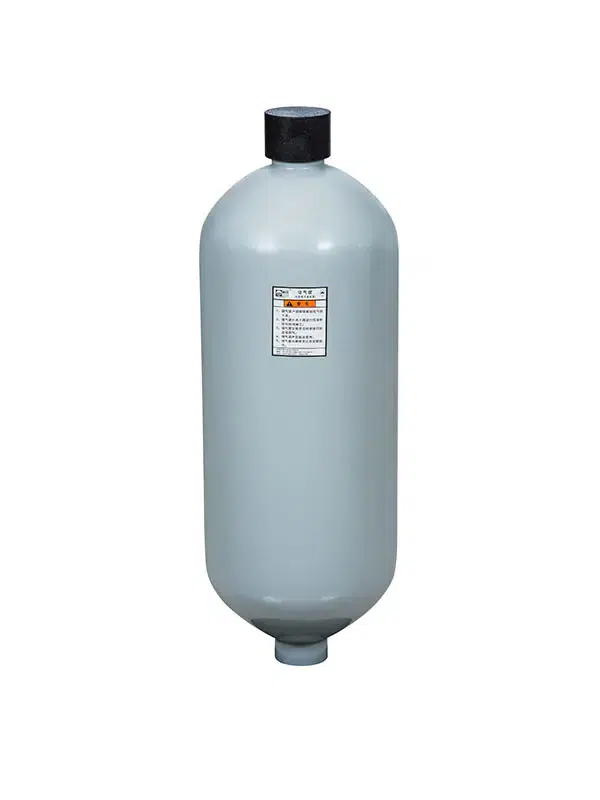
Nitrogen accumulators are indispensable components within hydraulic systems, designed to efficiently store and release energy, thereby enhancing the system’s overall performance and reliability. By harnessing compressed nitrogen, these devices help maintain pressure stability, absorb shock and vibration, and satisfy the system’s peak power demands without overloading the hydraulic pump. In numerous industrial applications, hydraulic systems frequently encounter sudden pressure fluctuations or intermittent energy requirements. Nitrogen accumulators effectively address these challenges by acting as “energy buffers”—storing surplus energy during periods of low demand and releasing it precisely when needed. This mechanism not only significantly boosts the system’s operational efficiency but also effectively minimizes wear and tear on critical components.
Chaori is dedicated to providing high-quality nitrogen hydraulic accumulators. Meticulously designed and manufactured, our products feature exceptional durability, safety, and performance, serving a wide spectrum of industries across various sectors.
| Function | Description |
|---|---|
| Contamination Prevention | Inert nitrogen does not react with hydraulic oil, keeping the system clean and extending service life. |
| Pressure Maintenance | Compressible nitrogen helps maintain stable system pressure. |
| Safety | Nitrogen is non-flammable, making it safer even in high-temperature environments. |
| Stability and Efficiency | Stable pressure improves machine performance and smooth operation. |
| Cavitation Prevention | Stable pressure reduces the risk of cavitation damage. |
Key Functions of Nitrogen Accumulators
How It Works
A nitrogen accumulator stores energy by compressing nitrogen gas within a sealed chamber. The nitrogen inside the chamber is separated from the hydraulic fluid by means of a bladder, piston, or diaphragm.
When hydraulic fluid flows into the accumulator, it compresses the internal nitrogen gas. This compressed nitrogen stores energy, operating on a principle similar to that of a spring. When system pressure drops or additional power is required, the nitrogen expands, pushing the hydraulic fluid back into the hydraulic system.
This process helps maintain stable system pressure and absorbs sudden pressure fluctuations. For instance, in the field of construction machinery, accumulators effectively mitigate shock loads, thereby enhancing the smoothness of equipment operation. Chaori hydraulic accumulators are widely utilized in such applications to ensure the consistent stability and reliability of equipment performance.
Tip: Nitrogen accumulators are capable of absorbing sudden pressure spikes, thereby effectively protecting equipment from damage.
Main Components
| Component | Function |
|---|---|
| Shell | Holds all parts together and withstands high pressure |
| Separator | Keeps nitrogen and hydraulic oil separate |
| Gas Chamber | Stores compressed nitrogen for energy |
Energy Storage and Release
A nitrogen accumulator stores energy when system demand is low and releases it when additional power is required. As fluid flows into the accumulator, the nitrogen is compressed, thereby storing energy; when demand increases, the accumulator releases this stored energy by pushing the fluid back into the system.
This mechanism ensures stable system operation and effectively mitigates pressure fluctuations. Furthermore, it absorbs shocks and pressure spikes, thereby enhancing equipment safety and reliability. Chaori accumulators are designed to maximize energy utilization efficiency and system stability.
Types of Hydraulic Accumulators
Bladder Type
Bladder accumulators utilize a rubber bladder to separate nitrogen gas from hydraulic fluid. As hydraulic fluid flows in, it compresses the bladder and the nitrogen gas contained within it.
Key Features:
- Rapid response to pressure fluctuations
- Lightweight and easy to install
- Simple maintenance
- Flexible mounting orientation
These accumulators are widely employed in mobile machinery and manufacturing equipment, primarily serving to provide energy storage, shock absorption, and emergency power support.
Piston Type
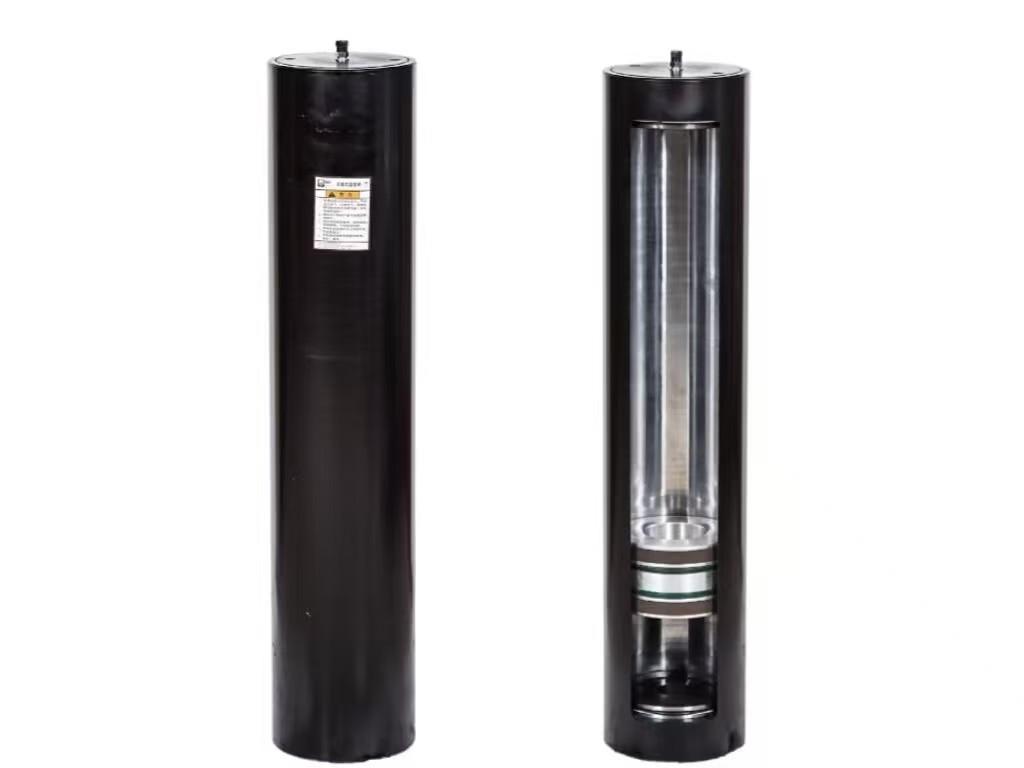
Piston accumulators utilize a movable piston to separate the gas from the fluid. As pressure changes, the piston slides within the cylinder.
- Handles very high pressure (over 10,000 PSI)
- Can be made in different sizes
- Strong and lasts long, even in hard jobs
Piston accumulators are used in big factories, presses, and offshore machines. They are good when you need lots of power and trust.
Diaphragm Type
Diaphragm accumulators use a soft rubber diaphragm to keep gas and fluid apart. The design is small and simple. You can use them when you do not have much space.
| Advantage | Description |
|---|---|
| Compact Design | Fits in small places |
| Economical | Costs less, good for small jobs |
| Reliability | Few parts move, so less fixing needed |
| Quick Response | Reacts fast to pressure changes |
Diaphragm accumulators are used in cars and small machines. They work well in brakes and oil systems.
Chaori’s diaphragm accumulators are a good and cheap choice when you need to save space.
Note: All Chaori accumulators follow strict safety rules. Check them often to keep your system safe and working well.
Why Use Nitrogen Gas in Accumulators
Inert Properties
Due to its chemical inertness, nitrogen is widely utilized in hydraulic accumulators; this means it does not chemically react with the hydraulic fluid or internal components. This helps prevent oxidation and fluid degradation—issues that are often difficult to avoid in the presence of reactive gases such as oxygen.
Another significant advantage of nitrogen lies in its completely dry nature. Compressed air typically contains moisture, which can trigger corrosion and contamination, as well as lead to diminished lubrication performance. Over time, this can cause damage to seals, valves, and other critical components. By employing nitrogen, these risks are substantially mitigated, thereby helping to extend the service life of the entire hydraulic system.
Furthermore, nitrogen maintains its stability across a wide range of temperatures and pressures, making it particularly well-suited for demanding industrial environments where reliability is of paramount importance.
Better Than Compressed Air
One of the most practical reasons for choosing nitrogen over compressed air lies in its stability. Air contains both oxygen and water vapor—two elements that, over time, can adversely affect system performance. The moisture present in the air may condense within the system, while the oxygen accelerates oxidation reactions and exacerbates wear.
Nitrogen effectively eliminates these risks. It ensures cleaner system operation, significantly mitigates internal corrosion, and guarantees that system performance remains stable even after prolonged periods of operation.
For this very reason, the majority of professional manufacturers of hydraulic systems and equipment—Chaori included—have established the use of nitrogen to charge accumulators as their standard practice, rather than using air.
Pressure Stability
Nitrogen offers stable and predictable pressure characteristics, which are crucial for maintaining the smooth operation of hydraulic systems. Thanks to its unique physical properties, nitrogen consistently exhibits a uniform response throughout repeated compression cycles, thereby ensuring consistent and stable performance.
This stability helps minimize pressure fluctuations, enhance control precision, and maintain a steady flow of fluid. In applications such as manufacturing equipment or automated systems, stable pressure directly contributes to improved product quality and ensures more reliable machine operation.
Safety Advantages
Safety is another key reason for choosing nitrogen. Unlike gases containing oxygen, nitrogen is non-flammable and does not support combustion. This significantly reduces the risk of fires and explosions, particularly in high-temperature or hazardous environments.
Nitrogen also enhances operational reliability. Compared to compressed air, nitrogen is less prone to leakage, helping to maintain the correct pre-charge pressure over extended periods. This not only reduces maintenance requirements but also minimizes instances of unexpected downtime.
Furthermore, because nitrogen does not chemically react with internal components, it helps protect seals and parts from premature wear, thereby further enhancing the system’s safety and durability.
Benefits and Applications of Nitrogen Accumulators
System Efficiency
Nitrogen accumulators contribute to enhancing the overall efficiency of hydraulic systems by reducing the load on the hydraulic pump. Rather than requiring continuous operation, the system stores surplus energy during periods of low demand and releases it when needed. This mechanism not only improves energy utilization efficiency but also effectively lowers operating costs over time.
Furthermore, accumulators help dampen pressure fluctuations, thereby reducing the stress placed on system components and ensuring smoother operation. In specific scenarios, accumulators can even provide momentary backup power during brief power interruptions, thereby preventing sudden system shutdowns. Overall, this contributes to improved system performance and reduced equipment wear.
Safety and Reliability
Nitrogen accumulators make your system safe and reliable. Nitrogen does not react with other things, so it stops rust and damage inside. It also does not carry water vapor, so there is less risk of rust from water. Nitrogen molecules are bigger than air molecules, so they do not leak out as much. This keeps your system closed and working well.
| Advantage | Explanation |
|---|---|
| Inert atmosphere | Nitrogen does not react, so it stops rust and damage. |
| Moisture control | Nitrogen has no water vapor, so it lowers rust and condensation. |
| Reduced leakage | Nitrogen molecules are bigger, so they do not escape easily. |
Industry Uses
Nitrogen accumulators are widely utilized across various industries that demand exceptionally high levels of pressure stability and operational reliability. In the field of construction machinery, they serve to absorb shocks, ensuring that equipment continues to operate smoothly even amidst fluctuating loads. Within the manufacturing sector, they maintain constant pressure within systems—such as hydraulic presses—thereby enhancing processing precision and product quality.
Furthermore, nitrogen accumulators are frequently deployed in energy systems and other heavy-duty operating environments, where the availability of backup power and pressure stability are of paramount importance. In essence, wherever there is a need to boost the efficiency and reliability of hydraulic systems, nitrogen accumulators offer a practical and effective solution—a domain that represents the quintessential application area for Chaori products.
FAQ
What is the main job of a nitrogen accumulator?
A nitrogen accumulator holds energy as compressed gas. This energy helps your hydraulic system work well and stay safe.
How often should you check the nitrogen pressure?
Check the nitrogen pressure every three to six months. Checking often helps you find leaks early and keeps your system working right.
Can you use air instead of nitrogen in an accumulator?
No, you should not use air. Air has moisture and oxygen. These can make rust and hurt your accumulator. Nitrogen is dry and safe to use.
Where do you use nitrogen accumulators?
Nitrogen accumulators are in building machines, farm tools, and factory systems. They help control pressure, store energy, and keep your machines safe from harm.