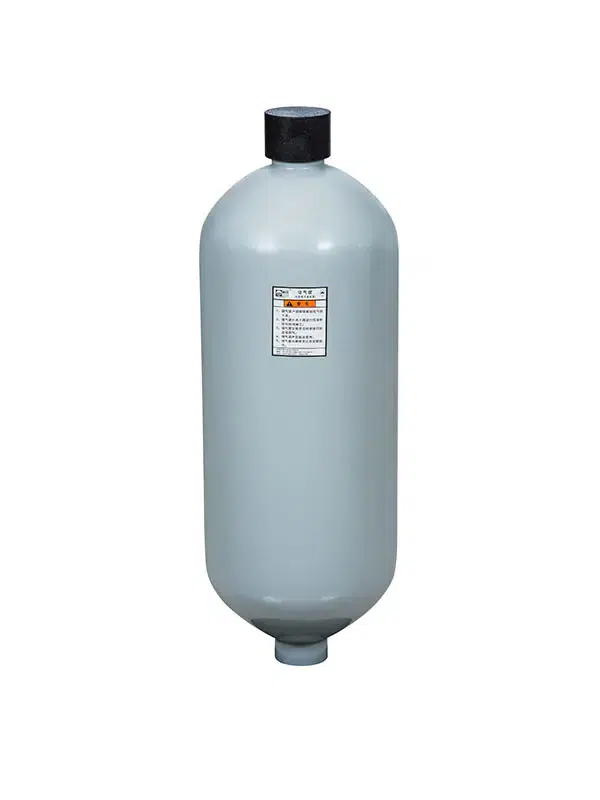
A hydraulic accumulator is not a component inside the pump itself, but it works closely with the pump in a hydraulic circuit. It stores pressurized fluid from the pump and releases it when demand rises. This helps stabilize pressure, smooth flow, and provide extra energy during peak loads. According to Straits Research, the global accumulator market reached USD 1.05 billion in 2025, reflecting its important role across industries.
Key Takeaways
- A hydraulic accumulator stores fluid under pressure and releases it to keep pressure steady and provide extra power when needed.
- It absorbs pressure shocks and pulsations, protecting components and making operation smoother and quieter.
- Using an accumulator saves energy, reduces wear, and provides emergency power, improving hydraulic system reliability.
How the Accumulator Supports the Pump

A hydraulic accumulator works like a pressure storage tank. When demand is low, pump flow enters the accumulator. Compressed nitrogen holds the energy until the machine needs more fluid. A check valve prevents backflow. When an actuator requires extra volume, the gas expands and pushes stored oil out to supplement pump flow. This allows engineers to use a smaller drive and motor for short demand spikes.
Storing Pressure Energy to Supplement Pump Flow
Bladder accumulators are a common type of gas-charged accumulator. A flexible bladder separates gas from fluid. The bladder receives a gas precharge before startup. As system pressure rises, fluid enters the shell and compresses the nitrogen. Storing fluid under pressure converts pump output into potential energy. Later, the bladder accumulator releases hydraulic fluid when pump flow is insufficient. The nitrogen expands and pushes stored oil back into the circuit. During charging, gas volume shrinks; during discharging, expansion is fast, giving quick actuator response.
Consider a machine with a main relief valve set at 3,000 psi. The work function needs 2,000 psi. An accumulator with a precharge pressure of 1,800 psi fills with full pump flow until the relief valve bypasses. During high demand, the accumulator adds to pump flow until stored oil is nearly depleted. A second precharge setting in the same unit determines usable energy. This energy storage role reduces required drive capacity, oil volume, reservoir size, and cooling load. The relief valve setting and gas charge work together, so engineers adjust both for each cycle.
Dampening Pulsation and Absorbing Pressure Shocks
Accumulators also protect circuit components from pressure pulsations. Pulsation builds with each stroke, and fast-closing valves create pressure spikes. An accumulator placed near the discharge line absorbs these surges. When set correctly, it takes in only a small amount of fluid during a shock. That fluid compresses the gas and releases energy smoothly. A well-designed accumulator can reduce pressure fluctuations and fluid hammer. Placement matters because the unit must sit close to the shock source. That shortens the surge travel distance and improves protection.
Manufacturers such as Ningbo Chaori Hydraulic design accumulators specifically to absorb shocks and reduce wear on circuit components. A properly sized accumulator can also absorb shock from sudden valve closure. Their bladder, piston, and diaphragm accumulators serve presses, wind power, and marine systems. Each type brings a different response speed. Ningbo Chaori Hydraulic has supplied accumulators since 1978 and supports them with ISO9001, ASME, and CE certifications. The result is quieter operation, fewer leaks, and longer component life.
Key Roles and Benefits of Hydraulic Accumulators

Maintaining Pressure, Leak Compensation, and Emergency Power
A hydraulic accumulator does three important jobs besides storing energy. Each helps keep a hydraulic system safe and efficient.
| Primary function | How the accumulator performs it |
|---|---|
| Maintaining system pressure | It stores hydraulic energy when demand is low and releases it during peak load, helping keep system pressure steady. |
| Compensating for leaks | It provides makeup fluid when no other flow or pressure source is available and temporarily maintains pressure to offset small internal leakage in valves or actuators. |
| Providing emergency power | It supplies backup hydraulic power during pump failure. |
When the system is on standby, the lines stay pressurized. If there is no major leakage, the main pump can turn off and the accumulator will hold pressure. This lets the pump rest while the accumulator keeps pressure for the next cycle.
An accumulator can also provide backup hydraulic power during a pump failure. A solenoid valve charges the accumulator while the pump runs. If the pump loses electrical power, the valve de-energizes and shifts back. Stored oil then releases to the cylinder, retracting the piston to a safe position. Offshore platforms use this function for emergency shut-off valves. Aerospace systems rely on it for emergency landing gear extension.
Energy Savings, Reduced Wear, and Faster Response
Energy savings are one of the most measurable benefits. A study on hybrid hydraulic excavators found that a system with a hydraulic accumulator achieved 14.6% energy recovery efficiency. A conventional system without an accumulator reached only 6.6%. That difference shows how much energy an accumulator can capture and reuse. For cycling applications, accumulators can reduce electrical consumption by 20–50% according to manufacturer estimates.
Lower energy consumption also means less heat generation. The pump runs less often, so components stay cooler. This reduces wear on seals, valves, and the pump itself. A smaller pump can serve the same circuit because the accumulator handles demand spikes. That cuts initial equipment cost and saves space.
Faster response is another direct benefit. The accumulator releases stored fluid instantly when a valve opens. The pump alone cannot match that speed because it needs time to build flow. This quick release helps actuators move without delay.
Noise reduction is a secondary benefit. An accumulator can dampen pressure pulsations and quiet a hydraulic power unit. However, effectiveness is limited because the accumulator dampens pulsations only within a certain frequency range for a given size and precharge pressure. Several accumulators may be needed to cover the full range of pulsation frequencies.
Ningbo Chaori Hydraulic designs bladder, piston, and diaphragm accumulators to deliver these benefits across industrial and mobile applications. Their accumulators help systems run smoother, use less energy, and respond faster.
Common Applications and Selecting an Accumulator Supplier
Uses in Industrial Machinery and Mobile Hydraulics
Accumulators serve many industries. In hydraulic presses, large accumulator banks store extra fluid during low demand, then add to pump flow for heavy pressing. Steel mills put accumulators on rolling mills, shears, and ladle turrets to absorb shock and smooth pressure changes. Agriculture uses diaphragm accumulators to soften shocks in spray booms and harvesting heads. For emergency feathering, wind turbines use pitch system accumulators. Fast response is needed in marine systems; a diaphragm accumulator provides it in steering.
Industrial machinery took 25.0% of the 2025 hydraulic accumulator market; agriculture and construction added 13.0%.
Mobile equipment also benefits. Tractors and construction vehicles use accumulators to reduce pressure spikes and changes. A bladder-type hydraulic accumulator often suits these jobs because its precharge pressure can match the working range. For confined machinery, a diaphragm accumulator can serve as emergency power for brakes.
Custom and Wholesale Options from Trusted Manufacturers
Picking the right accumulator supplier is as important as picking the right part. Ningbo Chaori Hydraulic has made accumulators since 1978. Its 18,000-square-meter factory has production lines. R&D and QC teams support custom designs and bladder, diaphragm, and stainless steel units.
Wholesale programs help. Ningbo Chaori Hydraulic holds ISO9001, ASME “U” stamp, CE, and a China Special Equipment License. These certifications cover bladder, piston, diaphragm, and stainless steel accumulators. A bladder accumulator with strong sealing works for high-pressure leak compensation.
Proper sizing starts with system pressure, needed volume, and working cycle. An accumulator holds pressure during standby. Choose the size for fast response. Place it near the pump to shorten the path. Ningbo Chaori Hydraulic’s team helps size units and offers custom and wholesale supply. They also provide complete accumulator stations, bladder accumulator stations, piston accumulator stations and nitrogen cylinder groups, and nitrogen tanks for centralized pressure maintenance.
Conclusion
A hydraulic accumulator stores energy from the pump and releases it when demand jumps. This keeps pressure steady and absorbs shocks. These parts make machines run smoother, use less energy, reduce pump wear, and improve reliability. Engineers should ask Ningbo Chaori Hydraulic, a trusted maker since 1978, for sizing, custom options, or bulk supply.
FAQ
How does an accumulator maintain pressure when the pump stops?
An accumulator keeps fluid under pressure. When the pump stops, this stored fluid is released to keep system pressure steady. This keeps actuators ready and makes up for small leaks.
What is the difference between bladder and piston accumulators?
Bladder accumulators react quickly and seal well for high-pressure jobs. Piston accumulators work with larger volumes and higher flows. Both types store energy and absorb shocks in different uses.
How do I choose the right accumulator size?
Size depends on system pressure, the volume you need, and cycle time. A bigger accumulator stores more energy but takes longer to charge. Ningbo Chaori Hydraulic helps engineers pick the right sizes.