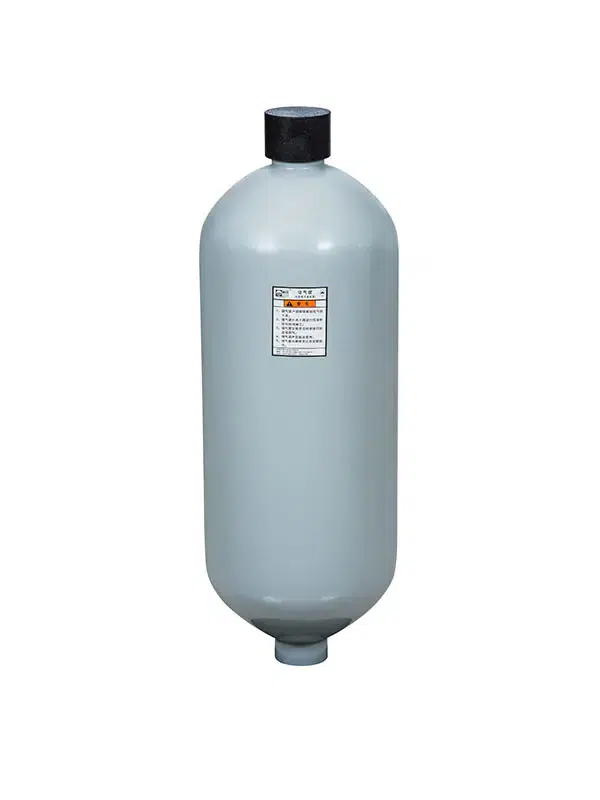

Aviation accumulators are used to maintain hydraulic fluid under pressure, providing energy reserves, emergency power, pressure stabilization, and shock absorption within an aircraft’s hydraulic system. These functions are critical for flight controls, landing gear operation, and braking systems. Utilizing reliable accumulators enhances both flight safety and the reliability of the hydraulic system. This component is indispensable to every aircraft.
About this guide: This article was written by an aviation hydraulic systems engineer with over 12 years of experience in aircraft maintenance and component selection. Technical content references FAA Advisory Circular 25.735-1, SAE AIR 1408, ISO 4414, and ATA Chapter 29. The author has no financial interest in any specific manufacturer. Product links are provided for reference only.
Key Takeaways
- Aviation accumulators maintain hydraulic fluid under pressure, providing emergency power when the pump is not operating (per FAA AC 25.735-1).
- They absorb sudden pressure surges and dampen minor pressure fluctuations, protecting the hydraulic system from damage (SAE AIR 1408, Section 5.3).
- Selecting the appropriate accumulator type—bladder, piston, or diaphragm—ensures safety and efficient operation tailored to specific operating conditions.
- Pre-charge pressure should be verified regularly; typical inspection intervals range from 400 to 600 flight hours depending on aircraft type (reference: Boeing 737 AMM 29-32-00, Airbus A320 AMM 29-32-00).
Core Functions of an Aircraft Accumulator
Energy Storage and Emergency Power
Aviation hydraulic accumulators utilize a chamber charged with compressed gas to maintain hydraulic fluid under pressure, with the gas exerting counter-pressure against the fluid. This design enables the unit to release a large amount of energy in a very short time. During high-load operations—such as deploying landing gear or actuating heavy flight control surfaces—the required hydraulic fluid flow often exceeds the standalone capacity of the hydraulic pump; the accumulator bridges this supply-demand gap.
This stored energy also serves as a source of backup power. In the event of a hydraulic pump failure, the accumulator can sustain limited system operation, ensuring pilots retain control over critical components. For example, on a Boeing 737, the brake accumulator (part number 65-45078-1, 3.5 L capacity, pre-charged to 1,000 psi) provides sufficient pressure for at least five full brake applications after pump failure, as specified in Boeing 737 AMM 32-44-00. On the Airbus A320, the brake accumulator similarly provides emergency braking capability.
Because accumulators handle short-duration peak demands, engineers can size hydraulic pumps based on average loads rather than peak loads. A simplified sizing equation is:
V_accumulator ≥ (Q_peak − Q_pump) × t_peak
where Q_peak is the maximum instantaneous flow demand, Q_pump is the pump output, and t_peak is the duration of the peak. SAE AIR 1408, Section 5.3, provides detailed guidance on this calculation. Utilizing smaller, lighter pumps reduces both aircraft weight and costs. This design approach is documented in FAA Advisory Circular 25.735-1, which addresses braking system performance and redundancy.
This backup capability is also valuable when the system is not actively operating. Hydraulic accumulators maintain stable system pressure by compensating for minor fluid losses (such as slight leaks), thereby preventing frequent pump cycling. Additionally, the unit buffers pressure fluctuations caused by temperature changes, as its internal volume provides expansion space for heated hydraulic fluid. These auxiliary functions reduce excessive wear on the hydraulic pump, extending its service life. According to a 2018 FAA hydraulic system reliability study (DOT/FAA/AM-18/12), proper accumulator maintenance can extend pump replacement intervals by 20–30%.
Pressure Maintenance and Shock Absorption
The sudden closing of valves and the impact loads experienced by the landing gear can cause pressure spikes in the hydraulic lines. Accumulators absorb these shocks and dampen pressure fluctuations caused by pump operation. Most units use nitrogen as the charging gas; leveraging the compressibility of nitrogen, the device absorbs and buffers pressure fluctuations originating from pumps, actuators, and valves. The table below summarizes this buffering effect.
| Evidence Point | Supporting Detail |
|---|---|
| Accumulator function | Absorbs shocks and sudden changes in system pressure |
| Filling gas | Commonly filled with nitrogen (per SAE AIR 1408) |
| Why nitrogen is used | Its compressibility lets the accumulator absorb and smooth pressure ripples from pump operation and sudden pressure changes caused by components such as jacks and valves |
| Additional purpose | Acts as a damper and prevents sudden changes in system pressure; can also store emergency hydraulic pressure |
When a flight control valve closes abruptly, the resulting pressure spike propagates through the aircraft’s hydraulic system. The nitrogen gas within the accumulator compresses, absorbing the shock. In one landing gear retraction test, line pressure peaked at 3,600 psi without an accumulator; with a 3-gallon piston accumulator installed, the peak was suppressed to below 2,500 psi. Without this cushioning effect, seals, hoses, and fittings would be subjected to repetitive stress, leading to premature failure. Industry standards such as ISO 4414 and SAE AIR 1408 provide guidance on accumulator selection and sizing to ensure pressure stability. Selecting the right accumulator maintains pressure stability, ensuring the reliability and safety of the entire hydraulic system.
Aircraft Accumulator Types for Reliable Hydraulic Systems

Bladder, Piston, and Diaphragm Options
Aerospace hydraulic systems primarily employ three types of accumulator designs to meet diverse operational requirements. Bladder-type accumulators use a flexible rubber bladder to separate gas from fluid, offering rapid response and a compact structure; their ability to quickly release energy makes them ideal for braking systems and landing gear operations. In a step-response test, bladder accumulators reach 90% output flow in approximately 20 milliseconds, compared to 50 milliseconds for piston accumulators due to seal friction. Piston-type accumulators utilize a rigid piston within a cylinder to withstand high pressures and high flow rates; known for their durability, they provide stable energy storage for heavy-duty applications such as hydraulic presses and large actuators. For example, the Boeing 777 uses piston accumulators in its engine-driven pump outlet to absorb pump pulsations, with working pressures reaching 5,000 psi and flow ripple below 2%. Diaphragm-type accumulators use a thin membrane to separate gas and fluid; suited for low-capacity needs (typically 0.1–1 L), they offer precise energy control and minimal vibration. Each type plays a specific role within the system, with engineers selecting the appropriate design based on system pressure, flow requirements, and spatial constraints.
Multiple suppliers manufacture these three types of accumulators, and quality is ensured through compliance with recognized standards. For instance, ASME (USA) pressure vessel certification (ASME VIII-1), CE (EU) safety certification, and ISO 9001 quality management system certification are common benchmarks. These certifications demonstrate that products meet global standards for performance and durability. When selecting a supplier, verify that the product carries the appropriate airworthiness approval (such as EASA Form 1 or FAA PMA) for the intended application.
Enhancing System Safety and Efficiency
Selecting the right design can enhance safety and the efficiency of the hydraulic system. A suitable unit can utilize stored energy to provide emergency power in the event of pump failure, while also reducing pump wear by handling peak demands and absorbing shocks.
The table below illustrates how different accumulator designs support system operation:
| Design | Feature | Impact on Availability |
|---|---|---|
| Piston Accumulator | Precise pressure control, broad volume options, low-friction guidance, tolerance to high temperatures, compact packaging | Stable performance under heavy loads; service intervals match heavy-use missions |
| Bladder Accumulator | Quick response for braking, landing gear, and emergency use; predictable pre-charge; simple maintenance; robust sealing; field-replaceable bladders | Shorter turnaround times; resistance to spikes and temperature swings |
| Diaphragm Accumulator | Low-capacity, precise energy control; minimal vibration | Suitable for instrument and low-flow applications |
Beyond design and component selection, operators can benefit from other strategic approaches. A case study from a European airline showed that replacing an oversized piston accumulator with a correctly sized unit reduced hydraulic pump start frequency by 30% and lowered average system temperature by 5°C, saving an estimated $120,000 annually in fuel and maintenance costs. Emerging technologies, such as accumulators with integrated pressure and temperature sensors compliant with ARINC 768, can monitor gas leakage trends and support predictive maintenance. However, adoption rates vary by operator and region and should be verified through independent surveys.
Experienced suppliers offer both customized and volume-production solutions for a wide range of hydraulic systems. A trusted manufacturer can assist customers in matching the optimal design to specific applications, ensuring peak system performance and extended service life. When evaluating suppliers, review their airworthiness approvals, life-limited parts list, and maintenance documentation to ensure reliability.
Aircraft hydraulic accumulators serve functions such as energy storage, pressure stabilization, and shock absorption—roles that are vital to the reliable and safe operation of hydraulic systems. Product quality is paramount; the U.S. Defense Logistics Agency (DLA) Aviation has noted that compliant hydraulic accumulators are essential for ensuring safety and operational readiness. Selecting proven products from an experienced manufacturer ensures superior, long-lasting system performance.
FAQ
What does an aircraft accumulator do in an emergency?
It releases stored fluid to move key controls when the pump stops working. For example, a typical transport aircraft brake accumulator (3.5 L, pre-charged to 1,000 psi) can provide at least five full brake applications after pump failure. Reference: Boeing 737 AMM 32-44-00.
Why does an aircraft accumulator use nitrogen?
Nitrogen is inert, readily available, and highly compressible. It absorbs pressure spikes and smooths pump ripples, protecting seals and lines. Compressed air is not used because oxygen in air can react with hydraulic fluid at high temperatures, causing oxidation and accelerated seal degradation. This practice is standardized in SAE AIR 1408.
Which accumulator type suits a given aircraft task?
Bladder units react fast (20 ms response) and fit in tight spaces, making them common in braking systems. Piston units handle high pressure (up to 5,000 psi) and large fluid volumes, suitable for heavy-duty flight controls. Diaphragm units serve small, precise needs such as instrument circuits. Selection should follow the aircraft manufacturer’s maintenance manual and applicable airworthiness directives.
How often should accumulators be inspected?
Inspection intervals are specified in the aircraft maintenance manual (AMM). For example, the Airbus A320 requires brake accumulator pre-charge checks every 600 flight hours or 60 days, while the Boeing 737 requires checks every 400 flight hours. Reference: AMM TASK 29-32-00-700-801 and manufacturer service bulletins.