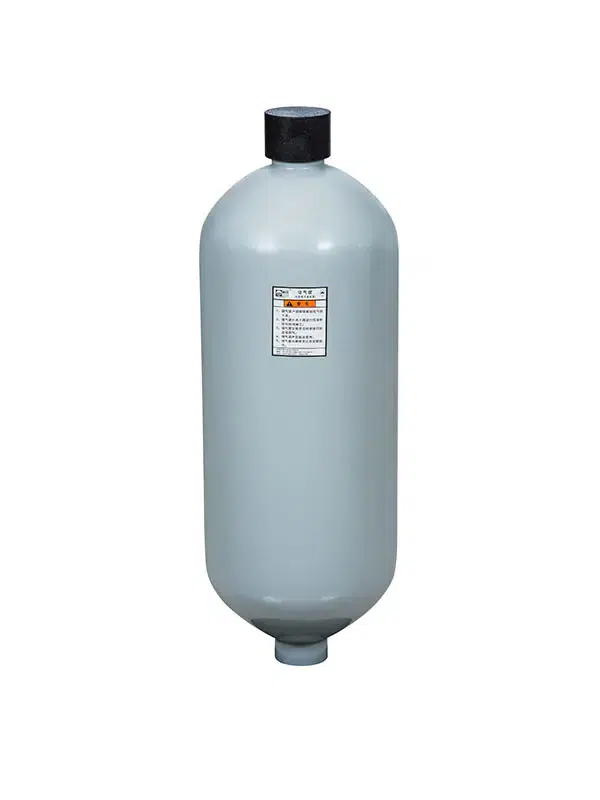
Accumulators help your machines operate efficiently. In hydraulic systems, a bladder accumulator is a type of hydraulic accumulator that is highly responsive and reliable compared to other types of accumulators. You can use bladder accumulators to save energy and maintain stable pressure. When pressure increases, oil flows into the bladder accumulator and compresses nitrogen gas. When pressure decreases, the nitrogen gas expands and pushes the oil back into the system. This rapid response process helps to easily handle load changes and absorb shocks, making the system operate more efficiently.
Bladder accumulators manufactured by Chaori Hydraulic are responsive and easy to maintain.
Key Takeaways
- Bladder accumulators maintain stable hydraulic system pressure and absorb shocks and vibrations, helping machines operate smoothly and extending their service life.
- Blade accumulator devices effectively store energy and release it quickly when needed or in emergencies.
- Furthermore, they are easy to maintain.
Bladder Accumulator Operation
Bladder accumulator mechanism
A bladder accumulator is a hydropneumatic device used in hydraulic systems. It stores energy using the pressure difference between gas and oil. Internally, it contains a rubber bladder that separates the gas from the hydraulic oil. When system pressure increases, the hydraulic pump delivers hydraulic oil, which flows into the accumulator, compressing the gas inside the bladder. The gas, acting like a spring, rapidly stores energy until the system requires higher pressure, at which point the gas releases the hydraulic oil. This rapid response helps control pressure changes, maintain pressure stability, and absorb shocks, ensuring smooth machine operation.
This convenient method of energy storage and utilization is the reason for the widespread use of bladder accumulators. Furthermore, bladder accumulators have a faster response time and fewer moving parts than piston or diaphragm accumulators.
Key components and materials
A bladder accumulator mainly consists of the following components:
- A steel casing securely connects all components, ensuring safe operation under high pressure.
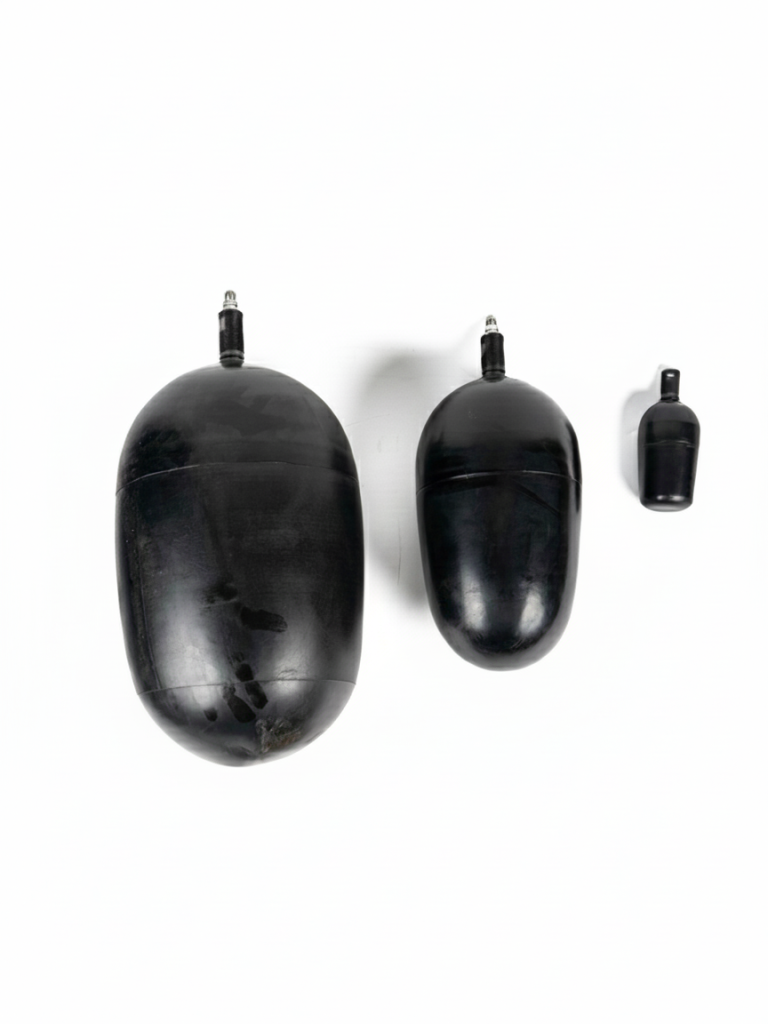
- A rubber bladder (made of nitrile rubber or fluororubber) isolates the bladder from gas and liquid.
- A gas valve is used to fill the bladder with nitrogen.
- A fluid interface connects the accumulator to the hydraulic system.
All these components work together to form a robust and durable device.
Bladder Accumulator Applications
Pressure maintenance
Bladder accumulators play a vital role in maintaining pressure stability within hydraulic systems. When load conditions fluctuate, the accumulator stores pressurized fluid; conversely, it releases this fluid whenever the equipment requires it. This mechanism ensures the smooth operation of the system, even when the hydraulic pump is running at a reduced speed. You can store energy during periods of low system demand and subsequently utilize it during peak demand periods. Furthermore, accumulators help mitigate the effects of thermal expansion by adjusting fluid volume to accommodate temperature fluctuations. Should minor leaks occur within the system, the accumulator can sustain pressure levels for a limited time, thereby ensuring the continued operation of the equipment.
Tip: The bladder accumulators manufactured by Chaori Hydraulic feature a robust steel shell and a high-quality rubber bladder. This design not only ensures stable pressure output but also guarantees a long service life for the product.
Shock and vibration dampening
Bladder accumulators rank help absorb shocks within hydraulic systems and reduce vibration. When machinery starts or stops rapidly, the resulting pressure spikes can damage components and generate noise. Acting as a buffer, the accumulator absorbs these pressure spikes, thereby ensuring a smooth and steady fluid flow. Consequently, you will experience reduced noise levels and significantly less vibration. This translates to an extended service life for your equipment and safer overall operation. In heavy machinery applications, bladder accumulators can reduce noise by up to 95% while effectively dampening pressure pulsations, ensuring your system runs more quietly and stably.
Energy storage and emergency supply
Bladder accumulators are utilized in hydraulic systems to store energy. When your equipment does not require significant power, the accumulator stores energy by compressing nitrogen gas; conversely, when increased power is needed, it rapidly releases this stored energy. This mechanism helps accommodate peak load demands and reduces the operational burden on the hydraulic pump. In emergency situations—such as power outages or pump failures—the accumulator provides backup power to actuate hydraulic cylinders or control valves, thereby ensuring the safe and controlled operation of the entire system. Furthermore, accumulators provide fluid compensation in the event of system leaks and help maintain stable fluid levels amidst fluctuations in ambient temperature.
Note: Bladder accumulators manufactured by Chaori Hydraulic offer rapid response times and ease of maintenance, making them an ideal choice for backup power supply and energy storage applications.
Bladder accumulators in industry
Bladder accumulators are widely utilized across numerous industries to address a diverse range of challenges within hydraulic systems. Their application areas span fluid filtration, hydraulic presses, injection molding equipment, wind turbines, and various test rigs. Distinguished by their rapid response, robust construction, and ease of maintenance, Chaori Hydraulic products provide powerful support for every application task.
Here are some real-world examples:
| Application | Description |
|---|---|
| Oil Filtration and Power Plants | Keeps flow steady and fixes pressure changes. |
| Hydraulic Presses and Forming Machines | Keeps force steady and takes in shocks. |
| Injection Molding Machines | Makes cycles better and lowers hydraulic noise. |
| Wind Turbines and Automation Systems | Keeps systems steady when conditions change. |
You can utilize bladder accumulators as dampers, backup power sources, and leakage compensation devices. Furthermore, they can be employed to deliver pressurized lubricants and help reduce noise. Regardless of the application scenario, you can expect exceptional performance and an effective extension of equipment service life.
Key Benefits of Hydraulic Bladder Accumulators
Efficiency and reliability
You want your hydraulic system to operate with consistent efficiency and stability; the bladder accumulator is the key component for achieving this goal. It stores and rapidly releases energy, thereby acting as a buffer and regulator during system operation to ensure smooth equipment performance. Thanks to its long service life and excellent environmental adaptability, it maintains reliable performance even under harsh operating conditions. Furthermore, its lightweight and compact design makes it particularly well-suited for installation in various types of mobile machinery. A high-quality sealing design effectively prevents the ingress of dust and moisture, ensuring stable operation in complex environments such as factories and construction sites.
Note: Take the Chaori hydraulic bladder accumulator as an example: it features a leak-proof sealing structure and supports the replacement of the accumulator bladder—features that not only enhance overall performance but also facilitate future maintenance.
In terms of energy conservation, accumulators demonstrate exceptional performance during equipment acceleration and deceleration cycles: they can save up to approximately 10% of energy consumption during the acceleration phase and up to 58% during the deceleration phase. Moreover, they maintain excellent stability even when subjected to significant system pressure fluctuations.
System protection
To ensure the safe operation of pumps, valves, and other hydraulic components, bladder accumulators play a vital protective role within a system. They effectively absorb pressure fluctuations and mitigate hydraulic shock, thereby reducing the risk of component damage and preventing the substantial repair costs and downtime associated with equipment failure. Furthermore, this buffering action helps extend the overall service life of the equipment and lowers the probability of sudden malfunctions.
Moreover, bladder accumulators help counteract the impact of shock loads on the system and, to a certain extent, maintain the stability of the hydraulic fluid volume—preventing conditions of either excessive or insufficient fluid supply. This enhances the operational reliability and safety of the system, ultimately making the equipment more durable.
Note: Taking Chaori Hydraulic bladder accumulators as an example, their products adhere to rigorous safety standards and regulations—such as ASME, PED, and CE certifications—thereby providing an additional layer of assurance for the safe operation of the system under a wide range of operating conditions.
| Standard | Description |
|---|---|
| ASME | Makes sure pressure vessels are safe and good quality in the USA. |
| PED | Sets rules for design and testing in the EU. |
| CE | Shows the accumulator meets European safety rules. |
Maintenance and cost savings
If you are looking to minimize maintenance time and costs, a bladder accumulator offers an efficient and reliable solution. Its internal bladder typically boasts a service life of approximately 12 years; maintaining optimal operational status requires nothing more than periodic inspections—for instance, every 2, 5, or 10 years. Should the bladder rupture, it can be replaced quickly and without the need for specialized tools, thereby significantly reducing downtime and boosting operational efficiency.
In day-to-day operation, the unit requires infrequent servicing, resulting in lower overall maintenance costs while simultaneously simplifying maintenance procedures. Through the proper application of accumulators, the system not only achieves greater operational stability but also ensures compliance with relevant safety standards and regulations, such as ISO 4413 and PED 2014/68/EU.
Bladder Accumulator Safety
Common risks
Before using a bladder accumulator, you must fully understand its potential risks. Such devices store immense energy under high-pressure conditions; therefore, safety is of paramount importance. Omissions during operational procedures or the aging of components may lead to malfunctions. The following table lists the primary potential hazards:
| Failure Mode | Description |
|---|---|
| Bladder rupture | Dirt or too much pre-charge pressure can make the bladder burst. This could cause a dangerous explosion. |
| Over-pressurization | If safety valves do not work, the accumulator might explode, especially when fixing it. |
| Improper gas selection | Using oxygen instead of dry nitrogen can start a fire, especially if it gets hot. |
| Low or no pre-charge | The bladder can get smashed into the shell, which can poke holes and make it fail suddenly. |
Damage to the bladder is a common occurrence during the equipment installation and commissioning phase. If depressurization occurs too rapidly, the bladder may strike the poppet valve and sustain cuts; furthermore, high-temperature hydraulic fluid can accelerate the aging and wear of the bladder. Frequent start-stop cycles or incorrect pre-charge pressure settings can also result in the bladder becoming pinched or damaged. The root cause of most malfunctions often lies in errors committed during the installation, commissioning, or maintenance of the equipment.
Tip: Please inspect seals and O-rings regularly. It is recommended to install an inline filter to prevent the ingress of contaminants, thereby effectively preventing malfunctions.
Safe operation practices
Adhering to simple rules ensures the safety of your system. It is mandatory to wear Personal Protective Equipment (PPE), such as safety glasses or a face shield. Before charging an accumulator, you must verify that the hydraulic system pressure has been reduced to zero. During the charging process, never stand directly in front of the hydraulic or gas ports.
Here are additional safety tips:
- When charging, inject nitrogen slowly to prevent damage caused by rapid cooling due to rapid expansion.
- Never use oxygen for pre-charging; use only dry nitrogen.
- Never apply excessive pre-charge pressure, as this may damage the bladder or valve core.
- Regularly check the pre-charge pressure to ensure it remains within the safe operating range.
- Installation and maintenance of the equipment must be performed by professionally trained personnel.
In the event of a valve malfunction, pressurized fluid could drive the load, potentially resulting in personal injury. You must strictly adhere to all safety operating procedures to safeguard your own safety and that of others. Cultivating safe operating habits and conducting regular inspections will help effectively prevent accidents and ensure that your hydraulic system remains in optimal working condition at all times.
FAQ
What is the main job of a bladder accumulator?
You can use a bladder accumulator to store energy and maintain pressure stability within a hydraulic system. It helps your equipment operate smoothly and protects it from shocks.
How often should you check the pre-charge pressure?
You should check the pre-charge pressure every few months. Regular checks help you detect leaks early and ensure that the accumulator remains in good working condition.
Can you replace the bladder if it wears out?
Yes, you can replace the bladder. When designing its accumulators, Chaori Hydraulic specifically engineered them to support rapid bladder replacement. You do not need to use any specialized tools.
What gas should you use to fill the bladder?
You should always use dry nitrogen. Never use oxygen or compressed air. Nitrogen ensures system safety and prevents fires.