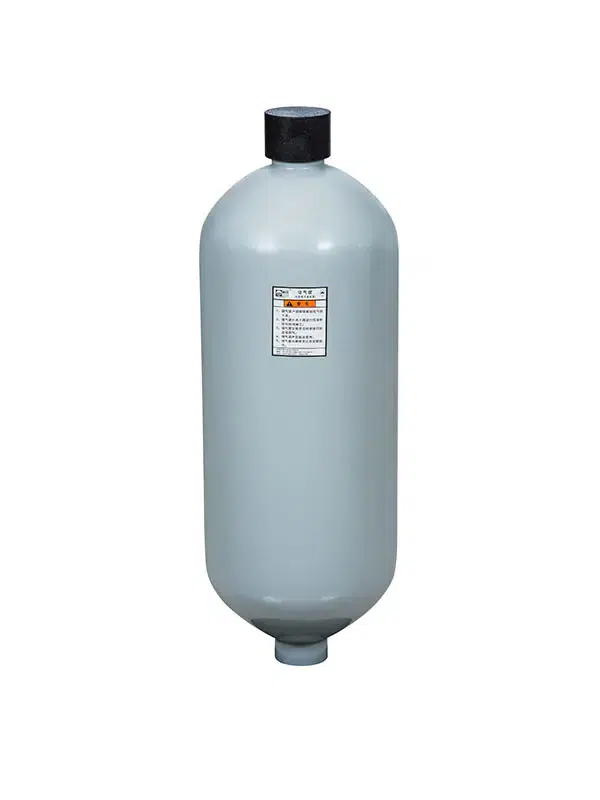
Low-pressure hydraulic accumulators are used to store and release hydraulic energy in relatively low-pressure systems. Their primary function is to maintain stable pressure, reduce fluctuations, and improve overall system efficiency without the need for high-pressure components.
In practical applications, low-pressure accumulators are often used for flow compensation and pulsation damping. They help smooth pressure changes caused by pumps or valves, ensuring more stable operation. This is particularly important in lubrication systems, cooling circuits, and low-pressure hydraulic units. They can also provide a backup fluid supply for short periods to support system operation during temporary increases in demand or minor power outages. Furthermore, they help reduce noise and vibration, thereby protecting components and extending equipment life.
In summary, low-pressure accumulators are ideal for systems requiring stability and efficiency rather than high force or high energy output.
Main Functions of a Low Pressure Accumulator
Energy Storage and Backup
Low-pressure accumulators help store energy in hydraulic systems. Like a backup tank, they store pressurized fluid internally. When the system needs more power, the accumulator releases this energy. This can provide additional power to the system during peak hours or emergencies. Its operation is somewhat similar to a battery in an electrical system. The accumulator uses a gas separation component to control the release of energy, thereby maintaining stable pressure. This ensures higher efficiency and backup power even if the main power supply fails.
Pressure Stabilization
A low pressure accumulator helps keep your hydraulic system steady. It takes in pressure spikes and stops sudden changes. This protects important parts from getting damaged. You get steady hydraulic energy, so your system works smoothly. The accumulator also helps with thermal expansion in hydraulic fluids. When the temperature changes, the fluid can get bigger or smaller. The accumulator acts like a tank to stop too much pressure and keeps your system safe.
Tip: If the pressure stays steady, your equipment lasts longer and works better.
Here is a table that shows how precharge conditions change pressure:
Precharge Condition
Effect on Pressure Fluctuations
Additional Impact
Proper Precharge
Reduces pressure spikes and keeps things steady
Smoother operation and less energy used
Incorrect Precharge
Makes pressure drop a lot and causes problems
Pump works harder and system acts strange
Pulsation and Noise Dampening
Pumps and valves in hydraulic systems generate pulsations and noise. Low-pressure accumulators can absorb and smooth these pressure spikes, thus reducing machine noise and vibration. They protect critical components from shocks and mitigate sudden changes. Accumulators also reduce noise from relief valves and pump pulsations, meaning easier work for operators and longer machine life.
How a Low Pressure Accumulator Works
Basic Operating Principle
To see how accumulators work, think about their main job. The accumulator helps your hydraulic system. When the system sends in extra fluid, the accumulator stores energy. It does this by squeezing gas or a spring inside. This energy waits until your system needs it. If your system suddenly needs more power, the accumulator gives out energy fast. This quick boost keeps things running well. The accumulator also takes in extra fluid when pressure gets too high. This helps keep your system safe and steady.
If you want to picture how accumulators work, think of them as both shock absorbers and energy banks for machines.
Key Components
The main parts of a low pressure accumulator decide how well it works. Most accumulators use one of three types: bladder, piston, or diaphragm. Each type is good for different jobs. Bladder accumulators react very fast and take in shocks well. You can use them when your system needs quick changes. Piston accumulators handle higher pressures and give you good control. They are best for tough jobs in factories. Diaphragm accumulators are small and light. You can put them in small spaces, and they react fast to pressure changes.
Ningbo Chaori Hydraulic sells all three types, so you can pick what you need. Each type helps your system work well and stay safe.
Tip: Pick the right accumulator type for your system to get the best results and safety.
Low Pressure Accumulator Benefits
System Efficiency
A low pressure accumulator helps your hydraulic system work better. It stores energy when your system does not need much power. Later, it gives back the energy when more is needed. This means your pumps do not have to work as hard. Because of this, your system uses less energy. Some places say they saved up to 28% on compressed air energy after using a three-stage accumulator system. Saving energy also means you spend less money to run your machines. The stored energy keeps the pressure steady and stops drops that slow things down. When your system runs smoothly, you get more work done and have fewer stops.
Reducing Wear and Tear
A low pressure accumulator works like a shock absorber for your system. It softens pressure spikes from pumps or quick valve moves. This helps protect parts like seals and valves from getting hurt. Over time, this means you do not need to fix or replace parts as often. Studies show accumulators keep pressure steady and lower wear on parts. When pressure stays even, your equipment lasts longer and costs less to fix. With fewer pressure changes, your system works better and does not break down as much.
Safety and Reliability
Low pressure accumulators make your system safer. They stop dangerous pressure jumps that could break things or cause accidents. The accumulator acts like a safety buffer and keeps pressure safe. This helps your machines work safely, even if something changes fast or the power goes out. Accumulators also give backup power in emergencies. This makes your system stronger and safer. Picking the right accumulator helps keep your machines safe and working well for a long time.
Industrial Uses of Low Pressure Accumulators
Hydraulic Systems
Low pressure accumulators are used in many hydraulic systems. They help keep the pressure steady and store energy for later. When the system changes fast, the accumulator absorbs shocks. This makes the flow smoother. Machines work better and last longer with an accumulator. It also helps with small pressure changes and thermal expansion. This keeps the system safe and reliable.
Automotive and Mobile Equipment
Low pressure accumulators are found in vehicles like tractors and forklifts. They help these machines run smoothly and safely. Here is a table that shows how they help in mobile equipment:
Function
Description
Energy Storage
Saves energy to help pumps when busy.
Emergency Backup
Gives power if the pump stops working.
Shock Absorption
Takes in pressure spikes for smoother movement.
Sustaining System Pressure
Keeps pressure steady when the pump slows down.
Relaying Pump Flow
Sends extra fluid during high demand to keep things running.
Using a hydraulic accumulator in your vehicle gives smoother rides. It also means less damage to parts and better safety.
Industrial Machinery
Factories and big machines use low pressure accumulators too. They help in many ways:
Save extra energy when machines are not busy and give it back later.
Keep pressure steady by taking in shocks and stopping drops.
Soften sudden changes to protect machine parts.
Give more fluid when demand is high.
Provide backup power if the main system fails.
These uses help save energy, lower downtime, and keep machines working well.
Key Considerations and Limitations
Pressure Range Suitability
You have to make sure the accumulator’s pressure range matches your system. Low pressure accumulators are best for systems that do not need high pressure. Most work well at 3,000 PSI. Some can go up to 5,000 PSI. Always check these numbers before you pick an accumulator.
Pressure Type
Value
Optimum System Pressure
3,000 PSI
Maximum Pressure Models
Up to 5,000 PSI
If you use an accumulator with the wrong pressure, you could break your equipment. Always check your system’s pressure before you choose.
Maintenance Needs
You need to take care of your accumulator so it works well. Doing regular maintenance stops problems and keeps things safe. Here are some important things to do:
Maintenance Practice
Description
Use dry nitrogen for charging
Keeps gas clean and stops dirt from getting in.
Maintain recommended pressure levels
Makes sure the accumulator works safely and smoothly.
Record inspection data
Helps you see how it is working and find problems early.
Replace worn diaphragms promptly
Stops breakdowns and keeps things running well.
Follow manufacturer guidelines
Makes sure you do everything right for your model.
Charge the gas end slowly so the bladder does not get too cold.
Do not charge too fast or you could hurt the bladder.
Change the pre-charge pressure if your system pressure changes.
Tip: Taking good care of your accumulator helps it last longer and work better.
System Compatibility
You must make sure the accumulator fits your system. First, look at what your system needs, like pressure, fluid amount, flow, temperature, and fluid type. Then, figure out how much fluid your system will use and how much pressure drop is okay. Pick the right type—bladder, piston, or diaphragm—based on your space and what you need it to do. Set the pre-charge pressure to match your system’s lowest pressure. Check that the size and pressure ratings are right for your system. Think about where you will put it, what it is made of, and how you will take care of it.
Find out your system’s pressure, fluid amount, and flow needs.
Figure out the fluid volume and pressure drop.
Choose the right accumulator type for your system.
Set the pre-charge pressure to the right level.
Make sure the size and pressure ratings fit.
Think about space, materials, and how you will maintain it.
Note: Picking the right accumulator helps your system stay safe and work well.
FAQ
What is the main job of a low pressure accumulator?
A low pressure accumulator stores energy in your hydraulic system. It keeps the pressure steady and absorbs shocks. This helps machines run smoothly and last longer.
How do I know if my system needs a low pressure accumulator?
You need one if your system has pressure spikes. It is good if you want backup power or face sudden changes. It also helps lower noise and protects parts from damage.
Can I use a low pressure accumulator for high-pressure systems?
No, you should not use a low pressure accumulator in high-pressure systems. Always check your system’s pressure needs. Pick the right type to stay safe and get the best results.
What types of low pressure accumulators can I choose?
You can choose bladder, piston, or diaphragm types. Each type is good for different jobs. Bladder types react fast. Piston types hold more fluid. Diaphragm types fit in small spaces.
How often should I check or maintain my accumulator?
You should check your accumulator often. Look for leaks and check pressure levels. Follow the manufacturer’s maintenance tips. Regular care helps your accumulator last longer and work better.