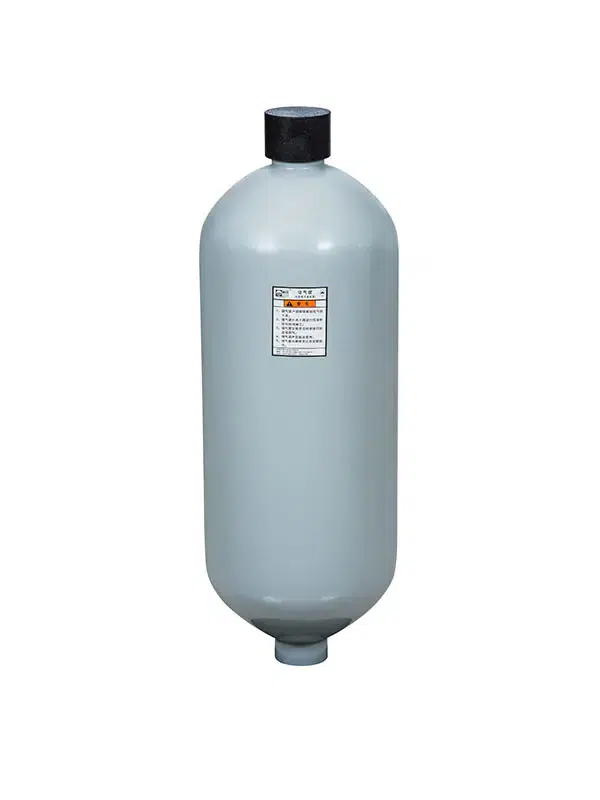
The accumulator system is a device that stores pressure. This pressure remains stable. One accumulator maintains water under pressure within the accumulator tank. Another accumulator tank controls fluid and water pressure. Hydraulic accumulators facilitate the flow of main water and water systems. Accumulator tanks help conserve energy and maintain safe operation in the event of a failure. Hydraulic accumators and hydraulic systems rely on this storage method.
Key Takeaways
- Accumulators use compressed gas to store energy. They can maintain stable pressure in hydraulic systems. This design is both energy-efficient and reduces wear and tear.
- Three types of accumulators are suitable for different pressure levels. The bladder-type accumulator is suitable for medium pressure. The piston-type accumulator is suitable for high pressure. The diaphragm-type accumulator is suitable for low pressure.
- The accumulator can reduce the power required by the pump by approximately 62%. It can absorb shocks, making the flow smoother. These advantages help protect equipment and reduce costs.
How Hydraulic Accumulators Work
Core Components and Mechanism
Hydraulic accumulators store energy by maintaining a liquid that cannot be compressed under pressure. This pressure is provided by an external source, typically compressed nitrogen gas. This simple concept distinguishes accumulators from ordinary storage tanks.
Each unit primarily consists of three components. The pressure vessel serves as the outer shell, housing the internal filler and ensuring the safety of the internal components. Manufacturers use steel, stainless steel, aluminum, titanium, or fiber-reinforced composite materials to construct this shell. A separating element divides the gas side from the liquid side. This element can be an airbag, diaphragm, or piston. Gas valves and liquid ports complete the assembly of the entire component.
This fluid port serves as both an inlet and an outlet connection. Fluid flows through this port and pushes the separation element. The gas valve allows technicians to set and maintain the nitrogen charge. This pre-charge sets the starting pressure and determines the response of the device.
The bladder-type accumulator is the most commonly used oil-gas accumulator. The bladder is filled with nitrogen and installed inside a pressure vessel made of welded or forged steel. The bladder is made of elastic materials such as rubber. The gas precharge pressure can be adjusted through the gas inlet and outlet valve on the top of the bladder-type accumulator.
The pre-charging settings follow clear rules. The table below illustrates the standard relationships.
| Parameter | Relationship |
|---|---|
| Pre-charge Pressure (P0) | Should be ≤ 90% of Minimum System Pressure (P1) |
| Maximum System Pressure (P2) | Should not be more than 4 times Pre-charge Pressure (P0) |
For bladder-type accumulators, technicians typically set the precharge pressure to 80% to 90% of the minimum system pressure. The precharge pressure for piston-type accumulators is usually 100 pounds per square inch (psi) lower than this minimum pressure. A precharge pressure range of 60% to 90% is suitable for most installations. When the goal is energy storage, setting the precharge pressure to 90% of the minimum working pressure works well. When the goal is shock absorption, the precharge pressure setting will be close to the maximum pressure.
The Energy Storage Cycle
When hydraulic oil enters the accumulator tank, it begins to charge. The hydraulic oil compresses the nitrogen gas in the pre-charged nitrogen chamber. During the release process, the gas expands and pushes the hydraulic oil back into the hydraulic system. This cycle enables the device to store energy for later use, just like a battery.
The compression process varies with speed. Slow cycles lasting longer than approximately one minute behave as isothermal processes. Nitrogen remains at ambient temperature. However, rapid cycles lasting less than one minute behave as adiabatic processes. During this process, no heat is transferred in or out, and engineers use a polytropic index n=1.4 to simulate nitrogen.
Pulsation control demonstrates the value of this cycle. The accumulator tank serves as a high-performance pulse damper for turbulent pump flow. Its flexible internal barrier can absorb the spike pressure generated by rapid valve movement and pump stroke. This function protects pipelines, seals, and control valves from noise, vibration, and fatigue damage. Test data proves this effect. In a system equipped with 1¼-inch pipelines and a pressure of 2,750 pounds per square inch, the overpressure reached 385 pounds per square inch without the use of an accumulator tank. After using a piston-type accumulator tank, this value dropped to 100 pounds per square inch, and further decreased to 78 pounds per square inch after using an airbag-type accumulator tank.
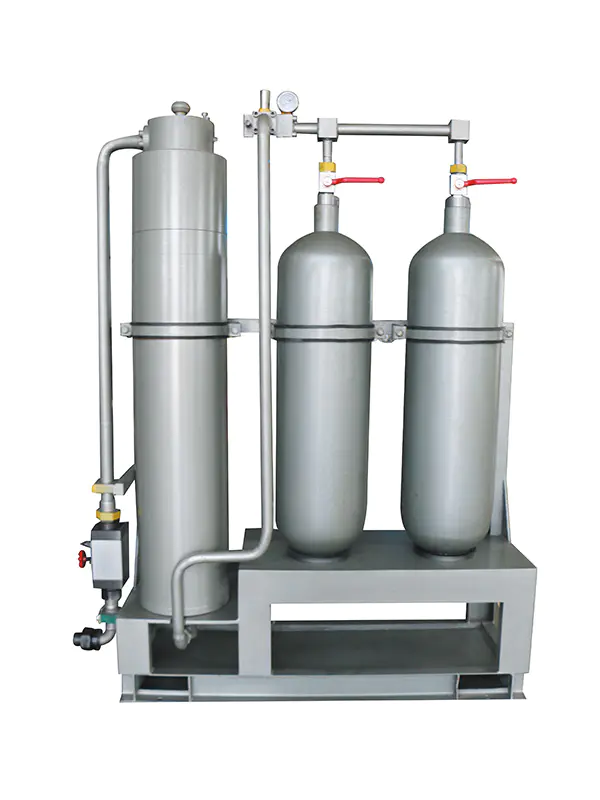
As a trusted manufacturer and supplier of hydraulic accumulators, Ningbo Chaori Hydraulic Co., Ltd. produces airbags, pistons, and diaphragm units, as well as complete accumulator stations for centralized pressure maintenance.
Types of Accumulator Tanks

Three main designs are used in the market: bladder, diaphragm, and piston units. Each type fits different pressure ranges and uses.
Bladder and Diaphragm Accumulators
The bladder-type accumulator utilizes a rubber membrane or bladder to separate nitrogen gas from hydraulic oil. It responds quickly to pressure changes and is relatively low cost. The sturdy housing can withstand various pressures. In general tasks that require rapid movement, the industrial sector opts for bladder-type accumulators. However, due to the potential leakage of gas over time, the bladder requires frequent pre-inflation checks. If the pre-inflation pressure is set too high, the bladder may also rupture.
Diaphragm accumulators operate on a similar principle, but employ a flexible diaphragm instead of an airbag. These devices are compact and lightweight, saving space in mobile machinery. They are resistant to dirt and perform well in harsh environments. Their main drawback is limited high-pressure capacity. Diaphragm accumulators are best suited for low-pressure applications below 3000 PSI. The diaphragm material wears over time and is highly sensitive to temperature changes.
Piston accumulators are best suited for high-pressure environments, with pressures reaching up to 5000 PSI or higher. Bladder accumulators are suitable for medium-pressure environments, with pressures up to 5000 PSI. Diaphragm accumulators are more suitable for low-pressure environments, with pressures below 3000 PSI.
Piston Accumulators
Piston accumulators use solid pistons to separate gas from liquid. This design is suitable for heavy-duty operations such as hydraulic presses. Compared to other types, piston accumulators are more resistant to high contamination and extreme temperatures. When the temperature is below –40°F or above 250°F, piston accumulators are the only option. If contamination leaves deep marks inside the cylinder bore, the device may become unusable. However, small seals fail slowly, so gas migration is slow and safe.
Shell: Made of chrome-molybdenum steel conforming to SA 372 Gr E Cl 70 standard, it is seamless and non-welded. According to Section VIII, Division 1 of the ASME B&PV Code, it has undergone a pressure test at 1.5 times the working pressure and has been serialized and stamped with the “U” seal by an ASME authorized inspector. U-1A certification is standard.
Ningbo Chaori Hydraulic produces all these types of products, including complete accumulator stations for central energy storage. As an experienced manufacturer and supplier of hydraulic accumulators, the company offers both wholesale and customization options to meet specific system needs.
Benefits and Applications of an Accumulator
Performance and Efficiency Gains
The device stores energy for future use, thus reducing the operating frequency of the pump. This helps maintain stable pressure throughout the system.
Besides energy saving, they can also absorb impact force and smooth out pulses.
Thermal expansion compensation. The accumulator can protect the hydraulic system from pressure changes caused by fluid expansion at high temperatures.
In a closed hydraulic circuit, heat causes the pipes to expand. The additional volume can increase the pressure beyond safe levels. The precharge device absorbs the excess heat.
Industrial Uses of Hydraulic Accumulators
Wind turbines utilize hydraulic accumulators for emergency pitch control. During grid failures, each blade has its own unit that allows for feathering within a range of approximately 90°. The same hydraulic system also powers the high-speed shaft brake calipers and yaw brakes. Agricultural machinery employs them to handle impact loads. The steel industry also relies on them.
Ships and marine equipment require certified quality. Ningbo Chaori Hydraulic has been a trusted hydraulic manufacturer and supplier since 1978, offering airbags, pistons, and diaphragm units. The company holds ISO9001, ASME, and CE certifications. Customers can order in bulk or customize accumulator stations to maintain pressure. Nitrogen inflation tools and safety valve sets further enhance the product range.
In the water supply system, the storage tank can provide stable water pressure and flow. When the main water supply pressure is low, another storage tank stores the main water supply. Storage tanks of various sizes can meet the demand; these storage tanks can maintain stable and reliable water pressure. The water supply system thus obtains a smooth and stable flow. Each storage tank can maintain constant water pressure; individual storage tanks can compensate for thermal expansion.
The accumulator system is used to store the energy required for hydraulic power. It stores liquid by compressing gas. There are three types of accumulators: bladder-type, piston-type, or diaphragm-type. It can provide shock absorption effects and save energy. These devices make the hydraulic system efficient and reliable. Ningbo Chaori Hydraulic has ISO9001, ASME, and CE certifications. This manufacturer and supplier wholesale custom-made oil tanks, including tap water and water pressure control units. If you have any needs for accumulator oil tanks or hydraulic accumators, please contact their team.
FAQ
What is the difference between an accumulator and an accumulator tank?
Accumulators utilize compressed gas to store hydraulic energy. Accumulator tanks, on the other hand, are used to store pressurized water in pipelines. Both can maintain pressure stability within their respective systems.
How does an accumulator tank help with water pressure?
When the main water supply changes, the water storage tank can maintain stable water pressure. The water storage tank stores water under pressure, thereby keeping the system stable. Multiple water storage tanks can meet different needs.
What types of hydraulic accumulators does Ningbo Chaori Hydraulic manufacture?
Ningbo Chaori Hydraulic Manufacturing produces bladder-type, piston-type, and diaphragm-type accumulators. This supplier also provides wholesale and customization services. Its hydraulic accumulators provide reliable pressure control for numerous industries.