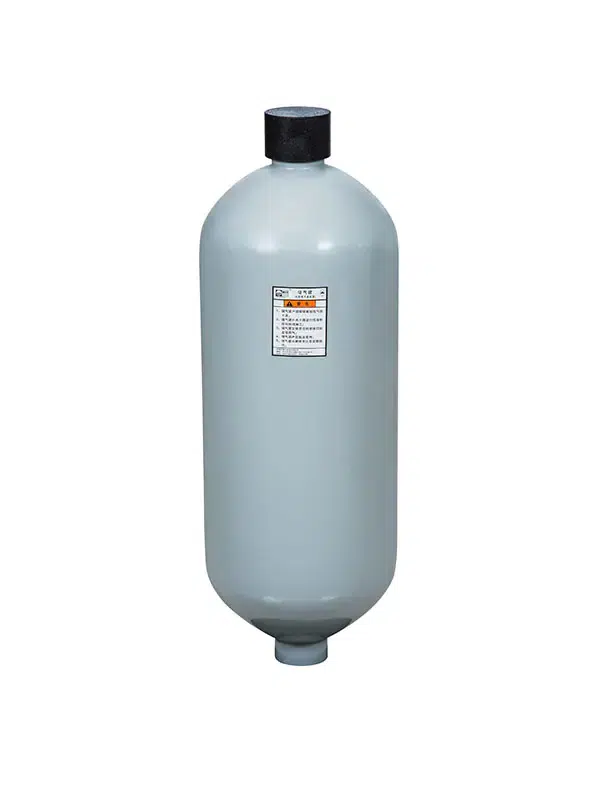
A hydraulic accumulator is a device that stores hydraulic fluid under pressure, typically by utilizing compressed nitrogen. In marine engines, its primary function is to provide an immediate supply of pressurized fluid to systems such as those controlling exhaust valves and fuel injection. When system demand increases, the hydraulic accumulator can rapidly deliver this fluid, ensuring an instantaneous response from the engine.
Key Takeaways
- A hydraulic accumulator stores fluid under pressure and releases it instantly whenever the engine requires it.
- To ensure the accumulator functions correctly, check the nitrogen pre-charge pressure every 6 months and inspect for leaks every 3 months.
- Different types of accumulators—bladder, diaphragm, and piston—are suited to various operating conditions; please select the appropriate type based on your engine’s requirements.
How the hydraulic accumulator works

Storing and releasing pressure
The operating principle of a hydraulic accumulator is similar to that of a gas spring. As hydraulic fluid enters the accumulator, it compresses the nitrogen gas contained within. This compression allows the hydraulic fluid to be stored under high pressure. When the system requires hydraulic fluid, the gas expands, pushing the pressurized fluid back into the system through the port.
This cycle repeats continuously during equipment operation. When system demand is low, the pump delivers hydraulic fluid into the accumulator; conversely, when demand surges, the accumulator releases the stored fluid. By utilizing this stored energy, the hydraulic system can respond immediately to instantaneous demands, without having to wait for the pump to react.
Key internal components
A hydraulic accumulator consists of three components that work in tandem. A fluid chamber stores hydraulic oil under pressure, while a gas chamber is filled with nitrogen. An isolation element is positioned between them to keep the two media separate.
The type of isolation element determines the accumulator’s design: bladder-type accumulators use a flexible bladder, diaphragm-type accumulators employ a flexible diaphragm, and piston-type accumulators utilize a rigid piston. Regardless of the specific type, these components allow the gas to exert pressure on the liquid without the two mixing.
The gas side is pre-charged with nitrogen to a specific pressure, which serves as a baseline. If the pre-charge pressure is set correctly, the accumulator can effectively store pressurized hydraulic oil and release it smoothly when needed; conversely, insufficient pre-charge pressure reduces the accumulator’s storage capacity and can cause the system to respond sluggishly. As part of routine maintenance, engineers periodically check this pre-charge pressure.
Accumulator function in marine engines
Bladder, diaphragm, and piston types
Different designs are suited to different application scenarios. Bladder-type accumulators are ideal for the stable, high-capacity storage of media. Diaphragm-type accumulators offer rapid response, making them well-suited for steering circuits and other load systems that require quick reactions. Piston-type accumulators serve as core components in offshore and marine energy storage systems, which typically involve high-capacity and high-pressure operating conditions. Manufacturers or suppliers can select the appropriate accumulator type based on the specific requirements of a circuit; in offshore applications, customized products are also quite common. For centralized pressure management, an accumulator station integrates multiple units for optimal performance.
Diaphragm-type accumulators have a known vulnerability: the diaphragm may rupture or tear—a common failure typically caused by pressure cycling, temperature fluctuations, or the incompatibility of the elastomer material. Should such a failure occur, the gas and fluid will mix, causing the accumulator to lose its functionality immediately. Other common failures include:
- Loss of pre-charged nitrogen due to permeation or valve leakage
- Internal corrosion caused by moisture ingress and poor fluid quality
- Damage to gas valves and charging ports resulting from improper charging procedures
- Accelerated diaphragm wear due to contaminants
- Reduced fatigue life caused by frequent pressure cycling
With proper maintenance, a diaphragm-type accumulator can have a service life of 10 to 20 years, depending on operating conditions.
Pressure, shock, and backup roles
In marine engines, accumulators serve three primary functions. First, they provide instantaneous fluid supply: in modern electronically controlled engines, accumulators within the hydraulic power source and control units deliver rapid hydraulic pressure for fuel injection and exhaust valve actuation. Second, they act as buffers and shock absorbers, dampening pressure spikes to protect pipelines and valves. Third, they serve as a backup supply, providing a short-term supplement of pressurized hydraulic fluid when the pump’s output is insufficient.
Furthermore, by utilizing stored hydraulic fluid, the system can handle peak demands even when the pump capacity is relatively low. Pumps can be sized based on average demand rather than peak demand, which reduces both initial equipment costs and installation space requirements. When a valve opens, the compressed nitrogen expands, rapidly forcing the stored hydraulic fluid back into the circuit—a response far faster than what a pump could achieve by building flow from scratch. Naturally, this capability has its limits: if demand consistently exceeds the pump’s output, the fluid in the accumulator will be depleted. Therefore, the pump must fully recharge the accumulator before the next peak demand occurs.
Given these functions, the accumulator is a core component for maintaining stable pressure within a marine engine’s hydraulic system. When selecting an accumulator for such a system, engineers should determine its gas volume based on peak demand rather than average demand.
Hydraulic accumulator on ships: function and maintenance
Main engine maintenance checks
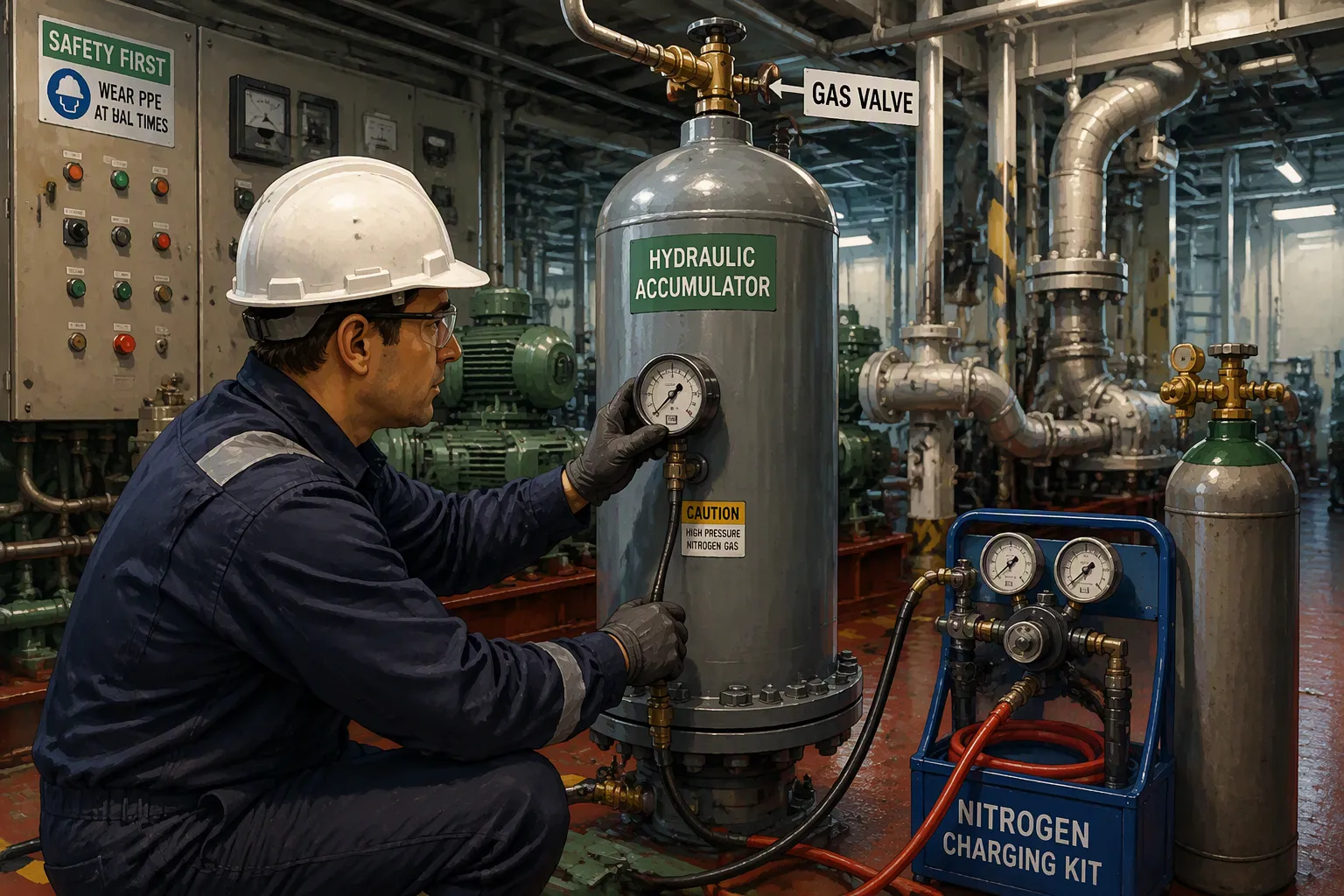
Regular inspection of the various hydraulic accumulators on board a vessel ensures their reliable operation. A standard inspection schedule includes checking the pre-charge pressure every six months and inspecting for external leaks every three months. For vessels or offshore platforms subject to more intensive operational demands, more frequent inspections may be required. Additionally, the internal bladder or diaphragm of each accumulator should be inspected every 12 months.
One critical rule must be strictly followed: when inspecting components associated with hydraulic pumps, the main machinery—as well as any start-up or booster pumps—must be completely shut down. Attempting an inspection while pumps are in operation will not only lead to inaccurate readings but also create significant safety hazards. A thorough understanding of how accumulators function and the maintenance requirements for their role within a vessel’s machinery system begins with strict adherence to this operational protocol.
Nitrogen charging and safety
Regular nitrogen recharging helps maintain stable pressure and reduces equipment wear. During every maintenance service, the nitrogen pressure should be checked to ensure it meets recommended standards. If the pre-charge pressure is too low, the system will be unable to handle sudden pressure demands, leading to frequent pump cycling and increased operating temperatures. Improper pre-charge pressure—whether too high or too low—interferes with the storage and release of energy.
Be alert for common signs of failure. A rapid drop in pre-charge pressure, the presence of hydraulic oil in the gas valve, unstable system pressure, unusual noises, or metal particles found in the hydraulic oil all indicate that the bladder inside the accumulator may be damaged. If oil is detected on the gas side (nitrogen side), it suggests that seals have worn, causing gas leakage, or that the bladder has ruptured. A bladder typically has a service life of 5 to 10 years and cannot be repaired once damaged.
Safe operation is critical. Always release system pressure before performing any maintenance; recharge the unit slowly through the gas valve; and never operate the equipment if a leak is present. Adhering to these operational protocols ensures both personnel safety and the protection of the hydraulic system.
Accumulators ensure the reliable operation of marine engines in three ways: by maintaining stable pressure, absorbing shock loads, and providing backup hydraulic power for exhaust valves and fuel injection control systems. Engineering personnel should incorporate “checking nitrogen pre-charge pressure” and “inspecting equipment during shutdown” into their routine tasks. Only when the crew carries out scheduled maintenance can hydraulic accumulators effectively serve their purpose of protecting the engine.
FAQ
How often should crews check the accumulator precharge?
The article suggests checking the precharge every 6 months. A leak inspection should happen every 3 months. Ships with heavy duty may need checks more often to keep pressure steady.
What happens when nitrogen pressure drops too low?
A low charge leaves no reserve for demand spikes. The pump then cycles fast and runs hotter. Correct nitrogen pressure keeps the hydraulic accumulator ready to release stored hydraulic fluid when needed.
How do crews spot a failed bladder or diaphragm?
Oil at the gas valve, erratic pressure, unusual noise, and metal particles in the fluid all point to failure. Bladders last 5–10 years. A damaged one cannot be repaired, so replacing it restores the function.