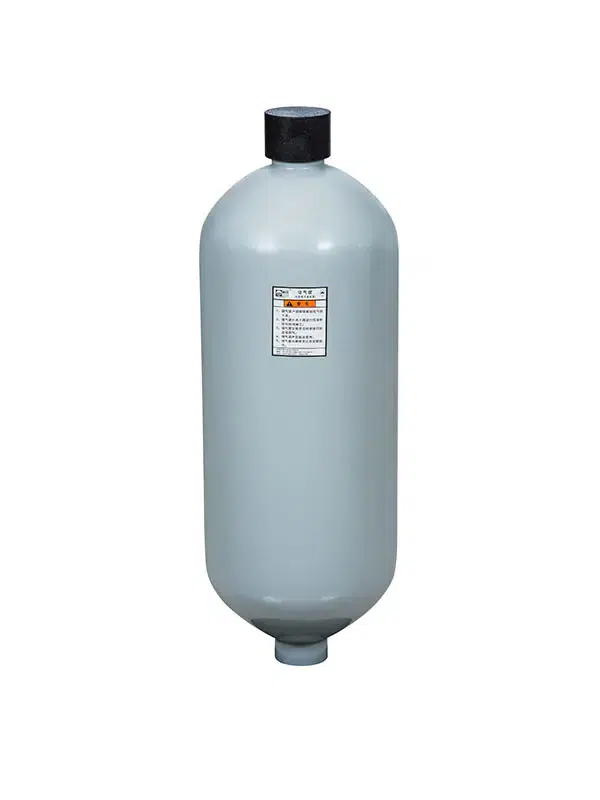

With proper maintenance, bladder-type accumulators can last for many years. Their service life depends on factors such as operating pressure, cycling frequency, fluid compatibility, temperature, and the maintenance of the nitrogen pre-charge pressure. As a manufacturer and supplier of bladder-type accumulators, Chaori Hydraulic recommends paying close attention to these factors.
Key Takeaways
- Set the nitrogen pre-charge pressure to 90% of the system’s minimum operating pressure. This reduces stress on the bladder and extends its service life by 30% to 50%.
- Check the pre-charge pressure daily at first, then switch to monthly checks, and perform a comprehensive inspection annually. Early detection of issues can prevent costly system failures.
- Use bladder materials that are compatible with the hydraulic fluid. Material incompatibility can lead to premature bladder failure and system malfunctions.
Factors Affecting Bladder Accumulator Life

The three primary factors determining the service life of a bladder-type accumulator are pressure cycling, temperature, and fluid compatibility. Each of these factors exerts direct stress on the bladder material. Properly managing the nitrogen pre-charge pressure can alleviate some of this stress, thereby significantly extending the accumulator’s service life.
Pressure, Cycles, and Temperature
Pressure cycling causes fatigue in the bladder. The bladder is subjected to mechanical stress during every expansion and contraction cycle. Rapid pressure fluctuations increase this stress, thereby shortening the bladder’s fatigue life. Its design life is determined by the number of pressure cycles rather than the duration of use; for instance, a system cycling once per minute will experience faster wear than one cycling once per hour.
Over time, the diaphragm also suffers from fatigue due to pressure cycling and temperature fluctuations. Severe pressure fluctuations impose greater mechanical stress on the diaphragm, shortening its fatigue life and leading to premature failure.
Temperature exacerbates the effects of pressure cycling. While the accumulator shell is rated for an operating temperature range of -60°C to +200°C—compatible with carbon steel, low-temperature steel, and stainless steel—polymer bladders have stricter limits, with a maximum operating temperature of 180°F (approximately 82.2°C). Bladder service life drops sharply when temperatures exceed 80°C; in systems operating at 90°C, bladder failure often occurs much sooner than expected.
Maintaining a minimum pressure prevents another common failure mode. If hydraulic pressure drops to zero, the poppet assembly can sink and pull the bladder into the fluid port, leading to issues such as bladder extrusion, pinching, or rupture. Re-pressurizing the system while the bladder is folded or twisted creates uneven stress, resulting in rapid failure. Maintaining a minimum pressure above zero avoids these problems.
Fluid Compatibility and Nitrogen Pre-Charge
Fluid compatibility determines the choice of bladder material. The bladder elastomer must be able to withstand chemical degradation caused by the hydraulic fluid; incompatibility can lead to swelling, softening, or hardening of the material over time.
| Bladder Material | Compatible Fluid Systems |
|---|---|
| NBR | Mineral oil |
| ECO | Water-glycol |
| IIR | Phosphate ester |
| FKM | Biodegradable fluids |
Selecting the wrong material can lead to a rapid loss of nitrogen pre-charge pressure, the presence of hydraulic fluid in the gas valve, unstable system pressure, abnormal operating noise, or the appearance of metal particles in the fluid. These signs indicate degradation of the bladder material, a direct result of fluid incompatibility.
Nitrogen pre-charge pressure is a critical, adjustable factor influencing the service life of the bladder. In accumulator applications, the pre-charge pressure should be set to approximately 90% of the system’s minimum pressure. This balance ensures sufficient fluid volume while maintaining adequate gas space, thereby preventing bladder damage, mitigating pressure spikes, and reducing the frequency of pump start-stop cycles.
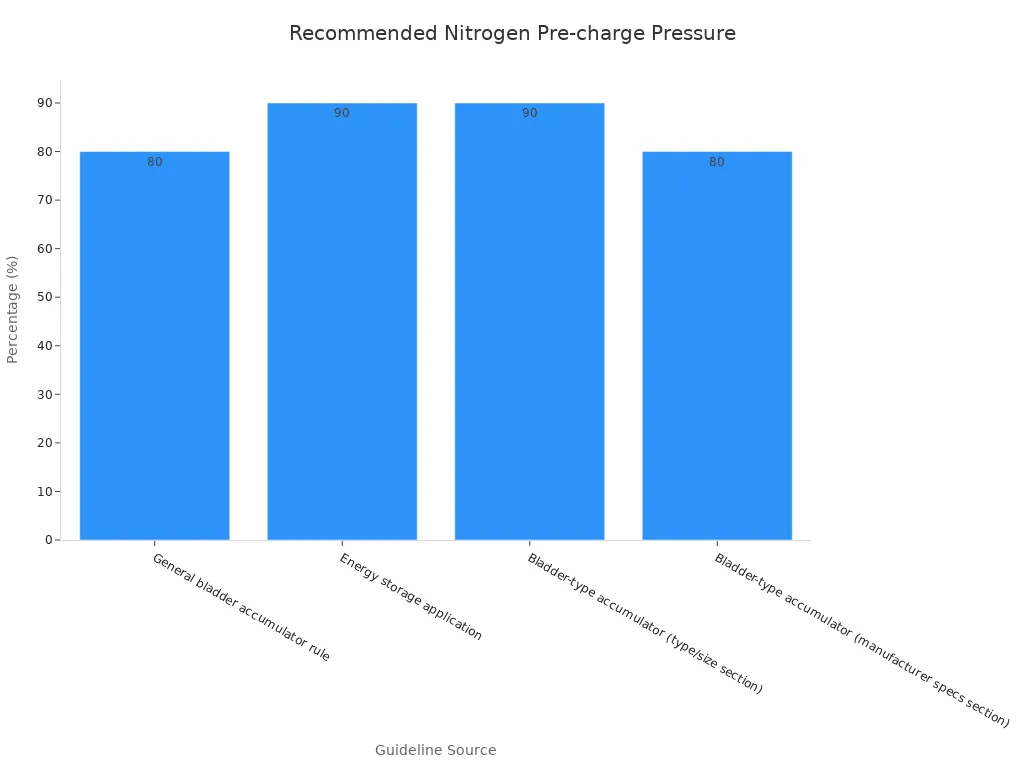
Best practices include charging the accumulator to a pressure slightly above the target pre-charge level to compensate for hysteresis effects. Always use dry nitrogen for pre-charging; never use oxygen or compressed air. The charging process should be performed slowly while monitoring the pressure with a gauge. For small accumulators, the measured pre-charge reading may appear lower than actual due to the internal volume of the pressure gauge itself.
Chaori Hydraulic manufactures high-quality bladder, piston, diaphragm, and stainless steel accumulators. Drawing on decades of manufacturing experience, Chaori Hydraulic provides both custom and wholesale accumulator solutions designed to meet the demands of diverse duty cycles and operating conditions.
Bladder Accumulator Warning Signs and Inspection

Common Failure Indicators
A failing bladder accumulator sends clear signals before it stops working. Operators should watch for these warning signs.
| Symptom | Cause | Effect |
|---|---|---|
| Erratic system pressure | Bladder lost pre-charge or perforated | Pressure spikes or sudden drops during load changes |
| Sluggish actuator response | Loss of usable gas volume | Actuators respond with lag or chatter |
| External fluid leakage at fittings | Bladder rupture or degraded seals | System contamination and safety risk |
| Knocking or abnormal vibration | Gas pockets or bladder hitting poppet valves | Increased wear on nearby components |
| Pressure gauge instability | Internal imbalance or gas leakage | Frequent system trips and safety hazards |
A rapid drop in pressure after system shutdown strongly indicates a loss of pre-charge pressure or a ruptured bladder. In a typical system, an accumulator in good condition generally maintains pressure for an extended period without a significant decline. If pressure drops rapidly in the absence of external leaks, it is highly likely that the bladder has completely ruptured. Fluid contamination is another serious issue; the ingress of dirt, metal particles, and moisture into the hydraulic system—and their subsequent accumulation within the accumulator—can cause wear on internal components and corrosion of the shell.
Inspection and Servicing Schedule
Regular inspections help extend service life. Timely replacement of the bladder is part of routine maintenance and can significantly prolong the equipment’s lifespan.
- After installation, the pre-charge pressure should be checked frequently; if the pressure remains stable, the inspection interval can be gradually extended.
- Older systems require regular inspections.
- A comprehensive inspection should be performed at least once a year. For systems involving high-frequency cycling or safety-critical functions, the inspection frequency must be increased.
- In high-frequency cycling applications, seals must be inspected regularly.
- Accumulators should be removed for hydrostatic testing at intervals recommended by the manufacturer or mandated by local regulations.
Comprehensive maintenance inspections include: checking and adjusting the nitrogen pre-charge pressure, inspecting seals for wear, checking the shell for corrosion, and verifying the safety relief valve. Never attempt to repair the accumulator shell; if the shell is damaged, it must be scrapped and replaced. Local regulatory authorities may require recertification.
The following five inspection methods help detect bladder ruptures early: first, check the condition of the hydraulic fluid—foaming or air entrainment often indicates gas leakage into the fluid; second, check the accumulator gas pressure; third, check the pressure stability of the hydraulic system; fourth, inspect the accumulator body for physical damage or leaks; and fifth, remove the accumulator for an internal inspection if necessary.
As a manufacturer and supplier of bladder-type accumulators, Chaori Hydraulic offers a wide range of accessories to support proper maintenance and reliable equipment operation. Choosing a trusted supplier helps teams establish efficient inspection schedules and procure replacement parts in bulk.
Repair or Replace?
When Repair Is Viable
If the issue is limited to the internal bladder of the accumulator, repair is a highly effective solution. Problems such as bladder wear or seal leaks are minor and can be resolved through component refurbishment or the use of a repair kit. Naturally, the shell, connections, and charging valve must first be inspected; if the shell is in good condition but the bladder has aged, repair is an ideal option.
If the accumulator shell is damaged, the unit should be replaced rather than repaired.
Cost is also a key factor in the decision-making process. When repair costs approach the price of a new, certified vessel, purchasing new equipment is more cost-effective. You can consult a trusted bladder-type accumulator supplier and request comparative quotes for both options.
When Replacement Is the Only Option
Pressure vessels must be replaced if they malfunction. Inspectors should carefully examine the vessel body, connections, and valves for cracks or dents, and check the shell for signs of corrosion or rust. Welds, joints, and connection points are critical areas for inspection; even minor leaks detected during the process could escalate into serious issues later.
Repair or recharging is appropriate only if the vessel body is free from corrosion, dents, or thermal damage. If the shell exhibits corrosion or cracks, or has undergone improper repairs, it should not be repaired and must be replaced. Additionally, failure to pass recertification requires replacement in accordance with local regulations.
As a manufacturer and supplier, Chaori Hydraulic offers custom replacement parts and wholesale services, backed by relevant industry certifications. Their expert team assists customers in determining the optimal solution for each piece of equipment.
The service life of a bladder accumulator depends on operating conditions, fluid quality, and routine maintenance. Regular inspections and proper nitrogen pre-charging help extend service life and reduce ownership costs. You can contact trusted suppliers like Chaori Hydraulic for customized solutions and wholesale parts. Regular maintenance effectively minimizes downtime and lowers the total cost of ownership.
FAQ
How long does a bladder accumulator usually last?
With regular maintenance, most equipment can have a service life spanning many years. In heavy industry, they often remain in use for extended periods. Their design life varies depending on operating conditions and maintenance practices.
How often should someone check the nitrogen pressure?
Check the pressure regularly after installation; if the pressure remains stable, the inspection interval can be gradually extended. Older equipment requires more frequent checks. An annual comprehensive inspection helps detect slow pressure loss.
When should a unit be replaced instead of repaired?
If the housing shows signs of corrosion, cracks, or dents, the unit must be replaced; replacement is also mandatory if it fails recertification. Repairs are permissible if only the inner liner is worn. The manufacturer and supplier, Chaori Hydraulic, offers custom replacement parts and wholesale services.