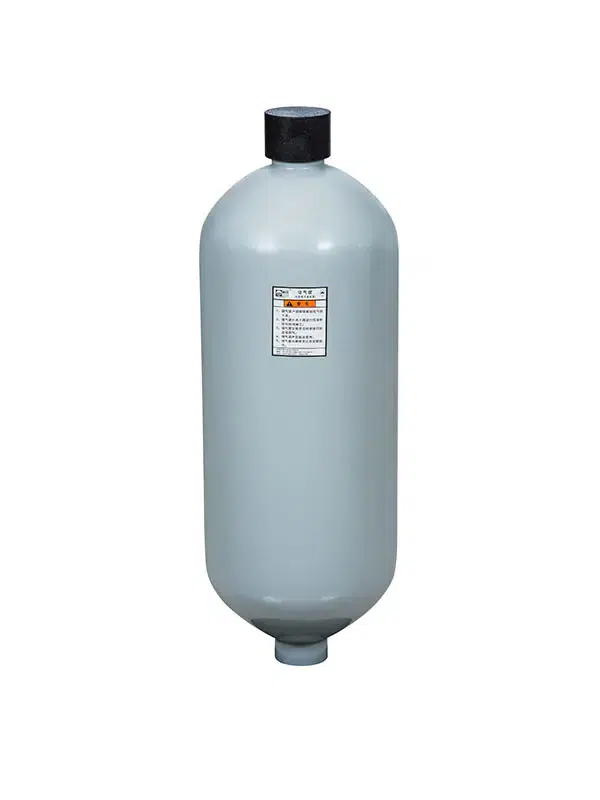
A hydraulic accumulator is a pressure-storage device that stores pressurized fluid and releases it when needed. Its primary function is to provide energy storage, shock absorption, and pressure maintenance within a hydraulic system. Compared to electric batteries, accumulators store less energy per unit of weight but deliver power more rapidly. This makes them essential for emergency power, pulsation damping, and stabilizing pressure across many industries.
Key Takeaways
- Hydraulic accumulators store pressurized fluid and release it when needed, providing emergency power to keep systems running during pump failure.
- By absorbing shocks and maintaining stable pressure, they reduce noise and vibration and prevent damage from pressure spikes.
- Various accumulator types are available for different pressure and flow requirements. Selecting the right one ensures safe and efficient operation.
Key Functions of a Hydraulic Accumulator

Energy Storage and Emergency Power
Accumulators store energy using compressed nitrogen. During normal operation, they fill with fluid; if the pump stops, the stored fluid drives actuators to safe positions. This provides emergency power for offshore shut-off valves, aerospace landing gear and braking, and industrial automation to prevent downtime. They also supplement pump flow, allowing smaller pumps, and accommodate thermal expansion. Pre-charge settings: bladder-type at 80% of minimum operating pressure; piston-type at 100 psi below minimum. Always depressurize the fluid side and use dry inert gas.
Shock Absorption and Pressure Maintenance
Accumulators absorb pressure peaks and pulsations, reducing noise, vibration, and water hammer. They maintain pressure during minor leaks, pump stops, or low-flow periods. For pulsation damping, set nitrogen pre-charge to 80–90% of minimum operating pressure to keep some fluid in the accumulator and prevent internal components from striking the vessel end. Incorrect pre-charge can damage the accumulator.
Types of Hydraulic Accumulators

Bladder, Diaphragm, and Piston Designs
- Diaphragm: under 3,000 PSI; compact and economical.
- Bladder: up to ~5,000 PSI; fast response, good for shock absorption.
- Piston: 5,000 PSI and above; high pressure, large volumes; flow up to 215 L/s; gas compression ratio up to 10:1.
Stainless steel accumulators are available for corrosive environments.
Accumulator Stations and Accessories
Accumulator stations integrate storage units for large systems. They include mounting brackets, control valves, ball valves, and piping; piston-type stations also have gas protection valves and nitrogen bottles. Accessories include charging tools, check valves, clamps, and safety valve blocks (PED 2014/68/EU compliant). Chaori Hydraulic, established 1978, manufactures bladder, piston, diaphragm, and stainless steel accumulators and stations; ISO9001, ASME, CE certified.
Common Applications of Hydraulic Accumulators
Industrial and Mobile Machinery
Used in agriculture (tractors, harvesters), mining, drilling, and construction (excavators) to absorb shocks and maintain pressure. They protect pumps, valves, and structures from pressure spikes and reduce downtime. Vehicle suspension systems use nitrogen-charged spheres to adjust spring and damping dynamically.
Wind Power and Marine Systems
Wind turbines use piston accumulators for fail-safe pitch control and braking. Marine and offshore systems rely on accumulators for heave compensation and emergency shutdown, including blowout preventers. Certification is critical: ABS requires Charpy impact testing, DNV GL mandates witnessed pressure testing, and USCG 46 CFR 61.10 requires hydrostatic testing at 1.5× MAWP if defects are found.
FAQ
What does an accumulator do in a hydraulic system?
It maintains fluid under pressure and releases it when needed, providing energy storage, shock absorption, and emergency power.
How does an accumulator maintain pressure?
It stores nitrogen behind a bladder, diaphragm, or piston. When pump output drops, the gas expands and forces hydraulic fluid out, maintaining stable pressure.
Why do hydraulic accumulators matter for safety?
They absorb pressure fluctuations, smooth out spikes, and provide backup power during pump failure, protecting equipment and ensuring safe operation of critical tasks.