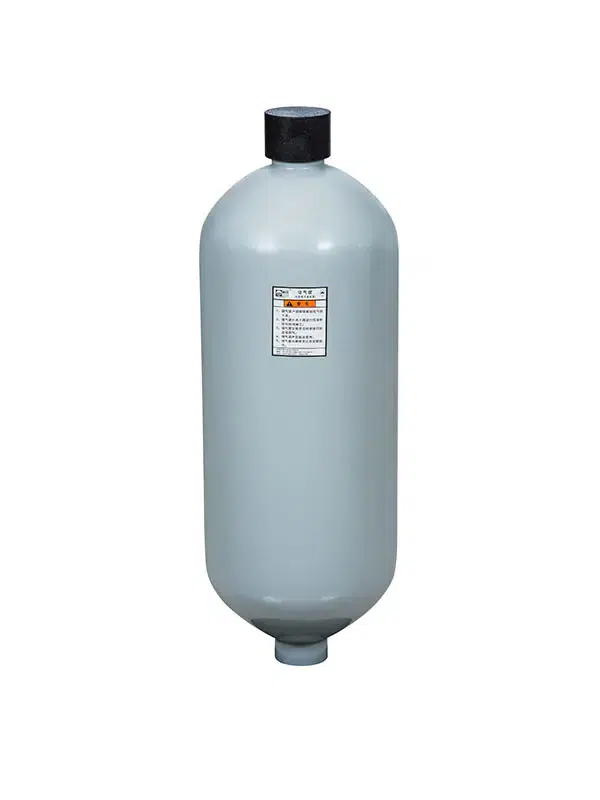
In hydraulic systems, hydraulic accumulators primarily serve to store and release energy, stabilize system pressure, and enhance overall operational performance, thereby ensuring the system operates both efficiently and safely. During load fluctuations or periods of increased instantaneous flow demand, accumulators provide compensatory flow, minimize pressure variations, and dampen shocks and vibrations, thereby preventing the occurrence of dangerous pressure spikes. Furthermore, they provide auxiliary flow support during high-speed equipment operation and can absorb fluid expansion caused by temperature changes, thereby protecting system components from damage. When necessary, accumulators can also function as an emergency power source, improving the system’s response speed, operational smoothness, and overall reliability.
Key Takeaways
- Hydraulic accumulators are capable of storing energy and maintaining pressure, thereby ensuring the efficient and smooth operation of mechanical equipment.
- They can absorb shocks and dampen vibrations, not only protecting equipment from damage but also effectively reducing noise levels.
- In the event of a power failure, accumulators can provide emergency power, ensuring that critical systems—such as braking systems and safety valves—continue to function properly.
- You should select the appropriate accumulator type—whether bladder, piston, or diaphragm—based on your system’s specific requirements and the available installation space.
- It is essential to conduct regular inspections and maintenance on your system, including pressure testing and checking for leaks. These maintenance measures ensure that your hydraulic system remains in a safe and efficient operating condition at all times.
Hydraulic Accumulator Functions
Energy Storage
A hydraulic accumulator functions as a “pressure reservoir” within your system. It stores hydraulic fluid under pressure, thereby serving as an energy reserve. When your machinery requires additional power, the accumulator rapidly releases this fluid, accelerating the equipment’s movement and optimizing its overall operational performance.
- When the system’s power demand is low, the accumulator stores energy.
- Conversely, when the system requires greater power, the accumulator releases this stored energy back into the system.
This ensures that your hydraulic pump does not need to operate continuously under heavy load, thereby achieving energy savings.
Pressure Maintenance
Maintaining pressure stability is a crucial function of a hydraulic accumulator. The accumulator sustains pressure by replenishing fluid until the hydraulic pump is able to recharge the system; this helps ensure that the system consistently operates at an appropriate pressure level, even in the event of load fluctuations or minor leaks.
Here is a table that shows how the accumulator helps with pressure:
| Functionality | Explanation |
|---|---|
| Energy Storage | Saves and gives energy to help with pressure changes when loads go up or down. |
| Leakage Compensation | Keeps pressure steady even if there are slow leaks, so things run smoothly until the pump helps. |
| Temperature Compensation | Fixes pressure changes from temperature shifts, so your system stays safe. |
| Faster Response | Sends fluid fast to meet high flow needs and keeps pressure even when things change quickly. |
Pulsation and Shock Dampening
Hydraulic systems frequently encounter issues involving instantaneous pressure surges (known as “pressure spikes”) and vibration. Leveraging the inherent compressibility of the nitrogen gas contained within its bladder—in contrast to the non-compressible nature of hydraulic fluid—a hydraulic accumulator effectively absorbs and dissipates shocks while dampening fluctuations, thereby providing robust protection for valves, hoses, and other critical components.
Specifically, when valves close rapidly, the accumulator effectively mitigates the resulting pressure spikes; it also dampens vibrations generated by the pump, ensuring that your system operates more quietly and smoothly.
Emergency Power and Leakage Compensation

In the event of a main power failure, a hydraulic accumulator releases its stored fluid to actuate critical equipment—such as emergency brakes or safety valves—providing essential backup power precisely when you need it most.
- In industrial plant environments, it ensures that machinery continues to operate uninterrupted during brief power outages.
- In the aviation sector, should the primary hydraulic system fail, it assists in the proper functioning of the landing gear or braking systems.
- In offshore drilling operations, it guarantees the proper opening and closing of safety valves, even in the event of a power interruption.
Furthermore, accumulators play a vital role when the system experiences slow leaks; they continuously replenish the fluid to maintain stable system pressure. Once the pressure drops to a preset lower limit, a corresponding control switch triggers the hydraulic pump to recharge the accumulator. This mechanism not only ensures smooth system operation but also prevents the hydraulic pump from running continuously.
Tip: Utilizing accumulators to address both emergency power requirements and system leakage issues helps you avoid costly losses resulting from downtime, thereby ensuring the safety and efficiency of your operations.
Types of Hydraulic Accumulator
There are three main types of hydraulic accumulators. Each one has special parts that make it good for certain jobs. You can pick the best type by knowing how each works.
| Accumulator Type | Construction | Operation | Typical Use / Features |
|---|---|---|---|
| Bladder | Uses a flexible bladder to separate gas/fluid | Gas compresses to store energy; bladder pushes fluid out | Fast response, great for shock absorption |
| Piston | Uses a moving piston to separate gas/fluid | Gas compresses; piston moves to release or store energy | Handles high pressure, large capacity, heavy machinery |
| Diaphragm | Uses a flexible diaphragm to separate gas/fluid | Gas compresses; diaphragm flexes to release or store energy | Compact, quick response, low maintenance |
Bladder Type
Capsule-type structures are frequently used in mechanical equipment requiring rapid response.
- You can use bladder accumulators in:
- Hydraulic presses and forming machines
- Oil filtration systems
- Injection molding machines
- Mining equipment
- Wind turbines
Ningbo Asahi Hydraulics offers bladder accumulators characterized by their responsive performance and excellent elasticity. You can customize products with specific dimensions and pressure ratings to meet your system requirements.
Piston Type
Piston accumulators are well-suited to meet the demands of high-pressure environments and large-scale operations, and are widely utilized in major industrial facilities and various types of mobile machinery. Ningbo Chaori Hydraulic is dedicated to assisting you in selecting the optimal specifications and functional configurations tailored to your specific operating conditions.
Diaphragm Type
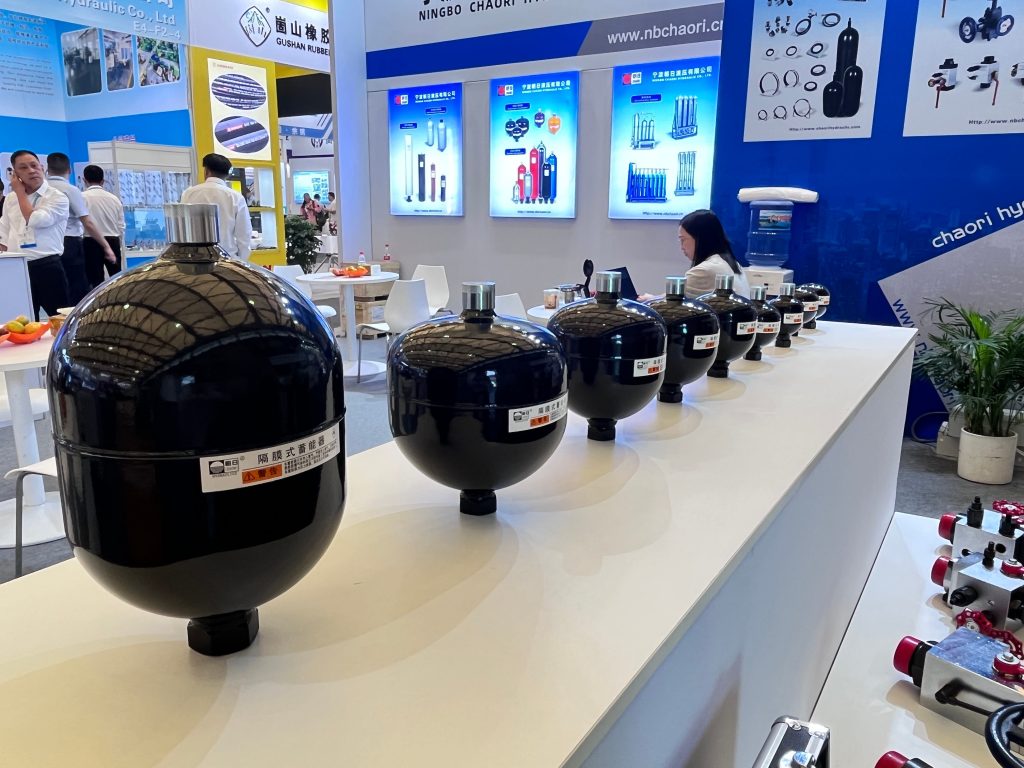
Diaphragm-type accumulators are particularly well-suited for confined spaces and mobile machinery. If you require a highly safe and compact diaphragm accumulator, Ningbo Chaori Hydraulic is your trusted and preferred choice.
Note: All accumulators manufactured by Ningbo Chaori Hydraulic hold top-tier safety certifications, including ISO9001, ASME, and CE. Regardless of the specific application scenario, we provide exceptional quality, reliable safety assurance, and comprehensive professional technical support.
| Certification/Standard | Description |
|---|---|
| ISO 9001 | Quality management system certification |
| ASME | Pressure vessel manufacturing certificate |
| CE | Compliance with EU safety standards |
Practical Applications of Hydraulic Accumulators
Industrial and Mobile Equipment
Hydraulic accumulators are widely utilized across various types of mechanical equipment. They play a pivotal role in enhancing operational efficiency within both industrial plants and agricultural settings. Equipment such as tractors, harvesters, and sprayers rely on accumulators to augment their operational capabilities. Mining machinery also depends heavily on accumulators, utilizing them to absorb shock and maintain pressure stability. Drilling rigs and transport trucks similarly incorporate this technology. Furthermore, accumulators can be found in wind turbines and robotic systems. Hydraulic accumulators are also extensively employed in sectors ranging from marine vessels and aircraft to oil and gas extraction equipment and power generation plants.
Hydraulic accumulators enable heavy machinery to conserve energy while facilitating rapid movement. Beyond maintaining system pressure stability, they can—to a certain extent—compensate for pressure losses caused by internal leakage. This ensures that various operations are conducted with greater safety and reliability.
Construction and Heavy Vehicles
Hydraulic accumulators are indispensable components in both construction sites and heavy-duty vehicles. These devices store energy generated by the engine or hydraulic pump, utilizing this stored energy to power hydraulic components and thereby reduce the operational load on the engine and pump. This not only minimizes system pressure fluctuations but also enhances the smoothness of equipment operation, thereby ensuring that your machinery remains safer and more reliable.
Furthermore, hydraulic accumulators effectively prevent the sudden uncontrolled descent of heavy loads in the event of an unexpected system failure, thereby averting accidents that could result in personal injury or equipment damage.
FAQ
What does a hydraulic accumulator do in my machine?
Hydraulic accumulators store energy for your equipment, maintain stable pressure, and absorb shocks, thereby facilitating smooth and safe operation. This not only enhances operational efficiency but also extends the equipment’s service life.
How do I know which type of accumulator I need?
Bladder-type accumulators offer rapid response; piston-type accumulators are suitable for high-pressure environments; and diaphragm-type accumulators are ideal for confined spaces. Please consider your system’s pressure, flow rate, and spatial requirements; if you are unsure, please contact us for assistance.
How often should I check my accumulator?
Please inspect the accumulator at least once every three months to check for leaks and test the pre-charge pressure; simultaneously, please also inspect the safety devices. Conducting these checks regularly helps ensure that your system operates safely and remains in good working condition.
Can I use a hydraulic accumulator for emergency power?
Yes, you can utilize an accumulator as an emergency power source. When the main pump ceases operation, it provides power to assist in driving brakes, safety valves, or other critical components, thereby ensuring the safe operation of your equipment during emergency situations.