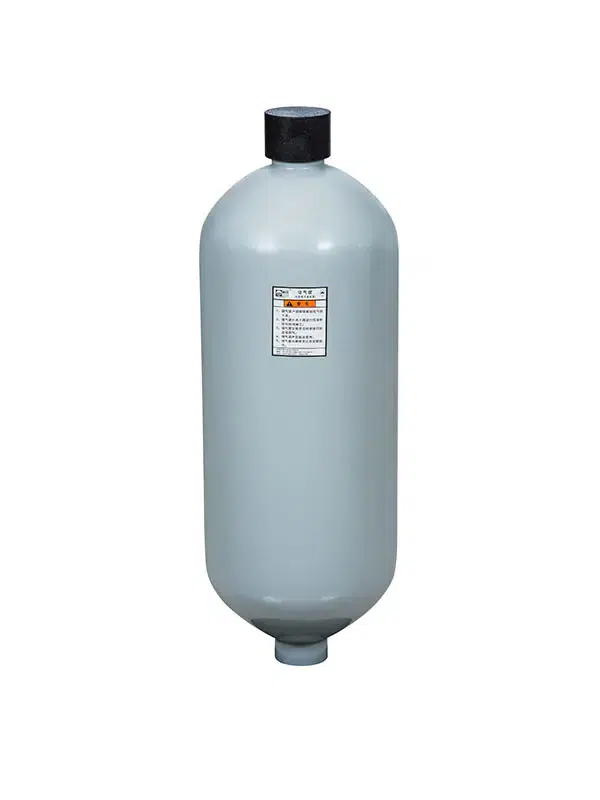

An accumulator stores potential energy, usually as compressed gas or pressurized fluid. Think of a coiled spring: it holds energy quietly until released. In hydraulic systems, this stored force does work on demand, powering machinery efficiently. The energy stored in accumulator systems reduces pump strain and cuts power use, making operations smoother and more cost-effective.
The market shows growing reliance on this technology. The aerospace accumulator segment alone is expected to grow from USD 610.4 million in 2024 to USD 932.1 million by 2030, a 6.3% compound annual rate.
| Metric | Value |
|---|---|
| Forecast Period | 2024 – 2030 |
| Market Size 2024 | USD 610.4 million |
| Market Size 2030 | USD 932.1 million |
| CAGR | 6.3% |
This article explains the principles, types, uses, and trade-offs of accumulators, giving a clear understanding for engineers and curious readers alike.
Key Takeaways
- An accumulator stores potential energy as compressed gas or pressurized fluid, ready to release on demand.
- Bladder accumulators respond quickly and work at high pressure, while piston types manage bigger flows and even higher pressures.
- Using accumulators can reduce energy use by up to 15% and improve efficiency, saving money.
- Accumulators give backup power and even out pressure spikes, which protects equipment and helps it last longer.
- Regular maintenance, such as checking precharge pressure, keeps accumulators dependable and efficient.
Understanding Energy Stored in Accumulator

Core Principle of Energy Storage
The energy stored in accumulator systems relies on a straightforward physical process. A hydraulic accumulator stores energy by compressing a gas, typically nitrogen, as hydraulic fluid enters the vessel under pressure. This compression transforms mechanical work into potential energy held within the gas molecules. When the system needs power, the compressed gas expands and pushes the stored fluid back into the circuit, releasing that potential energy as kinetic energy to drive actuators or perform mechanical work.
The accumulator requires a precharge before operation. This precharge is the initial static pressure of inert gas pumped into the vessel before connecting it to the hydraulic system. This baseline pressure gives the gas something to compress against, allowing the unit to store and release fluid effectively. Without proper precharge, the energy accumulation process becomes unpredictable and inefficient.
The accumulator is pre-charged with nitrogen gas. When hydraulic pressure increases, oil enters the accumulator and compresses the gas. When system pressure drops, the compressed gas expands and pushes the stored oil back into the hydraulic circuit.
Boyle’s Law governs this gas compression behavior. In a confined gas at constant temperature, pressure is inversely proportional to volume. For a gas with initial pressure P₁ and volume V₁, a change to new pressure P₂ and volume V₂ follows the equation P₁V₁ = P₂V₂, provided temperature remains constant. This relationship forms the mathematical foundation for sizing energy accumulators correctly.
However, real-world conditions complicate this simple formula. Compressing gas rapidly, in under half a second, causes temperature spikes that raise pressure above the isothermal prediction. The gas then slowly cools back to ambient temperature. For fast cycles under 10 seconds, engineers must apply the adiabatic exponent of 1.4. For slow cycles over 30 seconds, the isothermal exponent of 1.0 applies. Gas pressure also changes approximately 4% per 10°C, so temperature variations must factor into precharge calculations to avoid bladder collapse or insufficient pressure.
| Condition | Exponent n | Heat Transfer | Typical Cycle Time | Application Examples |
|---|---|---|---|---|
| Isothermal | 1 | Heat dissipates completely; gas temperature constant | Slow (>30 seconds) | Holding devices, clamping, leak compensation |
| Adiabatic | 1.4 | No heat transfer; gas temperature rises | Rapid (<10 seconds) | Flow supplementation, valve actuation |
Potential vs. Kinetic Energy in Systems
Understanding the distinction between potential and kinetic energy clarifies how accumulators function within larger systems. Potential energy represents stored energy waiting to act, like a coiled spring or a raised weight. Kinetic energy represents energy in motion, like a moving piston or flowing fluid. The energy stored in accumulator units exists entirely as potential energy while the gas remains compressed.
The transformation between these energy forms happens continuously in hydraulic machinery. Consider a bladder accumulator filling with pressurized fluid. The nitrogen-charged bladder compresses, storing hydraulic energy equal to the volume of fluid taken in multiplied by the precharge pressure. When downstream pressure drops, the bladder re-expands, pushing oil out and releasing the stored energy. This cycle converts potential energy into kinetic energy on demand.
Different industrial applications demonstrate this energy transformation clearly. Lifting massive objects converts electrical energy into potential energy against gravity. Pumped hydroelectric storage pumps water to a high pool at night, then releases it during the day to drive turbines. Flywheel storage spins a massive rotor in a vacuum, storing kinetic energy that drives a generator on discharge. Each example shows the same principle: energy accumulation creates a reservoir that systems draw upon when needed.
This approach delivers significant efficiency gains. Energy accumulators allow systems to use smaller, less costly pumps while the accumulator manages peak demand. The unit handles short bursts of high energy consumption without requiring the pump to run continuously at maximum output. This reduces installed power requirements and lowers overall operating costs. Properly sized accumulators also smooth pressure fluctuations, protecting sensitive components and extending equipment life.
The practical result is a system that responds instantly to demand spikes while maintaining steady baseline operation. Engineers select accumulator size based on the usable oil volume between minimum and maximum pressure, the cycle period, and the peak flow deficit. These calculations ensure the unit provides exactly the right amount of energy when needed, maximizing system performance and reliability.
Types of Energy Accumulators and How They Work
Bladder and Diaphragm Accumulators
Bladder accumulators are the most common hydro-pneumatic type used in industry. A flexible rubber bladder inside a steel shell keeps nitrogen gas separate from hydraulic fluid. When fluid enters under pressure, the bladder compresses and stores potential energy. These units respond very fast because the bladder changes shape instantly under pressure. Chaori Hydraulic makes bladder accumulators with compact, fast-responding designs and strong sealing, making them ideal for high-pressure industrial use.
The performance range for bladder units impresses engineers. They handle pressures up to 6,000 PSI while keeping a 4:1 gas-to-fluid ratio. Their lightweight build suits mobile equipment where weight matters. Maintenance stays simple since technicians can replace bladders without special tools. These energy accumulators also excel at shock absorption, protecting system parts from harmful pressure spikes. The excellent gas-fluid separation reduces nitrogen absorption into the oil, keeping fluid quality over long service intervals.
Diaphragm accumulators serve precision tasks that need small fluid volumes. A flexible diaphragm splits the vessel into gas and fluid chambers. These units reach compression ratios up to 8:1, much higher than bladder designs. They react fastest to sudden pressure changes, making them valuable for aerospace, rail, and renewable energy systems. Chaori’s diaphragm accumulators offer excellent sealing and sensitivity for low- and high-pressure small-capacity needs, perfect for precision equipment like wind turbine pitch control and marine steering systems.
| Factor | Bladder | Diaphragm | Piston |
|---|---|---|---|
| Response Time | Ultra-fast | Fastest | Slightly slower |
| Max Pressure | Up to 6,000 PSI | Below 350 bar | Up to 10,000+ PSI |
| Compression Ratio | 4:1 | 8:1 to 10:1 | Higher ratios |
| Typical Use | High-pressure industrial | Precision small-capacity | Heavy-duty large-flow |
Piston and Custom Accumulator Stations
Piston accumulators use a free-floating piston as the separator between gas and fluid. This mechanical design handles higher gas compression ratios and flow rates than bladder units. The response time runs slightly slower due to moving parts, but the piston keeps pressure more stable over long periods. These energy accumulators handle pressures up to 10,000+ PSI, making them essential for tough scenarios. Chaori produces piston accumulators for high-pressure, large-flow applications with long service life, suitable for hydraulic presses and heavy machinery.
Industrial presses and injection molding machines rely on piston accumulators for quick bursts of fluid energy. These units store hydraulic energy during low demand and release it when needed, keeping system pressure during high-demand periods. Oil and gas operations and defense equipment depend on their reliability in harsh environments where stable pressure is critical for safety. The mechanical piston provides great versatility and dependable performance in the most demanding applications.
Custom accumulator stations centralize energy storage for large-scale hydraulic systems. These integrated units combine multiple accumulators, control valve blocks, ball valves, gas safety valves, and gas cylinder banks into one assembly. Engineers specify the number of accumulators, volume per unit in liters, working pressure in MPa, and the medium type. Chaori designs custom stations that improve system-level performance through integrated mechanical design and operational strategies tailored to specific applications.
The selection process for any accumulator type follows a logical order. Engineers define the operating pressure window and effective discharge volume per cycle. They pick the accumulator type based on response speed, space limits, and maintenance preferences. They check local pressure vessel rules and manufacturer certifications like ISO9001, ASME, and CE. They confirm fluid compatibility for bladder, diaphragm, and seal materials. Finally, they evaluate long-term supply, including catalog depth and spare parts availability. This step-by-step approach ensures the chosen energy accumulators deliver reliable performance throughout their service life.
Key Applications in Energy Storage Systems

Industrial Machinery and Heavy Equipment
Energy accumulators play key roles in many industries. These units store hydraulic energy when demand is low and release it quickly when machines need fast action. Excavators use the energy from moving down to help lift, which cuts fuel use a lot. Hydraulic presses keep steady pressure with accumulator support, which boosts output and keeps part quality the same.
Steel mills show how flexible these parts are. Rolling mills, shears, presses, ladle turrets, and electric arc furnace circuits all use accumulators to absorb shocks and smooth out pressure changes. These jobs protect pumps, valves, and pipes from harmful pressure jumps. Accumulators also make up for fluid leaks and heat expansion, keeping systems stable at different temperatures. Chaori Hydraulic provides piston accumulators for these tough jobs, handling pressures above 10,000 PSI with a long lifespan.
The gains from using accumulators well are big. Storing energy in an accumulator lets facilities use cheaper pumps while the unit handles peak demand. This cuts the power needed and lowers running costs. Farm tractors, steel mill equipment, and hydraulic presses all gain from this way of managing energy.
Renewable Energy and Marine Systems
Wind turbines depend heavily on accumulator technology for safety and performance. Pitch system accumulators turn blades to feather position in emergencies, with each blade often having its own unit. These accumulators meet IEC safety standards and work safely even when the grid fails. Yaw system accumulators turn the nacelle smoothly and allow emergency yaw release. Brake system accumulators apply or release mechanical brakes on the high-speed shaft, ensuring reliable operation when the hydraulic pump loses power.
| Metric | Value | Context |
|---|---|---|
| Pitch system failure reduction | 40% | After retrofitting Danish offshore turbines with 6,000 psi piston accumulators |
| Maintenance frequency reduction | 30–50% | Onshore and offshore turbines (Global Wind Energy Council, 2023) |
| Gearbox/bearing lifespan increase | Up to 20% | Due to mitigated vibrations and pressure spikes |
| Hydraulic failure rate | Zero | Texas wind farm during 2023 dust storm |
Marine systems also use energy accumulators for steering and positioning. Chaori’s diaphragm accumulators offer strong sealing and quick response for precision gear like marine steering systems. These units react fastest to sudden pressure changes, making them useful for offshore work where reliability is critical. The growing use of accumulators in renewable energy and marine settings shows their value for sustainable power and safe operations.
Benefits and Limitations of Accumulator Use
Advantages: Efficiency and Reliability
Energy accumulators make hydraulic systems work much better. One test with a hydraulic impulse device found a 15% drop in energy use. The energy efficiency went from 62.82% up to 75.71%. These numbers show how storing energy lowers operating costs.
Systems stay steadier with energy accumulators. They smooth out pressure spikes that could harm delicate parts. Nitrogen gas compresses to soak up shocks from quick valve closures. These units also reduce pump shaking, protecting valves, hoses, and key equipment.
Reliability goes beyond everyday work. Energy accumulators supply backup power if the pump fails or power cuts out. They let important operations keep running or shut down safely. Load balancing keeps pressure steady even when demand changes, easing pump strain. Chaori Hydraulic makes accumulators for wholesale with ISO9001, ASME, and CE approvals, ensuring strict quality checks. As a supplier, they provide custom options for industrial needs.
Using smaller pumps is another plus. Energy accumulators cover peak demand, so systems can use less powerful pumps. This lowers hydraulic and heat losses and might even remove the need for a cooler. The result is less installed power and lower energy costs.
Drawbacks: Maintenance and Size Constraints
How you mount the accumulator affects how long it lasts. Mounting a piston unit sideways causes fast wear on the piston seals, shortening their life. A bladder unit mounted sideways forms a gap between the bladder and shell, trapping fluid away from the outlet and causing uneven wear. Technicians must follow manufacturer instructions for the right position.
Response speed also limits some uses. Piston types react slowly to pressure buildup, causing extra wear on the bore and seals when used for shock absorption. The short piston stroke cannot handle quick pressure jumps well. Engineers should pick bladder or diaphragm types when fast response matters.
Physical size creates real limits. Diaphragm types only hold small fluid volumes, so they do not work well in industrial settings that need larger storage. Systems that need big energy reserves must use larger bladder or piston units, which take up more space.
Regular upkeep keeps the accumulator working right. Check the precharge pressure at least once a year. Recharge nitrogen so the gas keeps its compression properties. Without this routine care, performance drops over time. These tasks add to the total cost of ownership but are needed for safe and efficient operation.
Accumulators store potential energy as compressed gas or pressurized fluid. This helps industries manage energy well. From factories to wind farms, these devices change how systems handle high demand. The renewable energy sector is growing the fastest in accumulator use. It is expected to reach USD 0.9010 billion by 2032.
The renewable energy sector is the fastest-growing part of the market. This is because people want better energy storage and green technologies.
New technology creates more options. High-pressure accumulators with stronger shells store more energy. IoT lets us check systems in real time and fix them before they break. Modular designs let us build systems that can grow. Engineers should see how accumulators can improve their work. Stored energy cuts pump stress and lowers costs. As green technology grows, accumulators will help balance supply and demand. They offer a practical way to make hydraulic systems more efficient and reliable.
FAQ
How does an accumulator store energy?
An accumulator stores potential energy. It compresses nitrogen gas when hydraulic fluid enters under pressure. The compressed gas holds the energy until the system needs it. When pressure drops, the gas expands and pushes fluid back into the circuit. This releases the stored energy to do work.
What is the difference between bladder and piston accumulators?
Bladder accumulators use a flexible rubber bladder to keep gas and fluid apart. They respond fast and are compact for high-pressure uses. Piston accumulators use a mechanical piston. They handle higher pressures and larger flows, and last longer. Engineers choose based on speed, pressure needs, and space.
How often should an accumulator be maintained?
Technicians should check precharge pressure at least once a year. They must recharge nitrogen to keep gas compression working right. Regular inspection stops performance loss and extends life. Without care, the stored energy drops over time, making the system less reliable and efficient.
Can energy accumulators reduce operating costs?
Yes. Energy accumulators let systems use smaller, cheaper pumps while the unit handles peak demand. This cuts the needed power and lowers energy use. One test found a 15% drop in energy use and efficiency rising from 62.82% to 75.71% with proper accumulator use.
What industries benefit most from accumulator technology?
Wind turbines, steel mills, farm machines, and marine systems all depend on energy accumulators. These units give emergency power, absorb shocks, and smooth pressure changes. The renewable energy sector is the fastest-growing market, driven by demand for better storage and green tech.