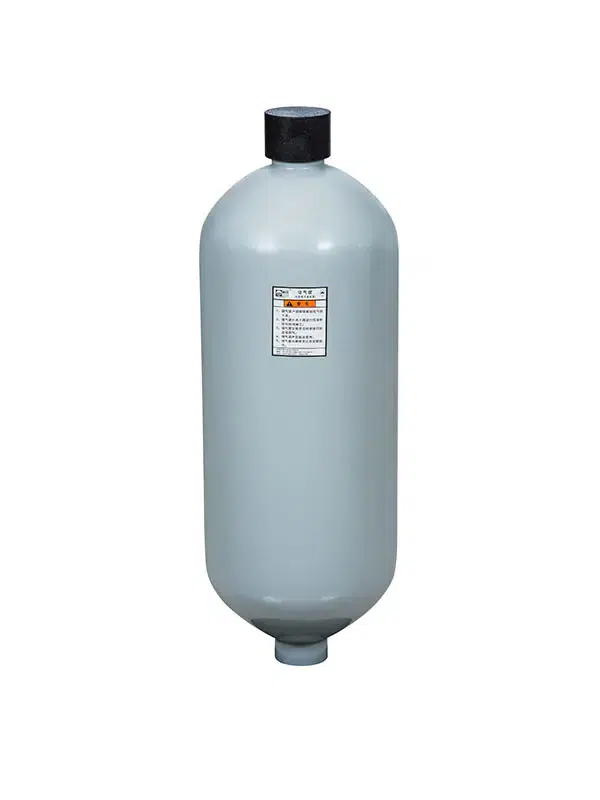
Hydraulic accumulators should ideally be installed as close as possible to the specific points in the system where pressure stabilization or energy supplementation is required. In most cases, they are positioned in proximity to pumps, control valves, or actuators to minimize pressure losses and reduce response times.
For applications involving shock absorption, accumulators are typically installed near components that generate pressure spikes—such as hydraulic cylinders or press systems. This positioning enables them to react rapidly, thereby protecting the system from the adverse effects of sudden load fluctuations.
The mounting position of an accumulator may also vary depending on its specific type. Bladder and diaphragm accumulators can be installed in a variety of orientations, whereas piston accumulators are typically mounted either vertically or horizontally, in accordance with their design specifications.
Furthermore, ensuring safe and convenient accessibility for maintenance and inspection purposes is of paramount importance. Proper installation practices contribute to enhanced operational efficiency, extended service life, and the sustained stability of overall system performance.
Key Takeaways
- Put the accumulator near where pressure changes happen. This keeps the pressure steady and stops shaking.
- Make sure the accumulator stands straight and is held tightly. Use a strong frame to hold it, not the pipes.
- Keep the accumulator far from things that make heat. This stops it from getting too hot and breaking.
- Look at the accumulator often to check for leaks or damage. Do maintenance every six months to keep it safe and working well.
- Always use dry nitrogen to fill the accumulator before use. Do not use oxygen or compressed air because it can be dangerous.
Accumulator Placement
Best Location in the System
You should pick the best spot for your accumulator tank. This helps your hydraulic system work its best. Put the tank close to where pressure changes or vibrations happen. The tank can then soak up shocks and keep pressure even. When you set up the tank, point the oil port down and the gas part up. This way, the tank works better and lasts longer.
Here are some good tips for placing your accumulator tank:
- Put the tank near where you need to control pressure or make things quieter.
- Use a strong frame to hold the tank. Do not let the pipes hold it up.
- Keep the tank away from things that get hot.
- Make sure the tank stands straight unless you cannot do that.
- Put the nameplate where you can see it easily.
Ningbo Chaori Hydraulic says you should follow these steps. This will help your tank stay safe and work well.
Proximity to Pump and Discharge Line
Do not put the accumulator on the pump inlet. This can cause trouble and might hurt your system. Instead, put the tank on the discharge line. It should be close to where you need to control pressure or stop pulsations. This helps the tank act fast and protect your equipment.
Hydraulic accumulators can be dangerous if they let out pressure by accident. You must keep the accumulators separate from other systems and let out pressure before fixing or during an emergency. Safety devices should be used to shut off and limit pressure.
Always do what the maker says when you pick a spot for your tank. This keeps your system safe and working right.
Accessibility and Safety
Think about safety and repairs when you choose a spot for your accumulator tank. Pick a place that is easy to get to. This makes it simple to check, clean, or fix the tank. Do not put the tank where you cannot see or reach it.
- Keep the tank away from heat so it does not get too hot.
- Make sure the tank is held tight so it does not fall.
- Leave space around the tank for repairs.
- Do not weld or change the tank after you put it in, as this is not safe.
Tip: Always check that the tank is tight and all safety parts are there before you start your system.
If you follow these steps, your system will work well and people will stay safe. Ningbo Chaori Hydraulic says you should check the tank often and follow all safety rules.
Why Proper Accumulator Placement Matters
System Performance
You want your hydraulic system to work well and fast. Where you put the accumulator tank is very important. If you put the tank close to parts that need steady pressure, the system stays stable. The tank can also react quickly when pressure changes. This helps your machines run without stopping.
If you put the tank in the right place, you get better pressure control and faster action. Your equipment will work better and last longer.
Preventing Damage
You can stop many problems by putting the accumulator tank in the right place. If you put the tank in the wrong spot, you might get leaks or damage to pipes and pumps. The right spot helps the tank handle pressure changes and keeps things safe.
Here are some ways the right spot stops leaks and damage:
- Good precharge helps the tank react to pressure changes, so there are fewer leaks.
- Tanks with the right precharge keep pressure even, so pumps and pipes do not wear out as fast.
- If you do not precharge the tank right, pressure can drop a lot. This can make the system shaky and cause leaks.
You should always do what Ningbo Chaori Hydraulic says. This keeps your tank safe and helps your system last longer.
Accumulator Installation Steps
Preparation and Safety
You must prepare carefully before you start the installation. Safety comes first when you work with a pressure accumulator tank. Always wear safety glasses and gloves. Check that you have the right tools and parts. Make sure the system is off and there is no pressure in the lines. Use a certified gauge to check the pressure in the tank. Only trained people should do this job.
Here are important safety checks:
- Check that the system pressure does not go over the limits set by the manufacturer.
- Inspect all parts for damage or rust.
- Always bleed and vent trapped fluids before you start work.
- Use personal protective equipment.
- Set up emergency shutdown steps.
- Install pressure relief valves to stop overpressure.
- Label the tank and keep records of maintenance.
Mounting the Accumulator
You need to mount the accumulator tank in the right way. The mounting position depends on the type of tank you use. Look at the table below for the best way to mount each type:
| Type | Preferred Mounting Position | Notes |
|---|---|---|
| Bladder | Vertical | Stops fluid from getting trapped between bladder and shell. |
| Piston | Any position | Handles high gas compression and flow rates. |
| Diaphragm | Not specified | Uses a flexible diaphragm to separate gas and fluid. |
Use a strong frame to hold the tank. Do not let pipes support the weight. Keep the tank upright if possible. Make sure you can see the nameplate.
Connecting to the System
You must connect the plumbing to the accumulator with care. First, make sure the system is at the right temperature. Shut down the system and drain all pressure. Remove safety caps from the tank. Connect the filling valve to the nitrogen tank. Open the charging valve slowly and watch the pressure gauge. Fill the tank with nitrogen gas until you reach the right precharge pressure. Close all valves and check for leaks.
Pressurizing and Testing
You must test the pressure accumulator tank before you use it. Start by making sure the system has no pressure. Wear your safety gear. Use only nitrogen gas for precharging. Connect the charging kit and open the nitrogen valve slowly. Watch the pressure gauge as you fill the tank. When you reach the right pressure, close all valves. Check the pressure again after a few minutes. Tag the tank with the date and pressure.
Tip: Do not let the pressure drop more than 10% below the set value. Check the pressure often and recharge with dry nitrogen if needed.
If you follow these steps, your accumulator will work safely and last longer.
You can make your hydraulic system work better if you put the accumulator in the right place and follow good steps. Always use the right way to mount it and keep the area neat. Check the accumulator every six months to look for damage or leaks. Change the seals and O-rings every 12 to 18 months. Only use nitrogen gas when you fill it. If you need help or special advice, contact Ningbo Chaori Hydraulic.
| Function | Installation Location |
|---|---|
| Saving energy | Vertical |
| Absorb pulsation | Vertical and horizontal |
| Hold pressure | Vertical and horizontal |
| Compensation capacity | Vertical |
Checking your system often and taking care of it the right way keeps it safe and working well.
FAQ
How do you know which type of accumulator to use?
You should look at your system’s pressure, space, and speed needs.
Tip: Bladder types work well for fast response. Piston types handle high pressure. Diaphragm types fit small spaces.
Can you install an accumulator yourself?
You can install one if you have training and follow safety rules.
- Always read the manual.
- Wear safety gear.
- Ask an expert if you feel unsure.
What gas do you use to precharge an accumulator?
You must use dry nitrogen gas.
Never use oxygen or compressed air. These can cause fires or explosions.
How often should you check your accumulator?
You should check the accumulator every six months.