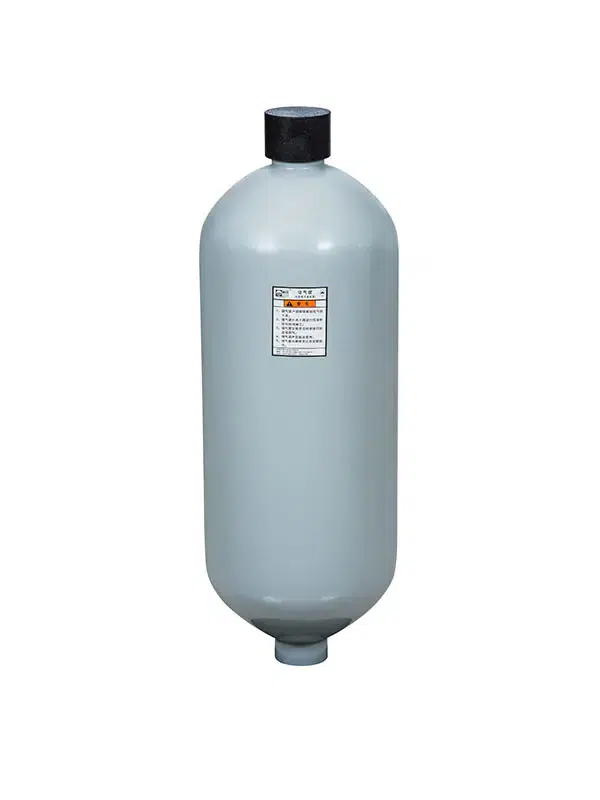
Nitrogen is selected for use in hydraulic accumulators because it exhibits inert, stable, and safe characteristics across a wide range of operating conditions. Unlike air, nitrogen contains neither oxygen nor moisture; this helps prevent oxidation, corrosion, and contamination within the hydraulic system, thereby maintaining the cleanliness of the hydraulic fluid and extending the service life of system components.
Furthermore, nitrogen can undergo repeated cycles of compression and expansion without significant changes to its physical properties, enabling the accumulator to store and release energy smoothly. This characteristic helps maintain system pressure stability, thereby enhancing overall performance.
Nitrogen is also non-flammable and does not support combustion, making it particularly suitable for use in high-temperature or hazardous environments. It is precisely because of these superior attributes that manufacturers like “Chaori” widely choose to utilize nitrogen, ensuring that their hydraulic accumulators operate reliably, efficiently, and safely.

Nitrogen Gas in Hydraulic Accumulators
Nitrogen plays a crucial role in hydraulic accumulators. It is utilized in all types of accumulators—whether bladder, piston, or diaphragm models. Ningbo Chaori Hydraulics employs nitrogen in all of these accumulator types, thereby helping to ensure the safe operation and continued high efficiency of your hydraulic systems.
Chemical Inertness
Nitrogen does not mix with hydraulic fluid. This means that no dangerous reactions will occur. If oxygen or air were used instead, a fire could be ignited. Nitrogen is non-reactive; therefore, it helps keep the equipment clean and safe.
- Nitrogen is the optimal choice for pre-charging because it is non-reactive.
- The use of oxygen or air could trigger a fire.
- Manufacturers affix labels to accumulators explicitly stating that only nitrogen may be used.
Using nitrogen ensures the safety of both your equipment and the workplace.
Safety Benefits
Nitrogen helps regulate the pressure within hydraulic accumulators. It acts as a buffer, absorbing and modulating pressure fluctuations originating from the hydraulic pump.
By utilizing nitrogen, you benefit from hydraulic accumulators that offer enhanced safety and superior performance. Ningbo Chaorui Hydraulic specializes in the manufacture of bladder, piston, and diaphragm-type hydraulic accumulators—all of which employ nitrogen as a safety medium.
Physical Properties
Nitrogen possesses inherent compressibility. This characteristic enables hydraulic accumulators to efficiently store and release energy, thereby enhancing energy utilization efficiency and significantly reducing operational noise. Furthermore, nitrogen serves to absorb vibrations and shocks generated within the piping system, thereby bolstering the overall operational stability of the entire system.
Ningbo Chaori Hydraulic offers a diverse range of accumulators designed to meet your varied application requirements. The table below outlines the specific ways in which each type of accumulator leverages the unique properties of nitrogen:
| Type of Accumulator | Application Needs | Features |
|---|---|---|
| Piston | High-pressure applications | Good for storing energy |
| Bladder | Mobile equipment | Takes in shocks |
| Diaphragm | Small designs | Works well |
Nitrogen gas can handle high pressure. It works as a gas that stores energy by being squeezed. This means your hydraulic accumulator works well in many places.
Note: Using nitrogen gas in hydraulic accumulators can affect the environment. Nitrogen gas does not make greenhouse gases, but making it can cause carbon dioxide. Companies like Ningbo Chaori Hydraulic try to use less energy to help the planet.
You keep your system working right and stop contamination with nitrogen gas. Your hydraulic accumulators stay safe and work well for a long time.
Why Other Gases Aren’t Used in Accumulator
Oxygen and Air Risks
You might think about using oxygen or air in a hydraulic accumulator. But these gases can be dangerous. They are not good for pre-charging. Here are some reasons why:
- Oxygen and air can mix with oil inside the hydraulic accumulator.
- These gases can help fires and explosions start.
- Most manufacturers put warning labels on accumulators. The labels say to only use nitrogen gas.
- Oxygen and air can make rust and water form inside the system.
If you use the wrong gas, you can break your equipment. You can also get hurt. Nitrogen gas does not help fire or rust happen. You keep your system safe when you use the right gas.
Tip: Always look at the label on your hydraulic accumulator before you add any gas. This helps stop accidents and keeps your machine working well.
Other Inert Gases Comparison
You may wonder if other inert gases can work in a hydraulic accumulator. Some gases, like argon or helium, are also inert. They do not mix with oil or start fires. Still, nitrogen gas is the best for most systems.
Here is a table to compare different inert gases:
| Gas | Cost | Availability | Safety | Performance |
|---|---|---|---|---|
| Nitrogen | Low | High | Safe | Excellent |
| Argon | High | Medium | Safe | Good |
| Helium | Very High | Low | Safe | Good |
Nitrogen gas is easy to find and does not cost much. You get great safety and performance. Argon and helium are safe, but they cost more and are harder to find. You want a gas that works well, is safe, and does not cost too much. That is why nitrogen gas is used in almost every hydraulic accumulator.
You make a smart choice when you use nitrogen gas. It keeps your system safe, steady, and working well.
Hydraulic Accumulator Performance
Pressure Consistency
You want your hydraulic system to work well every time. Nitrogen gas helps keep the pressure steady inside the hydraulic accumulator. When you squeeze the gas, it holds energy. Later, the gas lets out this energy to help machines move or lift things. This way, you get energy when you need it and your system reacts fast.
Nitrogen gas does not mix with oil or other parts. It takes in pressure changes and stops the system from shaking or being loud. You get a smooth flow of hydraulic fluid. This helps your equipment work better and last longer.
Tip: Using nitrogen gas in your hydraulic accumulator stops sudden pressure jumps. This keeps your system safe and protects your machines.
Longevity and Maintenance
Naturally, you want your hydraulic accumulator to be built to last. Ningbo Chaori Hydraulic employs robust and durable seals designed to securely contain the internal gas, effectively preventing any leakage. A high-quality sealing system ensures complete isolation between the gas and the fluid, thereby preventing gas from mixing into the oil and maintaining the overall cleanliness and purity of the hydraulic system.
Please inspect the seals and associated components regularly to detect and resolve potential issues at an early stage.High-quality seals effectively prevent the escape of internal gas.This gas-fluid separation system enables the storage and transmission of energy without any mixing of the gas and fluid.
Ningbo Chaori Hydraulic not only selects robust and durable sealing materials but also strictly adheres to rigorous manufacturing protocols. Their hydraulic accumulators comply with a range of top-tier industry standards, including ISO9001, ASME, and CE. These authoritative certifications serve as compelling proof of the products’ safety and exceptional performance. Before leaving the factory, every hydraulic accumulator undergoes rigorous visual inspections, pressure resistance tests, and wall thickness measurements. Consequently, you receive a high-quality product that delivers reliable performance across a wide variety of operating conditions.
Fluctuations in ambient temperature can impact both the seals and the state of the internal gas. High-temperature environments accelerate the aging and wear of seals, while low-temperature environments may cause a drop in internal gas pressure. Therefore, it is recommended that you conduct regular inspections of your hydraulic accumulator, particularly when operating in environments subject to extreme heat or cold. This proactive measure helps ensure that your hydraulic system remains in a safe operating state and effectively extends its service life.
Note: Strictly adhering to maintenance protocols and selecting products backed by authoritative certifications will help you maximize the performance and efficiency of your hyd accumulator.
You get the best results when you listen to experts:
- Gas-charged accumulators hold energy and take in shocks.
- Set pre-charge pressure at 80% to 90% of the lowest system pressure.
- Learn how nitrogen acts to help your system work better.
FAQ
What is the main purpose of nitrogen in a hydraulic accumulator?
Nitrogen helps keep the hydraulic accumulator safe and steady. It does not mix with oil. Nitrogen helps hold energy and makes the system work well.
Can you use other gases in a bladder accumulator?
You should not use other gases in a bladder accumulator. Only nitrogen is safe and works best. Other gases can make the system unsafe or break it.
How does a piston accumulator store energy?
A piston accumulator stores energy by squeezing nitrogen gas. The gas works like a spring. It gives you energy when you need it.
Why do hydraulic accumulators need regular checks?
You need to check hydraulic accumulators often for leaks or pressure drops. Checking them helps keep your system safe and working for a long time.
What happens if you use the wrong gas in your system?
If you use the wrong gas, you can start fires or break things. Always use nitrogen to keep your hydraulic accumulator safe and working well.